
2026-09-16 · A Field Inquiry into the Ethics of Photography
Lead — This September, the Yellowstone Volcano Observatory (YVO) published a set of cleanup figures in Caldera Chronicles: in just one summer, geology crews retrieved more than 20,100 objects from the park’s thermal areas. The most striking of them were not coins, hats, or toys. They were 54 camera lens caps — the single most common plastic item found. Fifty-four lens caps, like fifty-four periods yanked off too quickly, turn what could have been a quirky news item into a field investigation of how we look, and what that looking costs.
1. The Haul: An Accidental “Camera Gear Exhibit”
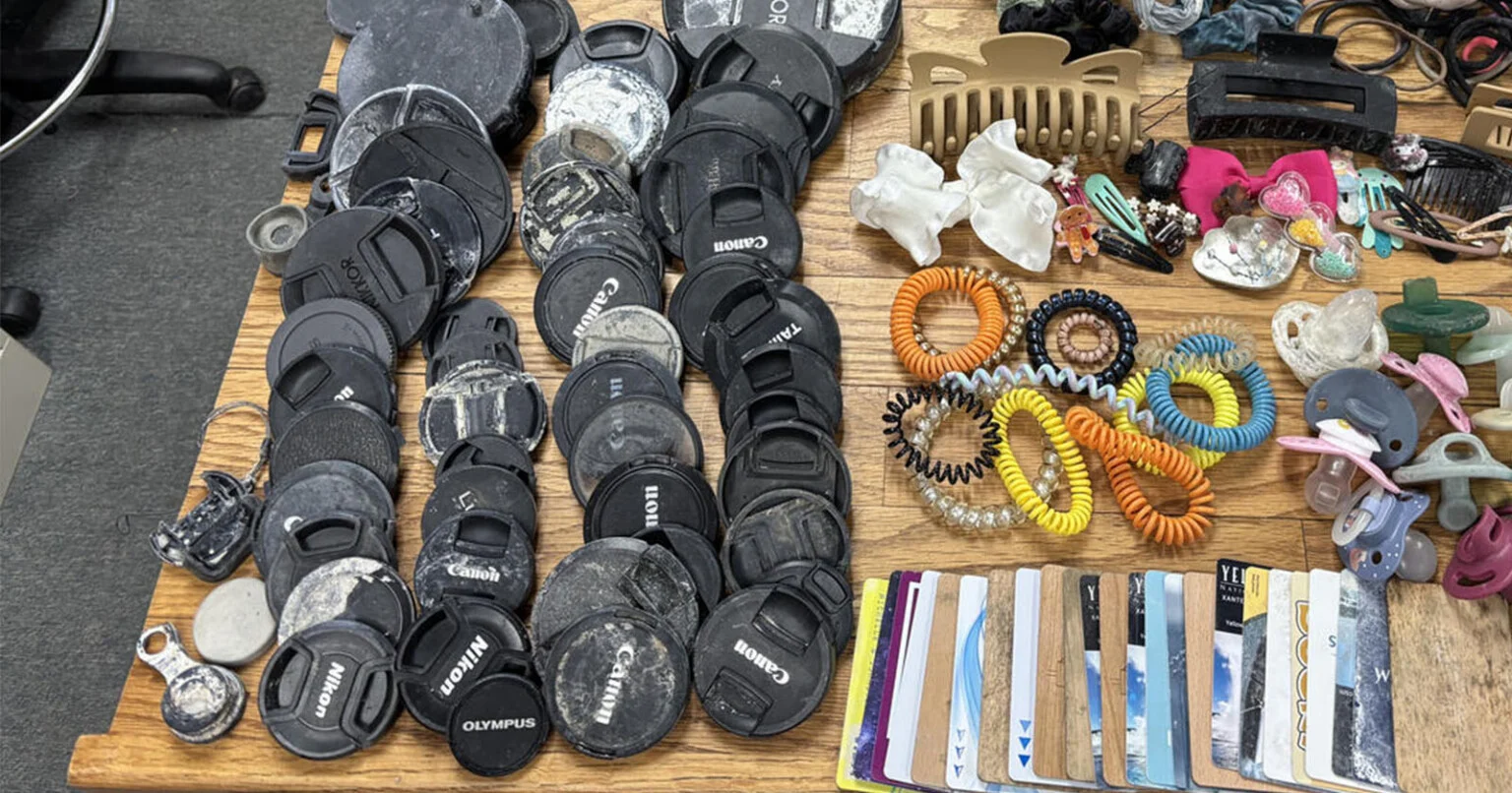
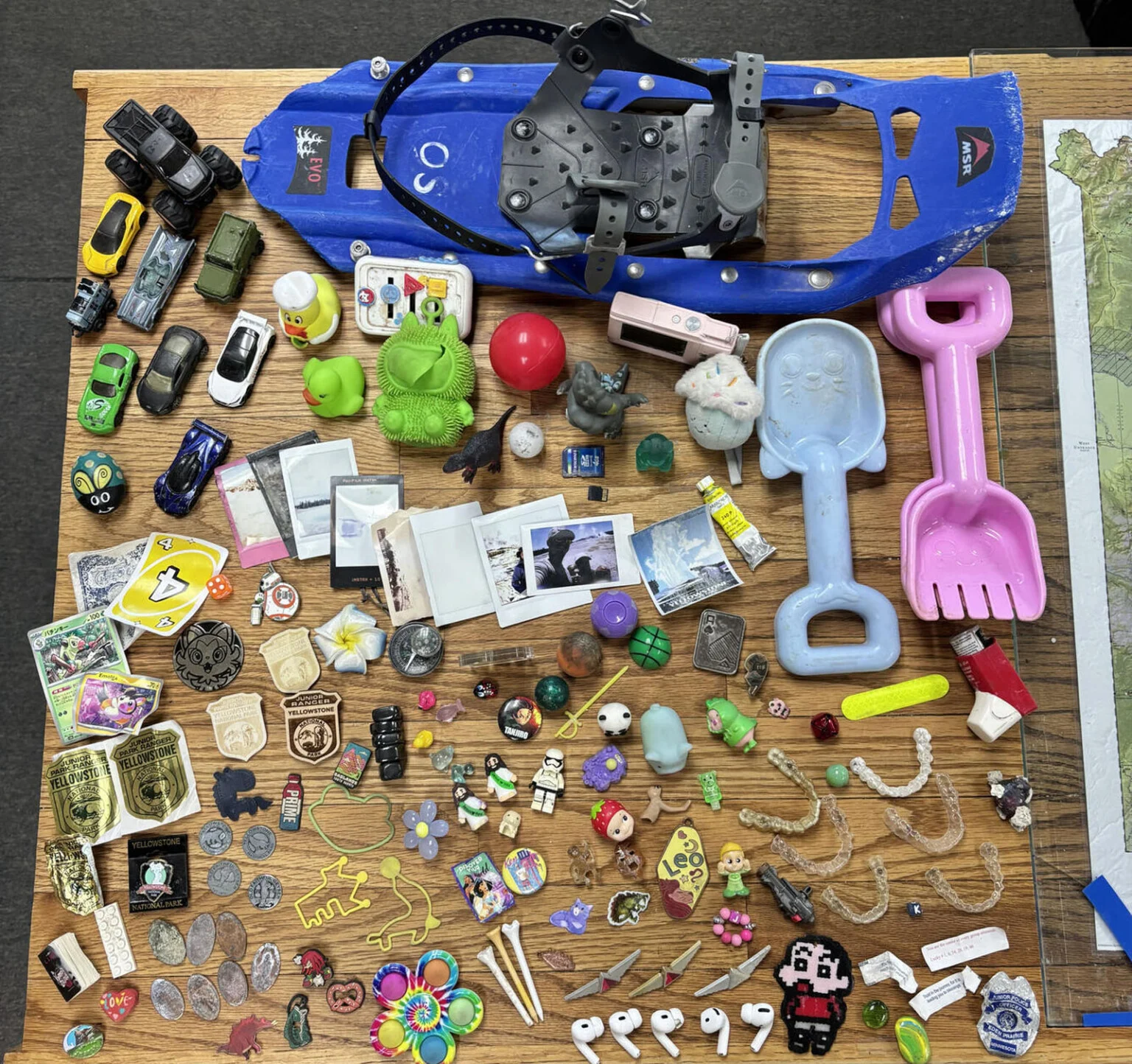
Margery Price, a physical science technician on Yellowstone’s geology team, described in the report how the cleanup of thermal areas — including the Old Faithful and Midway Geyser Basins — turned up such a variety of personal belongings that they could almost fill a small camera-gear exhibit:
- 54 camera lens caps, covering mainstream brands like Canon and Nikon — including one unusually large Nikkor cap;
- Several camera body caps and lens hoods;
- 7 Polaroid photographs — the most absurd detail being that some of those photos showed the very hot spring they had fallen into;
- Binocular covers and other optical accessories;
- 5 pairs of AirPods and tiny microSD cards, forgotten pieces of electronics.
To retrieve these items without damaging the fragile crust and microbial mats, geology crews used telescoping grabber poles up to 30 feet (about 9 meters) long, along with custom strainers and fishing rods. The lens caps lay submerged in boiling water and silica deposits. Pulling them out was, in itself, a delicate kind of archaeology.
2. Why Do Lens Caps End Up in the Hot Springs?
Unlike visitors who deliberately toss coins for “good luck,” most of the 54 lens caps were lost through unintentional accidents. A photographer standing on a boardwalk removes the cap to compose, meter, or change lenses, and their attention has already gone completely to the scene. A sudden gust of wind over the thermal area, a slip of the hand, and the cap — not tucked into a zippered pocket or camera bag — slides into the spring.
But “unintentional” does not mean “harmless.” Those 54 lens caps are a symptom of a deeper condition in contemporary photography: the anxiety of looking. Under the pressure of instant sharing, a landscape is no longer an other to be contemplated and respected, but a resource to be captured and uploaded. A dropped lens cap is the smallest and most honest byproduct of that rush — when we are in a hurry to look, we often stop seeing.
3. From One Lens Cap to a Changed Landscape: Four Paths of Damage
Once a lens cap falls into a hot spring, it stops being a photography mishap and becomes an ecological event. Drawing on Yellowstone’s records and the geology team’s findings, the damage photography causes to these fragile thermal ecosystems can be mapped along four paths.
Path 1: Dropped Gear Clogs Hydrothermal Circulation
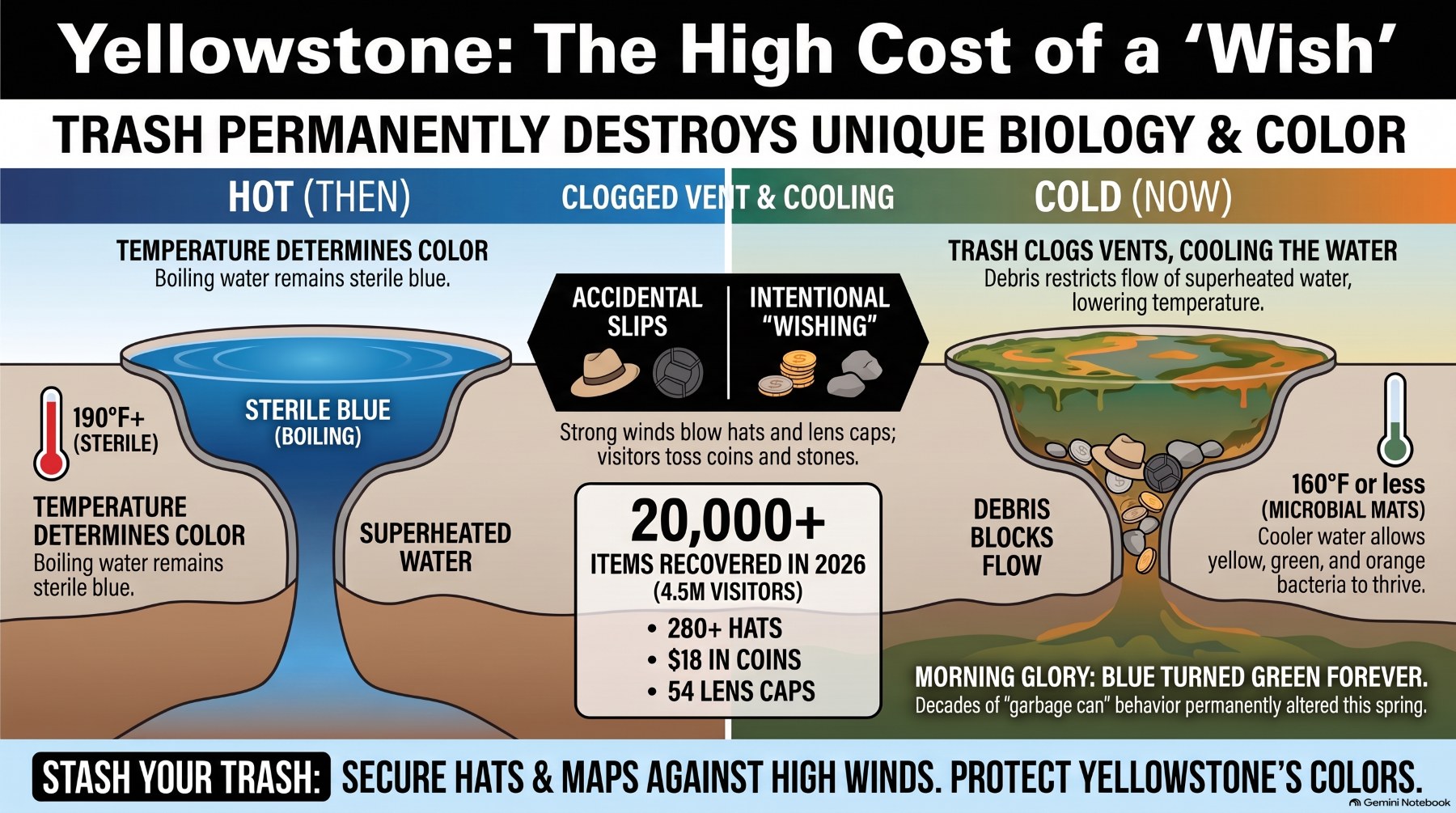
When plastic items sink to the bottom of a pool, they can block underwater vents, disrupt circulation of superheated water, and leach chemicals into the system. The blockage lowers the water temperature, which allows heat-loving microbes to multiply rapidly — permanently changing the spring’s natural color. Morning Glory Pool is the textbook example of this chain reaction. (See Section 5.)
Path 2: Stepping off the Boardwalk Crushes Microbial Mats
In search of a better angle, a composition, or a selfie, some photographers cross the railing and leave the boardwalk. The ground in thermal areas is extremely fragile. The bacterial communities known as Microbial/Bacterial Mats are crushed permanently underfoot, causing nearly irreversible ecological damage. At the same time, the geothermal crust is thin and sits above boiling water; stepping off trail can break through, causing severe burns or even death.
Path 3: Approaching Wildlife Disrupts Natural Behavior
Trying to get a close-up, some photographers illegally approach bison, elk, bears, or wolves. Park rules require keeping at least 100 yards (91 meters) from bears and wolves, and at least 25 yards (23 meters) from all other wildlife. Closing that distance disturbs animals’ natural behavior, can provoke an attack, and in severe cases can lead to an animal being euthanized because it injured a person.
Path 4: Illegal Drones and Automated Equipment
Flying a drone in a protected area — for example, over Grand Prismatic Spring — is against the law. The noise and intrusion of a drone can seriously disturb wildlife, especially nesting birds.
In short: when photography crosses a boundary, the photographer becomes a polluter.
4. A Trash Ledger: The Quantified Link Between Visitor Numbers and Environmental Load
Yellowstone receives more than 4.5 million visitors every year. The relationship between visitor volume and environmental pressure is direct, measurable, and far-reaching.
| Category | Summer 2026 | Summer 2025 |
|---|---|---|
| Total trash | 20,100+ items | about 13,000 items |
| Rocks and branches | 5,600 | about 4,000 |
| Hats | 280+ | 300+ |
Total trash increased by nearly 55% in a single year. Among the personal items cleaned out of the thermal areas were 47 hair ties, 36 pairs of sunglasses, 20 hotel key cards, 17 pacifiers, and 6 sets of Invisalign aligners — plus coins and paper money from the United States, Europe, Japan, Canada, Mexico, and elsewhere.
To keep the thermal areas safe and retrieve lost items, the geology team walks more than 1,300 miles (about 2,100 km) of trails and boardwalks and drives more than 11,000 miles (about 18,000 km) every year. After crews removed 6,000 rocks and branches from a small spring near the Grand Prismatic overlook, both the water flow and temperature rebounded — proof of the reverse: once trash enters a thermal system, it sets off a clear causal chain: physical blockage → falling water temperature → microbial succession → permanent changes in color and function.
5. Morning Glory Pool: A Monument to “Fading Glory”
Morning Glory Pool is the most famous casualty of that chain. From the late 19th century through the mid-20th century, it sat close to the park’s main road, and visitors treated it as a wishing well and trash can, throwing in thousands of coins, bottles, pieces of wood, and even car parts.
- Original condition: The water was extremely hot, too hot for most microbes to survive. It was crystal clear and showed a pure, deep blue.
- After the blockage: Trash wedged into the vent, cutting off the flow of superheated water. The temperature dropped, yellow, orange, and green heat-loving bacteria and algae flourished, and the pool permanently turned yellow-green.
The USGS assessment is blunt: because the debris is embedded deep in the underground thermal plumbing, forcefully cleaning it out could destroy the spring entirely. Morning Glory Pool almost certainly will never return to its original deep blue. The park eventually stopped large-scale pumping and dredging. Instead, it placed a sign beside the pool reading “Fading Glory,” preserving it as an open-air monument to warn everyone who comes after.
The same tragedy befell other features:
- Minute Geyser: In 1947, rocks were thrown into its main vent, permanently stopping its major eruptions;
- Handkerchief Pool: Visitors used it as a natural “washing machine.” It stopped working in 1927 and took about 20 years to recover only weakly.
And elsewhere in the park, some springs still hold their original deep blue — precisely because they have not yet been treated as trash cans. The abyssal blue of those intact pools, set against the yellow-green of Morning Glory, makes the warning impossible to miss.
6. Rules and Red Lines: What You Need to Know Before Photographing in a National Park
The moment photography crosses a line, it changes from documentation to destruction. The Superintendent’s Compendium for Yellowstone draws several hard boundaries:
- Permits: Ordinary handheld cameras, phones, and standard tripods in open areas generally do not require a permit. But entering closed or restricted areas, having exclusive use of a site, using large props or equipment, or working with a crew of more than 8 people requires a Filming & Still Photography Permit;
- Commercial workshops: Organizing commercial photography classes, workshops, or guided photo tours inside the park requires a Commercial Use Authorization (CUA) from the National Park Service (NPS). Operating without one is illegal;
- Drones: Taking off, landing, or operating a drone anywhere in the park — on land or water — is prohibited. Violators can face fines of up to $5,000, six months in jail, and confiscation of the equipment;
- Wildlife distances: With bears and wolves, keep at least 100 yards (about 91 meters). With all other animals, keep at least 25 yards (about 23 meters). Using flashlights, spotlights, or flash to illuminate or photograph wildlife is banned parkwide;
- Boardwalk boundaries: Tripods must stay entirely on boardwalks or designated trails. Climbing over a railing to “find an angle” is strictly forbidden.
7. A Leave No Trace Checklist for Photographers
Before pressing the shutter, press pause on your own impulses. Drawing on the geology team’s experience, official rules, and the lessons of ecological damage:
- Stash it the moment you remove it: Put lens caps, filters, and body caps into a zippered pocket or a fixed slot immediately. Never set them down on a railing;
- If something falls, don’t retrieve it: If gear falls into a thermal area or any dangerous zone, note the location and contact a ranger. Never cross the boardwalk to grab it;
- Zoom with your lens, not with your feet: Carry a 300–400mm long lens and photograph wildlife from a safe distance;
- Stay on the trail: Keep both your feet and your tripod inside the boundaries. Don’t step on microbial mats or block other visitors;
- Pull into pullouts: Shoot and move on. Don’t occupy the road or set a tripod up on the pavement;
- Beware of silica in steam: Dissolved silica in thermal steam hardens on lenses and is extremely hard to remove. Protect and clean your gear promptly;
- Respect the animals: Don’t surround them, crowd them, chase them, or light them up at night.
Conclusion: What 54 Lens Caps Teach Us About Seeing
Fifty-four lens caps are fifty-four acts of looking that were hurried, careless, and ultimately let go. They fell into hot springs, blocked the flow, changed the colors, and permanently damaged landscapes that took decades to form.
In an age when algorithms generate images and platforms circulate film, photography is all too easily reduced to extracting and uploading. But Yellowstone’s story reminds us: every press of the shutter is an intervention into someone or something else. It demands material care — put the lens cap in your pocket — and ethical humility — before you point the lens, ask yourself whether you are looking, or conquering.
A lens cap can’t look. An algorithm can’t respect. A landscape can’t wait.
But a person who is willing to slow down, put their gear away properly, keep their distance, and respect a boundary — can.