Core Conclusion
Recently, Netflix Tudum released wrap news for the series “Scooby-Doo: Origins,” along with a set of visual materials that rely heavily on photo-driven communication. The official new photo set was unveiled, drawing significant audience attention to the live-action characters, Scooby’s appearance, and the series’ visual information.
From a photography perspective, the show’s currently available spoiler materials form a clear two-layer visual system: one layer is a youthful suspense aesthetic built from low-key lighting, negative space, and doorframe obstructions; the other is a private-memory aesthetic constructed from direct flash, light leaks, film grain, and Photo Booth imagery. Teal-green, orange-red, yellow, and wood-brown unify both layers into the Scooby-Doo brand color palette.
The series has not yet been released, and this analysis covers only the teasers, official character stills, and behind-the-scenes photographs publicly released by Netflix. Throughout this article, any content involving focal length, lighting, and equipment that lacks a project-level source is explicitly marked as “inferred” or “replication suggestion.”
Cinematography Style and Frame-Level Analysis of Publicly Available Images
Scope of Materials and Method
Because Scooby-Doo: Origins has not premiered, there are no real on-screen timecodes like “Episode 1, 12:34” that can be verified. Netflix has so far released only a very short teaser and publicity/behind-the-scenes images. Netflix’s official description of the teaser is that Scooby sniffs around the woods, spots Shaggy nearby, and at the end gives viewers their first clear look at the real dog Scooby being held by Shaggy. Scooby-Doo: Origins Introduces the First-Ever Real Dog Scooby, Streaming on Netflix in 2027 - Netflix Tudum
Therefore, the following uses relative teaser positions and Tudum page image positions rather than fabricated episode timecodes. Only teaser frames are moving images; the rest are official publicity/BTS photography. Distinguishing these two types of material is the most important research discipline when judging the show’s eventual cinematography.
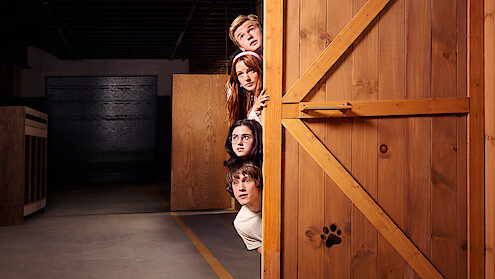
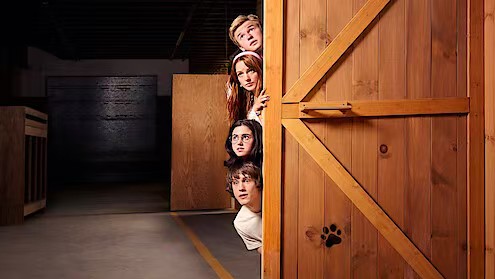
Frame One: Four People Peeking from Behind a Wooden Door
Location: hero image in the 2026-09-13 Tudum article; Tom Griscom. Scooby-Doo: Origins Live-Action Series Synopsis, Cast, Release Date, News - Netflix Tudum, dnm.nflximg.net
The key to the composition is not “four people standing together,” but that the people are compressed into an extremely narrow vertical column of characters. Four faces form a rhythm from top to bottom that resembles comic panels or animation squash-and-stretch. The wooden door on the right occupies a large amount of warm physical mass, while the left is a nearly empty, dark warehouse space. The people sit precisely on the dividing line between two visual worlds. dnm.nflximg.net
In lens language, it reads like a medium-wide environmental portrait slightly wider than a standard lens: perspective is not aggressive, faces show no obvious ultra-wide distortion, yet enough warehouse space is retained. The finished image alone cannot establish focal length; for a full-frame recreation, I would start in the 35–50mm range rather than using 85mm or longer.
The essence of the lighting design is “warm door bright, unknown area dark, faces readable.” The faces are clearly brighter than the left-hand space, locking the viewer’s attention while deliberately preserving the left background as a potential threat zone. The black claw marks on the door act as a micro-storytelling cue, turning the composition from an ordinary group shot into a Scooby-Doo world “evidence photo.” dnm.nflximg.net
Costume and photography reinforce each other: the costumes preserve the original characters’ color identities, while the background remains restrained so that character colors do not compete with the environment. Here, production design is not pretty set dressing; it serves the photographic function of making viewers look into the darkness.
Frame Two: The Teaser’s Forest Search and Scooby’s Subjective Feel
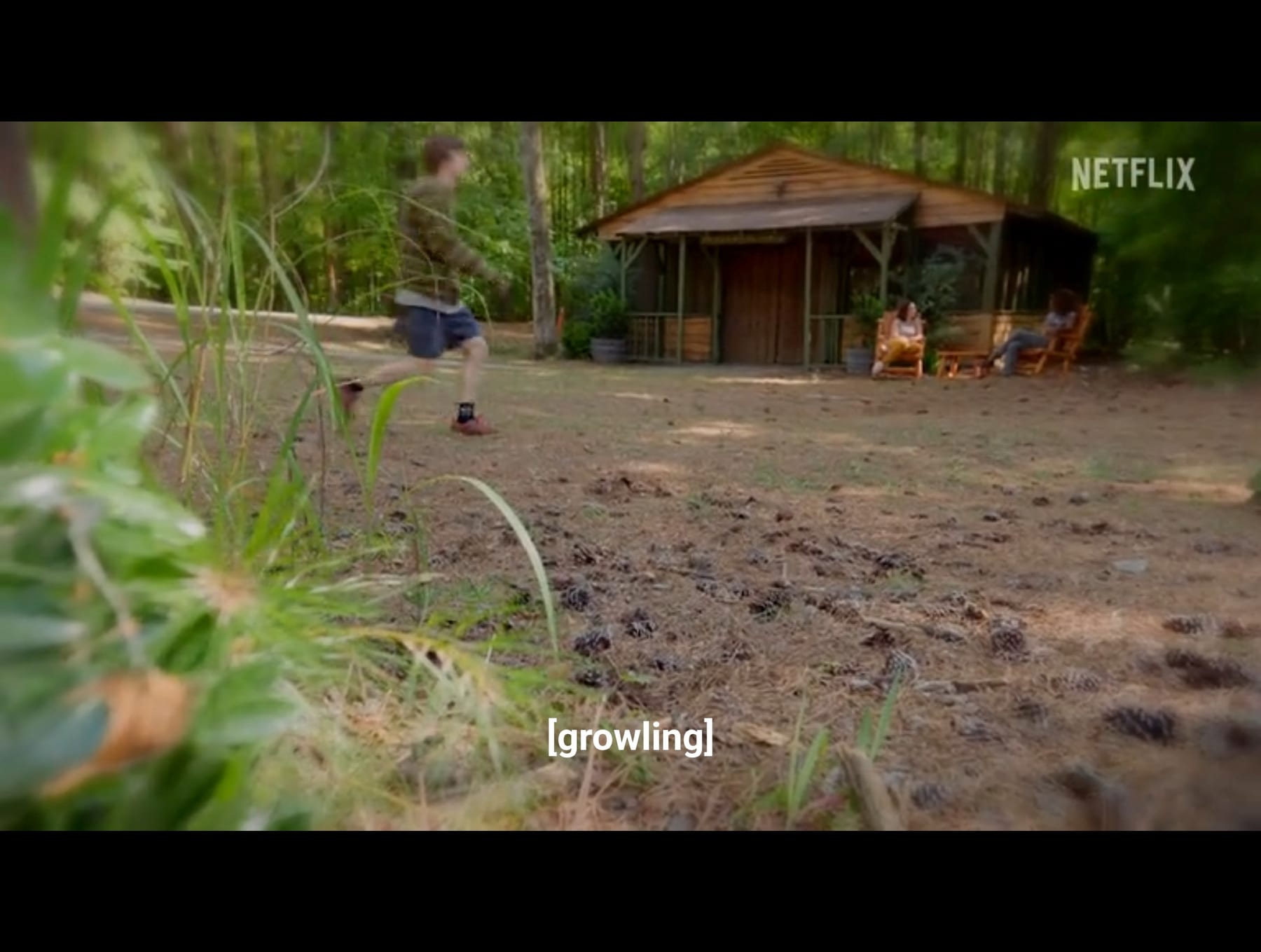
Location: from the beginning to the early-middle of the teaser; Netflix’s official text describes Scooby sniffing around the woods and spotting Shaggy. Exact seconds are not publicly disclosed, so no frame-level timecodes are invented. Scooby-Doo: Origins Introduces the First-Ever Real Dog Scooby, Streaming on Netflix in 2027 - Netflix Tudum
From a narrative design standpoint, the most important choice here is lowering the viewing height: for the first time, the story is not looking for the dog through a hero’s eyes, but instead bringing the audience closer to the dog’s exploratory rhythm. Netflix officially describes the action as Scooby “sniffs around the woods until he spots Shaggy,” so the photographic logic itself is “search—discover.” Scooby-Doo: Origins Introduces the First-Ever Real Dog Scooby, Streaming on Netflix in 2027 - Netflix Tudum
If recreating this in photographic language, such images are best served by a low camera position, close-range wide-angle, and slightly unstable movement rather than stable telephoto observation. Nearby branches, the ground, and Shaggy in the background can form at least three depth layers, giving the “sniffing for clues” action a sense of space. If motion blur appears here, it can reinforce the unpredictability of puppy movement rather than being read as a technical flaw.
Frame Three: Shaggy Holding Scooby at the End of the Teaser
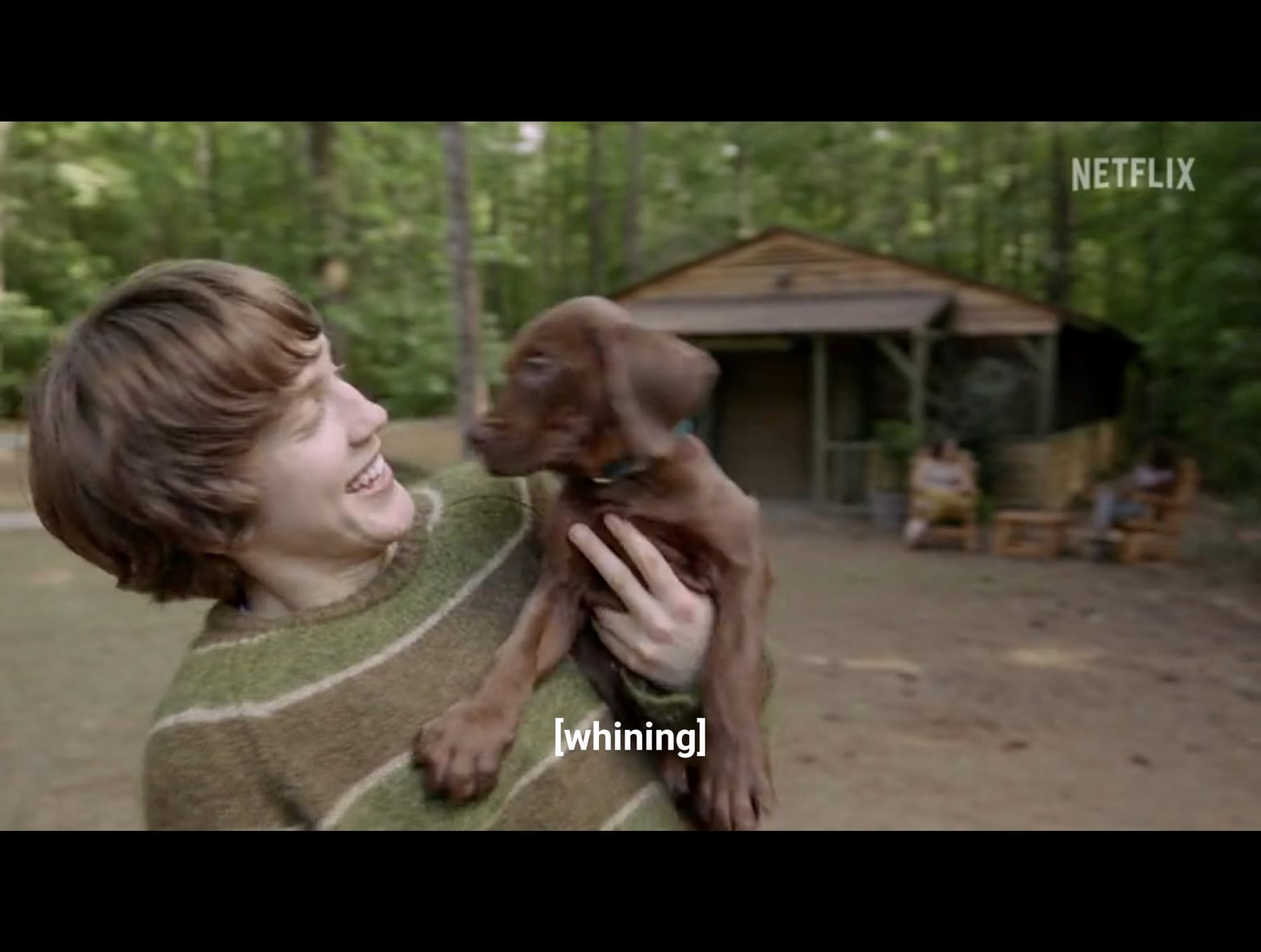
Location: Netflix officially describes it as the “tail-end of the clip,” meaning the closing segment of the teaser. Scooby-Doo: Origins Introduces the First-Ever Real Dog Scooby, Streaming on Netflix in 2027 - Netflix Tudum
In the released frame, the person and puppy feel more kinetic than a conventional formal reveal, and the forest background and wooden structure are not completely frozen. This keeps the first clear reveal of live-action Scooby from looking like a pet advertisement while keeping it inside story-driven motion. The frame can be read as an emotional reveal shot: the audience first experiences the space through the dog’s actions, and only at the end receives a clear image of “human and dog forming a relationship.” Scooby-Doo: Origins Introduces the First-Ever Real Dog Scooby, Streaming on Netflix in 2027 - Netflix Tudum
In color terms, the forest is naturally green; Scooby’s brown fur and Shaggy’s character colors sit in the warm zone; the signature teal collar provides a brand anchor. Unlike a fully CGI character, real dog fur requires very careful highlight control because hard top light quickly creates patchy highlights on short fur. Actual shooting is therefore more likely to rely on natural ambient light with gentle fill rather than large frontal hard lights; this is a lighting logic inferred from fur rendering, not a confirmed equipment fact about the show.
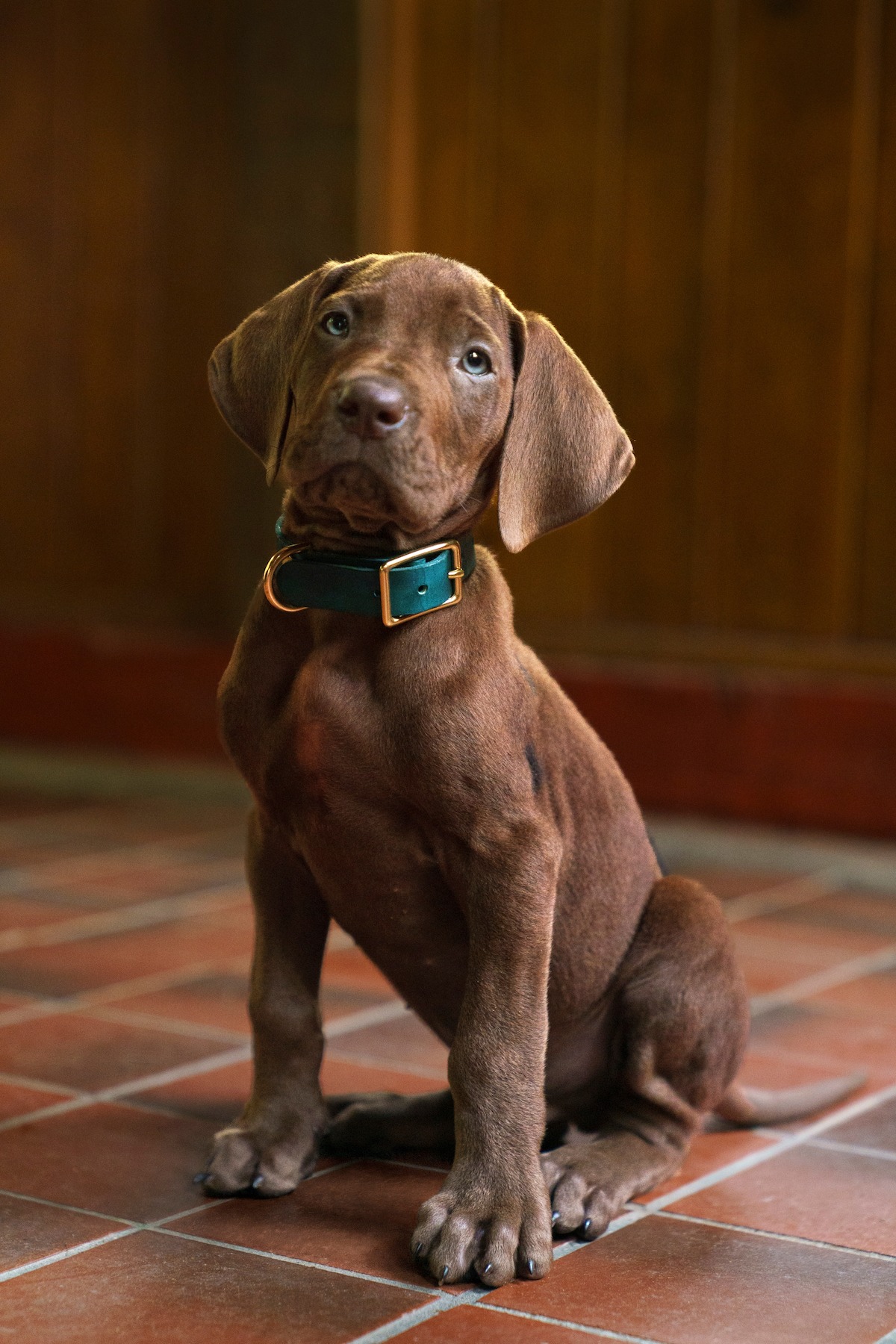
Frame Four: Steve Dietl’s Official Scooby Portrait
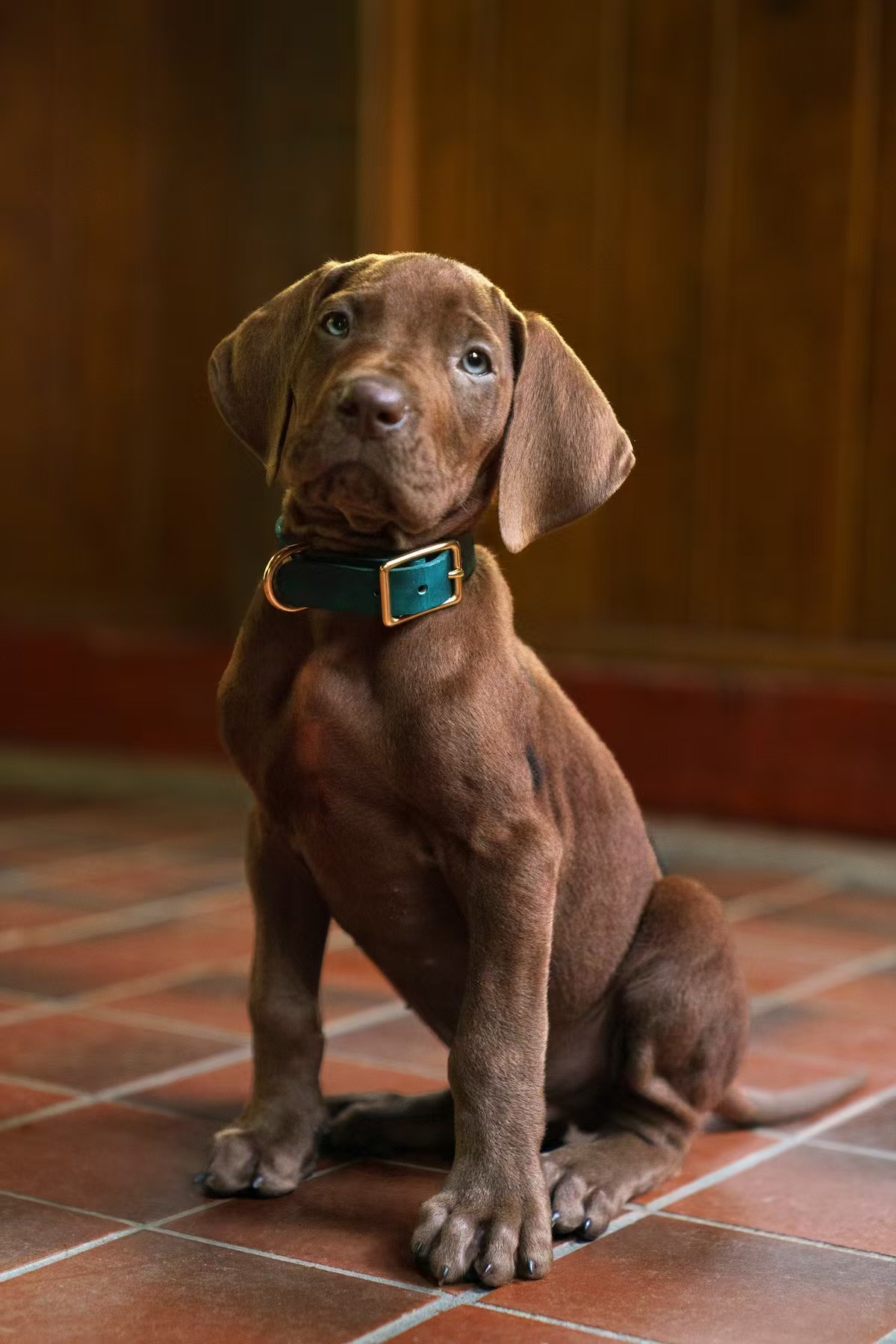
Location: middle of the 2026-06-08 teaser Tudum article; photography by Steve Dietl. Scooby-Doo: Origins Introduces the First-Ever Real Dog Scooby, Streaming on Netflix in 2027 - Netflix Tudum, dnm.nflximg.net
This photo most clearly shows how this project translates a highly cartoonish character into something “real.” The photography does not impose an exaggerated cartoon look on the dog; instead, three elements carry the recognition: brown fur, teal collar, warm brown environment. dnm.nflximg.net
Depth of field is clearly shallower than in the four-person hero image. The wooden wall has softened, and the dog’s eyes and nose area receive the main sharpness; this gives the real puppy the visual hierarchy of a “character portrait.” For a recreation, start from full-frame 50–85mm, f/2–f/2.8, then stop down to f/2.8–f/4 depending on how quickly the dog moves forward and backward.
The most beautiful part of the lighting is in the edges: warm separation light appears on the top of the head and ear edges, while the background remains darker so the brown fur does not melt into the wood. The teal collar is almost the only significant cool color block in the entire warm frame, functioning as a character “logo” through color. dnm.nflximg.net
Frame Five: Scooby, Clapperboard, and Colorful Van Interior
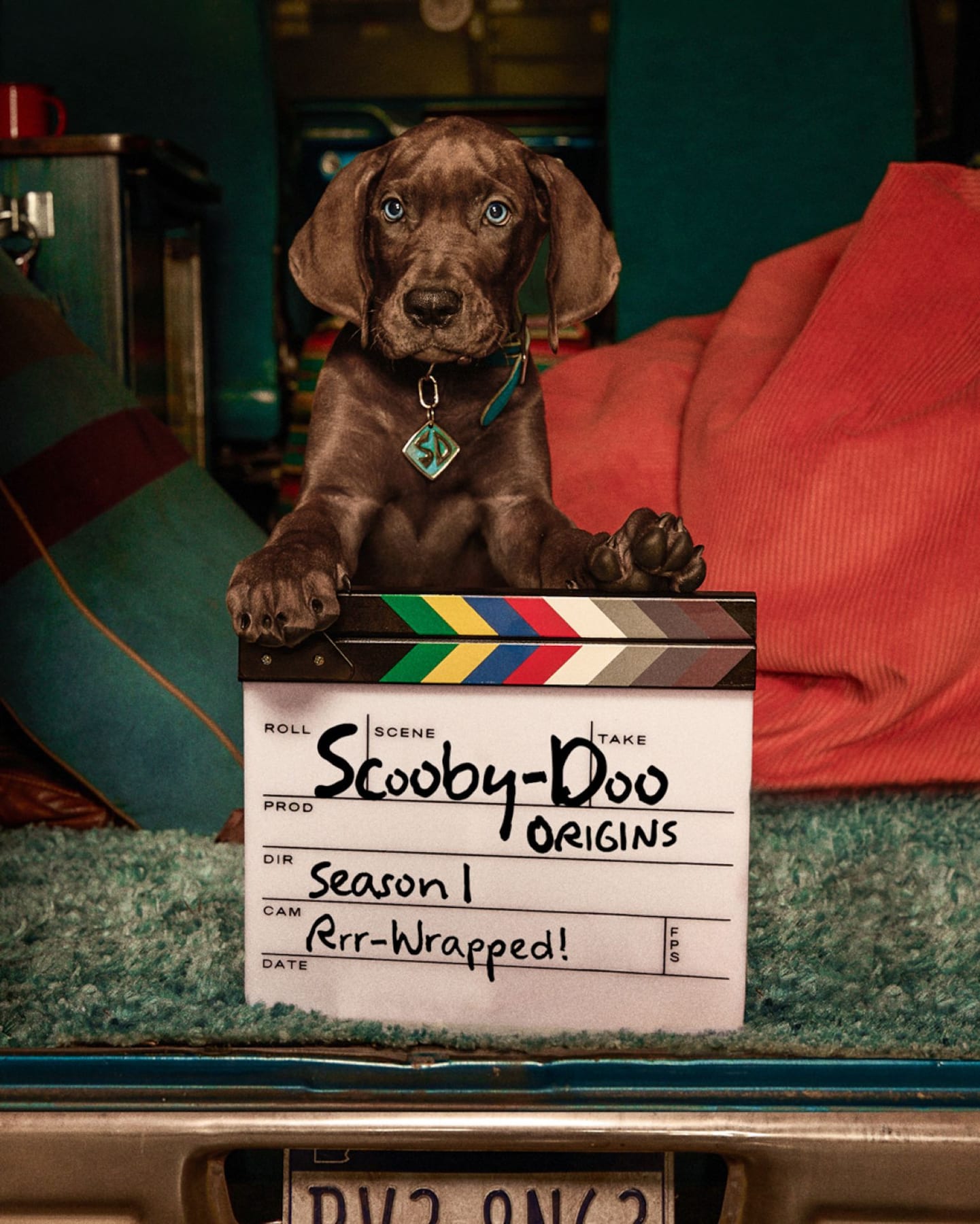
Location: first behind-the-scenes image after the opening of the 2026-09-13 Tudum wrap article. Scooby-Doo: Origins Live-Action Series Synopsis, Cast, Release Date, News - Netflix Tudum
This is one of the most valuable images for understanding how production design and photography relate in this project: the van interior concentrates teal, coral red, yellow, wood tones, and patterned fabric, clearly expanding Scooby-Doo’s brand colors from character costumes into physical space. Scooby-Doo: Origins Live-Action Series Synopsis, Cast, Release Date, News - Netflix Tudum
Photographically, it uses a nearly frontal composition so the puppy, clapperboard, and interior geometry are all easy to read. Compared with the horror-suspense scenes, this lighting is more even and closer to a wrap/publicity image. It therefore cannot be used to prove that every Mystery Machine scene in the final show will be this bright.
What is genuinely worth borrowing is this: the photography does not manufacture “cartoon color” on its own; it lets the set provide the colors first, then uses lighting to preserve their saturation. For photographers, this is usually much more natural than “pulling a neutral scene into Scooby colors in post.”
Frame Six: Sofa Group Shot and Orange-Red Light Leak
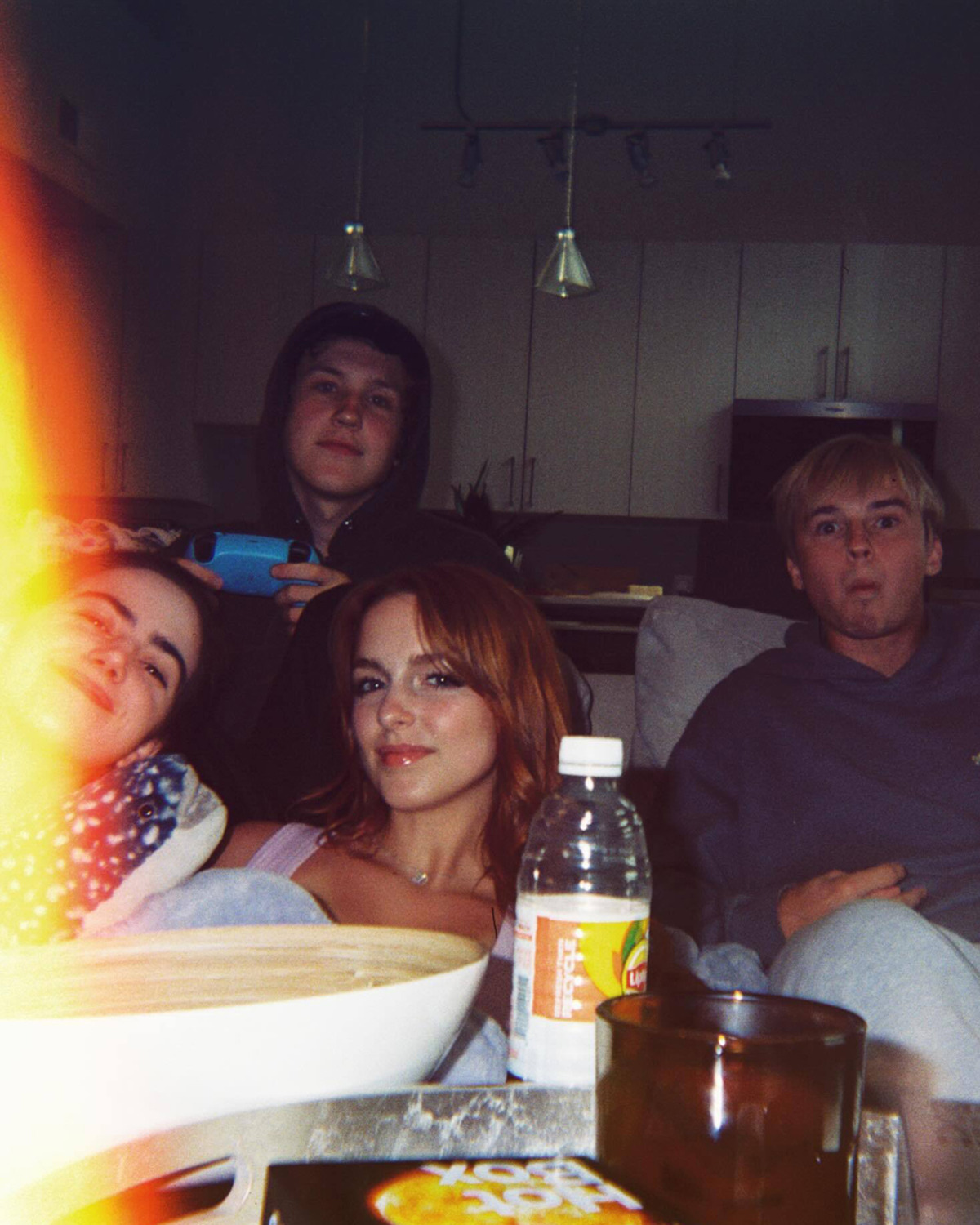
Location: 2026-09-13 Tudum wrap article, after the Scooby clapperboard image. Scooby-Doo: Origins Live-Action Series Synopsis, Cast, Release Date, News - Netflix Tudum
This is the strongest “youth memory” language in the batch. A large orange-yellow light leak appears on the left, the background is relatively darkened, and the people look lit by near-axis direct flash. The image does not pursue the cleanliness of advertising photography; instead, it allows light spots, grain, edge chaos, and even uneven exposure to become part of the emotion. Scooby-Doo: Origins Live-Action Series Synopsis, Cast, Release Date, News - Netflix Tudum
This effect may come from real film, a disposable camera, an older digital/flash camera, or post-production simulation; the available materials are insufficient to tell which. Therefore, the mere fact that it “looks like film” cannot support the conclusion that the production used 35mm still film.
For the visual positioning of the whole project, this image is crucial: it suggests the publicity visuals want the audience to perceive these people as “a real group of high school friends who actually existed,” not merely IP characters. In other words, the retro feel is not a period reconstruction but a retro treatment of the memory medium.
Frame Seven: “FRESH FILM” and Black-and-White Photo Booth
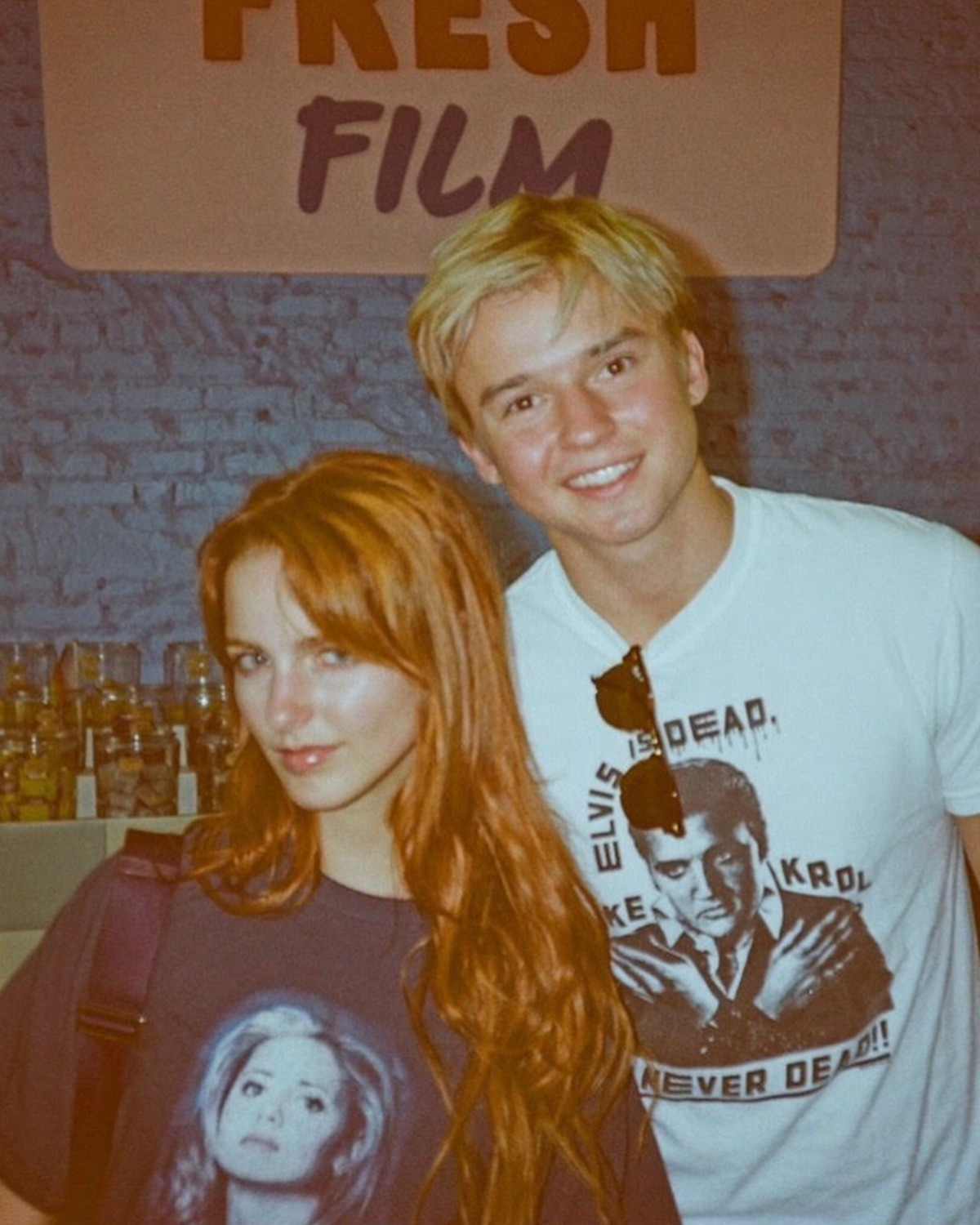
Location: both images sit between the synopsis and cast sections of the 2026-09-13 Tudum article. Scooby-Doo: Origins Live-Action Series Synopsis, Cast, Release Date, News - Netflix Tudum
The “FRESH FILM” image continues the near-axis direct flash, warm color temperature, and slightly rough texture; the graphic T-shirt and store shelves give the frame a strong density of everyday-life information. Meanwhile, another photo places a black-and-white photo-booth strip directly on bright red tiles, turning the two-dimensional character portraits into an object once again. Scooby-Doo: Origins Live-Action Series Synopsis, Cast, Release Date, News - Netflix Tudum
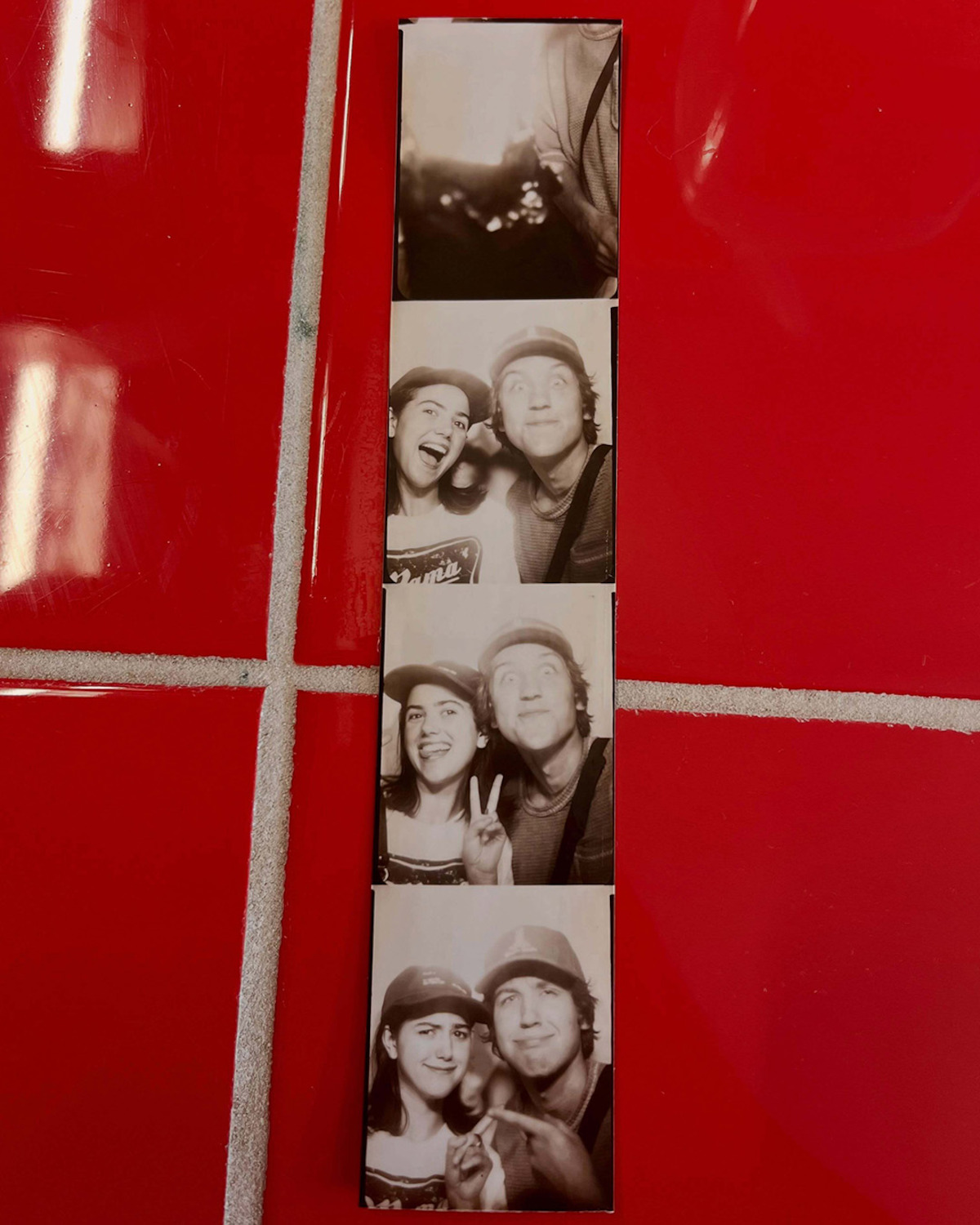
This reveals a very clever visual motif: photos are not only marketing material; they may also become “memory objects” within this teenage mystery world. The red tiles supply brand-level saturated color, while the black-and-white photo booth supplies private memory; the contrast between warm color and no color is more concrete than merely adding a cinematic LUT.
Overall Cinematography Judgment
Putting all currently available official images together, the safest stylistic conclusion is:
Composition favors clear geometric relationships among characters while preserving plenty of doors, dark areas, and spatial obstructions suitable for suspense. dnm.nflximg.net, Scooby-Doo: Origins Live-Action Series Synopsis, Cast, Release Date, News - Netflix Tudum
Color is not a uniform low-saturation horror route; instead, it creates tension between Scooby-Doo brand colors—teal, orange-red, wood brown, yellow—and dark backgrounds. Scooby-Doo: Origins Live-Action Series Synopsis, Cast, Release Date, News - Netflix Tudum, dnm.nflximg.net
Lighting has at least two languages: formal story/hero visuals tend toward controlled, directional cinematic shaping; youthful behind-the-scenes images allow frontal direct flash, light leaks, and localized overexposure. dnm.nflximg.net, Scooby-Doo: Origins Live-Action Series Synopsis, Cast, Release Date, News - Netflix Tudum
Depth of field also changes by function: pet character portraits are clearly shallow; group and environmental suspense images need to preserve more spatial information. dnm.nflximg.net, dnm.nflximg.net
Texture is currently most distinctive not as simple “film grain,” but as a juxtaposition of polished cinematic image and imperfect snapshot. The latter includes hard flash, grain, light leaks, black-and-white photo booths, and physical photos. Scooby-Doo: Origins Live-Action Series Synopsis, Cast, Release Date, News - Netflix Tudum
Costume and set design carry much of the color design work: the camera does not need extreme grading to tell viewers “this is Scooby-Doo.” The teal collar, character costumes, wooden warehouse, and high-saturation van interior already complete the brand recognition. dnm.nflximg.net, Scooby-Doo: Origins Live-Action Series Synopsis, Cast, Release Date, News - Netflix Tudum
Technical Details, Equipment Inferences, and Production Team
Confirmed Cinematography and Visual Personnel
| Role | Person | Confidence Level | Source |
|---|---|---|---|
| Director of Photography | Jeff Cutter | High: WPA’s own career resume directly lists Season 1 | WPA resume lists Toby Haynes and Geeta Patel together admin.wp-a.com |
| Director of Photography | Timothy A. Burton | Medium-high: current IMDb/IMDbPro entry; at least Episode 1.3 has a credit | “Scooby-Doo: Origins” Episode #1.3 (TV Episode), Scooby-Doo: Origins (TV Series 2027– ) |
| Premiere director / EP | Toby Haynes | High: official Netflix source | Scooby-Doo: Origins Live-Action Series Synopsis, Cast, Release Date, News - Netflix Tudum |
| Director | Geeta Patel | Medium-high: listed alongside Jeff Cutter’s WPA Season 1 resume | admin.wp-a.com |
| Production Designer | Scott Chambliss | Medium-high: IMDb/industry sources | Scooby-Doo: Origins (TV Series 2027– ) - Full cast & crew - IMDb, “Scooby-Doo: Origins” Episode #1.1 (TV Episode 2027) - Full cast … |
| Concept Designer | Dean Sherriff | High: Art Directors Guild career material | Material explicitly labels PD: Scott Chambliss DeanSherriff ConceptDesigner - assets - Art Directors Guild |
| Official still photographer | Tom Griscom | High: Netflix image credit | Four-person hero photograph Scooby-Doo: Origins Live-Action Series Synopsis, Cast, Release Date, News - Netflix Tudum |
| Official still photographer | Steve Dietl | High: Netflix image credit | Scooby portrait Scooby-Doo: Origins Introduces the First-Ever Real Dog Scooby, Streaming on Netflix in 2027 - Netflix Tudum, Scooby-Doo: Origins Live-Action Series Synopsis, Cast, Release Date, News - Netflix Tudum |
| Drone camera operator | Kallen Gardner | Low to medium: IMDb credit | Currently listed for 1 episode Scooby-Doo: Origins (TV Series 2027– ) - Full cast & crew - IMDb |
| Colorist | No reliable public credit found | Not announced / to be confirmed | Not reverse-engineered from footage |
| DIT | No reliable public credit found | Not announced / to be confirmed | Not speculated |
| Gaffer / Chief Lighting Technician | No sufficiently reliable project-level source found | Not announced / to be confirmed | Not speculated |
| “Visual Director” | No evidence this project formally uses that title | Not applicable / not announced | Production Designer and Director of Photography should be considered separately |
| Costume Designer | Could not be confirmed in reliable sources for this study | Not announced / to be confirmed | Unverified names from search results are not used |
Jeff Cutter’s professional background is highly relevant to this project type, but it can only serve as a “creator prior,” not as equipment proof for this series. WPA lists among his cinematography credits Prey, Predator: Badlands, 10 Cloverfield Lane, Orphan, A Nightmare on Elm Street, as well as the The Boys pilot and Daisy Jones & The Six. admin.wp-a.com, Jeff Cutter | Worldwide Production Agency
In previous discussions of 10 Cloverfield Lane, Cutter paid particular attention to “where to place the practicals”—that is, where visible practical light sources should be placed within cramped sets. His public cinematography conversations with Dan Trachtenberg about Prey also consistently discuss naturalistic light and environmental photography. But as of 2026-09-13, I have not found any project-level interview in which Cutter discusses the camera, lenses, lighting units, or LUTs for Scooby-Doo: Origins, so his previous methods cannot be treated as facts about this series. Dan Trachtenberg, Jeff Cutter On ‘Prey’ Cinematography, Clubhouse Conversations — Prey
Original WPA resume file:
https://admin.wp-a.com/wp-content/uploads/2026/05/CUTTER-Jeff-DP.pdf
The current version of that PDF directly states “SCOOBY-DOO: ORIGINS (Season 1).” admin.wp-a.com
Camera and Lenses: How Far Inference Can Go
Netflix’s current production technology guide requires, in principle, that at least 90% of the final program’s total runtime be shot on its approved cameras. This makes “high-end Netflix-certified digital cinema camera” a reasonable broad inference, but it cannot narrow the range to a specific ARRI, Sony, or RED model. Cameras & Image Capture: Requirements & Best Practices.
Therefore, the following strictly separates “possible” from “confirmed”:
| Technical Item | Possible Approach | Basis for Inference | Confidence |
|---|---|---|---|
| Main camera | One or more of ARRI ALEXA 35 / Mini LF, Sony VENICE series, RED high-end cinema cameras, or other Netflix-approved models | Netflix production workflow; dynamic range, low light, and high-end drama requirements | Low; no equipment list for this project |
| Recording format | Log or RAW/high-bitrate mezzanine workflow | Large dramas usually preserve grading and VFX latitude; Netflix post pipeline supports camera-log pipelines | Medium-low; not confirmed for this project VFX Archival Asset Specifications - Studio Partner Help Center |
| Main lens set | Modern spherical or mildly vintage-style lenses; some scenes may use different lens sets | Public photos show restrained edge distortion and natural perspective; but publicity stills do not equal production lenses | Low |
| Diffusion filters | Black Pro-Mist, Glimmerglass, Pearlescent, or similar “light diffusion” effects may exist | Warm highlight softening and nostalgic feel can be achieved this way, or entirely in lens/grading | Very low |
| Common character focal lengths | Around 35–50mm for environmental group shots; 50–85mm for character portraits | Inferred from perspective relations in public images | Medium-low; recreation advice only |
| Interior lighting | Large soft LED + practicals + negative fill | Can keep faces readable while preserving low background levels | Medium-low; equipment models unknown |
| Exterior night scenes | Directional moonlight-style soft source + practical fire/lamps + localized hidden LEDs | Compatible with Cutter’s previous naturalistic experience, but not confirmed for this show | Low Clubhouse Conversations — Prey, Dan Trachtenberg, Jeff Cutter On ‘Prey’ Cinematography |
| POV/search movement | Handheld, low rig, or lightweight stabilizer | The teaser’s puppy-search narrative naturally requires low-height mobility | Medium-low Scooby-Doo: Origins Introduces the First-Ever Real Dog Scooby, Streaming on Netflix in 2027 - Netflix Tudum |
| Base frame rate | Likely 23.976/24fps; special action may use higher frame rates | Common narrative workflow; Netflix technical ecosystem supports multiple standard frame rates including 23.976/24 | Low to medium; not announced for this show VFX Archival Asset Specifications - Studio Partner Help Center |
| Delivery resolution | High likelihood of being designed for Netflix high-quality UHD/4K production chain | Netflix approved-camera production system | Medium; specific DI mastering resolution not disclosed Cameras & Image Capture: Requirements & Best Practices. |
| Grading software | DaVinci Resolve / Baselight or others all possible | Common in the industry, but no project evidence | Extremely low; cannot be specified |
| Stabilization systems | Dolly, Steadicam, gimbal, handheld likely mixed | Normal narrative drama needs; different scene visual languages differ | Low |
One very important counterexample: the sofa light-leak photo cannot be used as evidence that “the show’s production pipeline used a film camera or Pro-Mist.” That image is itself behind-the-scenes/publicity photography, and it can be produced by any combination of real film, old digital, flash, light-leak overlays, or post-production LUT. Inferring an A-camera pipeline from the texture of publicity photography is a common but serious methodological error. Scooby-Doo: Origins Live-Action Series Synopsis, Cast, Release Date, News - Netflix Tudum
A Reasonable Model of the Post-Production Color Pipeline
Without an official LUT or colorist interview, the most reasonable step is only to build a plausible workflow model:
flowchart LR
    A[High dynamic range digital capture] --> B[Camera Log / RAW or high-quality master]
    B --> C[On-set monitoring LUT]
    C --> D[Dailies / Editorial]
    D --> E[VFX and dog-related digital processing]
    E --> F[DI color grading]
    F --> G[Suspenseful low light + Scooby high-saturation brand color]
    G --> H[SDR/HDR Netflix delivery version]
Netflix itself defines dailies as an important daily process for evaluating, standardizing, and processing the captured picture and sound data; its technical materials also clearly include camera-log color spaces and workflows at various standard frame rates. However, this only supports the idea that such a professional digital workflow is reasonable; it does not tell us which LUT, grading software, or colorist Scooby-Doo: Origins used. Dailies: Best Practices - Studio Partner Help Center, VFX Archival Asset Specifications - Studio Partner Help Center
Practical Shooting Plans and Exercise Checklist for Photographers
The parameters below are not a “crack” of the production’s setup; they are actionable recreation plans based on the published visual language.
A General “Origins Look” Recipe
For a full-frame mirrorless camera or cinema camera, set a basic foundation as follows:
Cinematic story mode: 24fps, 1/48 or 1/50 second shutter, ISO starting at the camera’s native setting, 35mm/50mm as the primary focal lengths, aperture around f/2–f/4. Do not chase extremely shallow depth of field at the start, because this visual system depends on environmental clues such as doorframes, warehouses, camps, and forests.
Youth snapshot mode: 35mm or equivalent field of view, 1/60–1/125 second, f/4–f/8, ISO 400–1600; use on-camera direct flash or a small flash placed near the lens axis. Let shadows harden, and allow the background to underexpose by 1–2 stops. The key is not “pretty,” but creating the feeling that “a friend casually took this.”
Color strategy: Do not rely only on a LUT. Place real color blocks of teal, orange-red, yellow, and wood brown in the scene first, then enhance them in post. Keep skin relatively natural; give teal mostly to clothing, collars, set pieces, and shadow areas; give orange-red to wood, brick, tungsten lamps, and light leaks.
Suspense lighting strategy: Keep the subject’s face readable, but do not lift the entire background. Use flags/negative fill to reduce fill light, and deliberately preserve “unclear but layered” areas behind doors, in hallways, warehouses, and deep forest. Horror comes from missing information, not simply from turning the whole frame dark.
Shooting Exercise Checklist
| Exercise | Scene | Camera Suggestion | Lighting / Set | Goal |
|---|---|---|---|---|
| Four people behind a wooden door | Warehouse, garage, wooden door | 35–50mm; 24fps; f/2.8–4 | Warm soft light by the door, negative fill in dark area | Recreate “character column + huge negative space” |
| Puppy character portrait | Wooden wall / brick floor | 50–85mm; 1/250 still; f/2.8 | Large soft light + warm rim light | Train fur highlights, shallow depth of field, brand color |
| Forest low-position POV | Woodland / park | 24mm–35mm; 24fps; 1/48 | Natural light; gentle face fill if needed | Train low-height movement and layering |
| Youth sofa snapshot | Dark living room | 28–35mm; 1/60; f/5.6; ISO 800 | On-camera direct flash; can add real prism/light-leak material | Make “beautiful imperfection” |
| Black-and-white Photo Booth memory object | Red tiles / tabletop | 50mm; f/4–5.6 | Top-side soft light; photograph physical print | Practice photo-within-photo and color contrast |
Wooden-Door Suspense Group Shot
First find a wide wooden door or warehouse partition, place the door in the right half of the frame, and leave at least 35%–45% dark negative space on the left. Do not line the four people up horizontally; instead have them lean out with vertical offset from top to bottom.
Start with about a 40mm equivalent focal length, with the camera at the middle character’s eye height. If both the top and bottom faces need to be sharp, stop down to about f/4 and adjust according to distance.
Place a 90–120cm softbox about 45° outside the door side, with slightly warm color temperature; do not fill the dark side, and even add black fabric as negative fill. Finally, place a very weak background rim light so the space is not pure dead black.
In post, only lightly increase the contrast between warm wood and skin tones, and do not crush the blacks straight to zero; you still want the audience to feel that something exists in the darkness.
Scooby-Style Pet Character Portrait
Keep the pet at least 1.5–2.5 meters away from the wooden wall; this is the first step toward clean shallow depth of field. Use about 70mm focal length and shoot from the animal’s eye height.
Place the key light slightly above and in front, using a large soft source; add a warm rim light from behind and to the side so the ear edges and top of the head separate from the wood background. Avoid hard top light directly hitting the nose.
Give the pet a highly saturated teal accessory, while keeping the environment wood brown and brick red. This establishes a complementary color relationship without violently changing the fur color in post.
Use animal-eye continuous AF; if the animal frequently moves toward the lens, choose f/3.2–f/4 rather than stubbornly staying at f/1.4.
Forest “Puppy’s View” Search Shot
Lower the camera to roughly 30–60cm above the ground. 24–28mm will exaggerate movement speed; 35mm is more natural.
In the first section, move among branches and grass; in the second, let the main person enter in the distance; in the third, move closer. This builds the narrative “smell a clue—notice the person—approach,” instead of aimless shaking.
Shoot 24fps at 1/48 second to retain a suitable amount of motion blur. If handheld is too shaky, use a lightweight gimbal but deliberately keep a little vertical float; do not stabilize it into a real-estate promotional video.
Natural backlight works best. If the face is too dark, use only a small reflector or hidden LED to raise it by half to one stop.
Sofa Direct-Flash “Friend Album”
First deliberately underexpose the interior by about 1–1.5 stops, then let the on-camera flash handle the people.
Around 35mm is the most suitable field of view, because it can fit multiple people while creating a slightly intimate spatial exaggeration. Let people overlap, hold snacks, drinks, or game controllers, and avoid overly formal posing.
Use 1/60–1/100 second and keep a little ambient light. If you want light leaks, place semi-transparent warm material near the edge of the lens for a practical effect; a safer approach is to add localized warm exposure pollution in post using Add/Screen blend mode.
In grading, raise the blacks slightly, reduce digital sharpening, add fine grain, keep flash-lit skin relatively neutral, and let the background go more yellow or green.
Black-and-White Photo Booth on Red Tiles
First actually shoot a strip of four black-and-white headshots and print them, rather than just pasting a digital photo in Photoshop.
Place the printed strip on the highly saturated red tiles, tablecloth, or plastic surface, and shoot from a slightly oblique angle with a 50mm lens. Make sure the paper’s curl, reflection, and surface texture are visible.
Do not overcomplicate the lighting: one large soft light from the upper side is enough, with a small flag if necessary to create contrast on the paper.
In post, saturate the red but keep the black-and-white photos truly neutral. The point of this exercise is to understand that production design is itself part of the color grade.
Core Primary and Authoritative Source Links
| Source | Purpose | Link | |
|---|---|---|---|
| Google Trends Explore | Re-verify US / today / photography conditions | https://trends.google.com/trends/explore?date=now%201-d&geo=US&q=photography&hl=en |
|
| Google Trends Help — Related searches | Official definition of Breakout > 5,000% | https://support.google.com/trends/answer/4355000?hl=en-GB Find related searches - Trends Help |
|
| Google Trends FAQ | Sampling, normalization, 0–100, statistical noise | https://support.google.com/trends/answer/4365533?hl=en FAQ about Google Trends data |
|
| Netflix Tudum — Origins overview/wrap | Official photos, characters, production, and 2027 window on 2026-09-13 | https://www.netflix.com/tudum/articles/scooby-doo-live-action-series Scooby-Doo: Origins Live-Action Series Synopsis, Cast, Release Date, News - Netflix Tudum |
|
| Netflix Tudum — Scooby teaser | 2026-06-08 live-action Great Dane reveal and teaser description | https://www.netflix.com/tudum/articles/scooby-doo-origins-scooby-teaser Scooby-Doo: Origins Introduces the First-Ever Real Dog Scooby, Streaming on Netflix in 2027 - Netflix Tudum |
|
| Netflix Media Center | Official entry point for the title’s media | https://media.netflix.com/en/only-on-netflix/81777028 [Scooby-Doo: Origins |
Netflix Media Center](https://media.netflix.com/en/only-on-netflix/81777028) |
| Jeff Cutter — WPA | Cinematographer career page | https://wp-a.com/clients/jeff-cutter [Jeff Cutter |
Worldwide Production Agency](https://wp-a.com/clients/jeff-cutter) |
| Jeff Cutter — WPA PDF Resume | Directly lists Scooby-Doo: Origins Season 1 | https://admin.wp-a.com/wp-content/uploads/2026/05/CUTTER-Jeff-DP.pdf admin.wp-a.com |
|
| Netflix Camera & Image Capture Guide | Approved-camera production requirements | https://partnerhelp.netflixstudios.com/hc/en-us/articles/360000579527-Cameras-Image-Capture-Requirements-and-Best-Practices Cameras & Image Capture: Requirements & Best Practices. |
|
| American Society of Cinematographers | Reference for Jeff Cutter’s previous cinematography methods; not equipment proof for this series | ASC’s Prey Clubhouse Conversation Clubhouse Conversations — Prey | |
| U.S. Copyright Office Fair Use Index | Four factors and fair use explanation | https://www.copyright.gov/fair-use/ U.S. Copyright Office Fair Use Index |