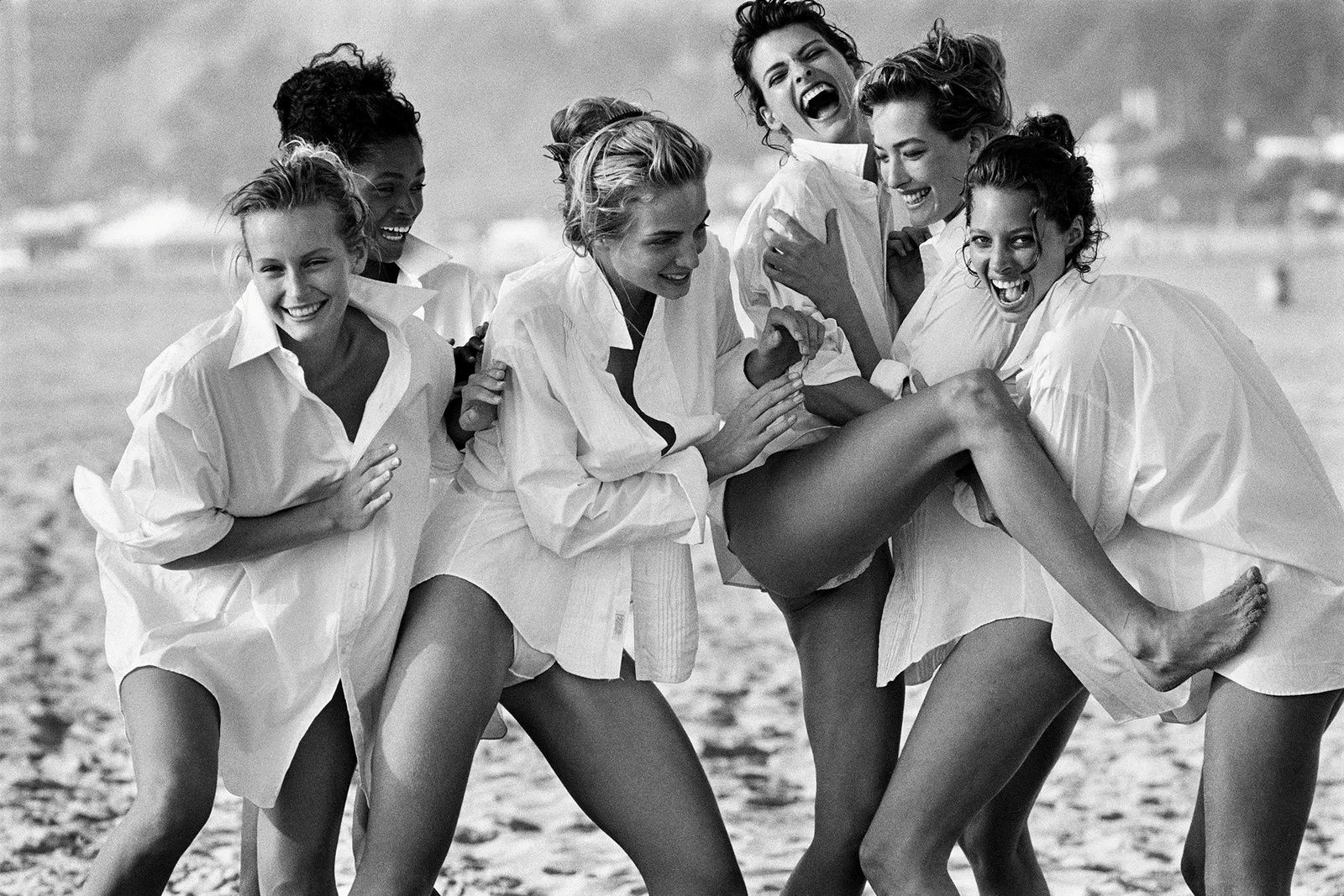
The Beginnings of Anti-Commercial Retouching and Anti-Staged Photography Title: White Shirts (Malibu) Photographer: Peter Lindbergh Year: 1988
I. Origins: A Visual Rebellion Against Aesthetic Homogenization
In today’s image ecosystem — dominated by algorithmic recommendations, filter presets, and assembly-line posing — “True to You Photography” has evolved from a commercial sub-style into a visual movement resisting aesthetic conformity.
The rise of this concept is, at its core, a systematic rebellion against three prevailing modes:
- Chromatic Distortion: The hegemony of filters represented by moody browns, teal-and-orange grading, and “cinematic” presets that strip out greens entirely. These flatten regional differences in weddings, portraits, and travel photos, rendering the true qualities of light, skin tone, and vegetation eerily uniform.
- Posing Orthodoxy: “Foolproof posing guides” propagated across platforms like Xiaohongshu and Pinterest — the triangular compositions, the over-the-shoulder glances, the deliberate hand-to-face obstructions — reduce the subject to a prop filling a predetermined frame.
- Digital Sanitation: High-frequency skin smoothing and bone-structure liquifying erase pores, fine lines, and irregular lighting, producing a deceptive “false physicality.”
“True to You” photography relocates the creative axis from “the photographer’s style template” back to “the subject’s physical and psychological reality.” It proposes photography as an Archival Witness — one whose value lies in being recognizable, ten or twenty years later, as an authentic document of that day’s light, fabric texture, skin state, and unrepeatable emotional slice.
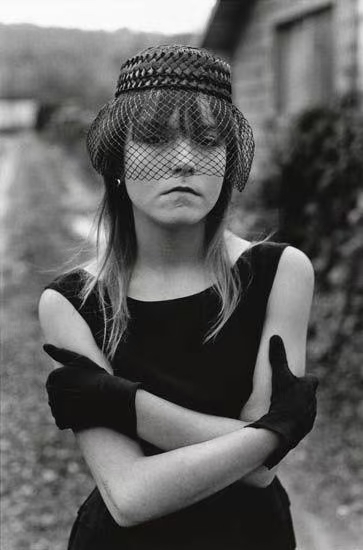
Rejecting Sociological Pity and Sensationalist Gaze Title: “Tiny in Her Halloween Costume” Photographer: Mary Ellen Mark Year / Series: 1983, from the documentary project and > photo book Streetwise
II. Technical Pillars: The Methodological Foundations of Authenticity
The visual depth of “True to You” photography does not rely on casual snapshots. Rather, it is built upon rigorous optical control, guided psychology, and color science.
1. Physical Layer: True-to-Color Calibration
- Restoring Environmental Hue: Abandon one-size-fits-all film presets. Use a ColorChecker for on-site color calibration. Preserve the pure white of a wedding dress, the saturated emerald of foliage, and the natural gradient of skylight — without disrupting the spectral character of the location.
- Tonal Continuity in Skin: Retain the subtle cheek flushing from emotional fluctuation, the micro-circulatory shifts between hot and cold — avoid the uniform “cool porcelain” or “honey brown” templates.
- Open Shadows and Natural Highlights: Unlike moody photography that intentionally crushes blacks for drama, “True to You” preserves shadow detail and accepts highlight bloom, simulating the light-ratio gradient perceived by the human eye on-site.
2. Interactive Layer: Prompt-based Dynamic Capture
Traditional posing requires the subject to be still and face the camera. The core of the anti-formula methodology is the introduction of situational prompts:
- Micro-movements in place of static frames: “Whisper a secret into their ear,” “Adjust your cuff while walking briskly down the corridor,” “Search for a specific landmark in the crowd.”
- The In-between Moments: The photographer no longer presses the shutter at the countdown of “3, 2, 1” — but focuses on the relaxed instant after the instruction ends, the micro-expression when a conversation is interrupted, the laughter of relief after awkwardness, or the brief silent gaze.
3. Optical Layer: Objective Neutrality of Focal Length
- Deverbalizing Perspective: Abandon the lazy compositions of f/1.2 ultra-wide apertures that violently blur backgrounds. Use moderate apertures (f/4 – f/8) to establish an organic relationship between subject and physical space (architectural texture, street signage, environmental clutter).
- Return to Human-Scale Focal Lengths: Favor the classic documentary focal lengths of 28mm, 35mm, and 50mm. The 28mm and 35mm force the photographer into the scene, offering a breathing, first-person perspective. The spatial compression and voyeuristic quality of 85mm+ telephotos are deliberately avoided.
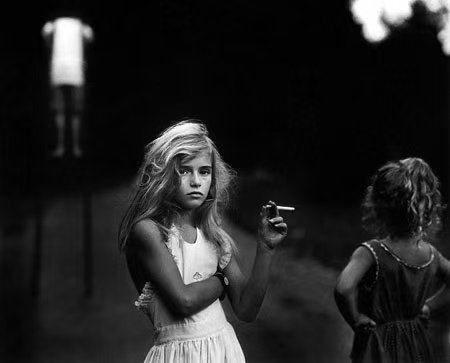
Deconstructing the Cloying Myths of Family and Childhood Title: Candy Cigarette Photographer: Sally Mann Year / Series: 1989, from the photo book Immediate Family
III. Anti-Formula Practice: Dismantling “Ritualized / Check-in” Stereotypes
Whether in crowded holiday public spaces, tourist check-in scenes, or traditional portrait commissions, the common disease of formulaic photography is manufacturing a false tranquility within chaos. Anti-formula practice adopts the opposite visual narrative logic:
| Dimension | Formulaic Photography | True to You Anti-Formula |
|---|---|---|
| Spatial Treatment | Avoids crowds and clutter; seeks crowd-free detail shots, or uses ultra-wide apertures to violently blur backgrounds | Transforms crowds into sociological context; uses the directional momentum of foot traffic to build visual layers |
| Subject’s Expression | Lip-biting, fake smiles, gazing into the void — formulaic emotional pantomime | Fatigue, distraction, laughter, packing bags, the raw expressions exchanged between two people meeting eyes |
| Compositional Logic | Strict adherence to symmetry or rule-of-thirds; pursues visual balance and “tidy output” | Introduces slight tilts, edge cropping, foreground occlusion — amplifying the uncertainty and caught-in-the-moment quality of documentary work |
| Use of Light | Strict frontal light, supplemental reflectors for even fill, elimination of facial light-shadow contrast | Accepts overhead light, side-back light, even complex artificial sources — preserving light’s physical sculpting of the body |
Scene Reconstruction Strategies
- Document the “Not-Yet-Ready” Reality: Tying shoelaces, adjusting backpack straps, waiting at traffic lights, looking down to check a map — these “waste frames” are precisely the authentic vehicles of personal habit.
- Introduce Off-Screen Connections: The lens is no longer confined to the subject as an isolated individual. Capture moments of interaction with the surrounding environment: the gaze toward a street performer, the hand-off with a vendor, the frame interrupted by a passing stranger’s glance.
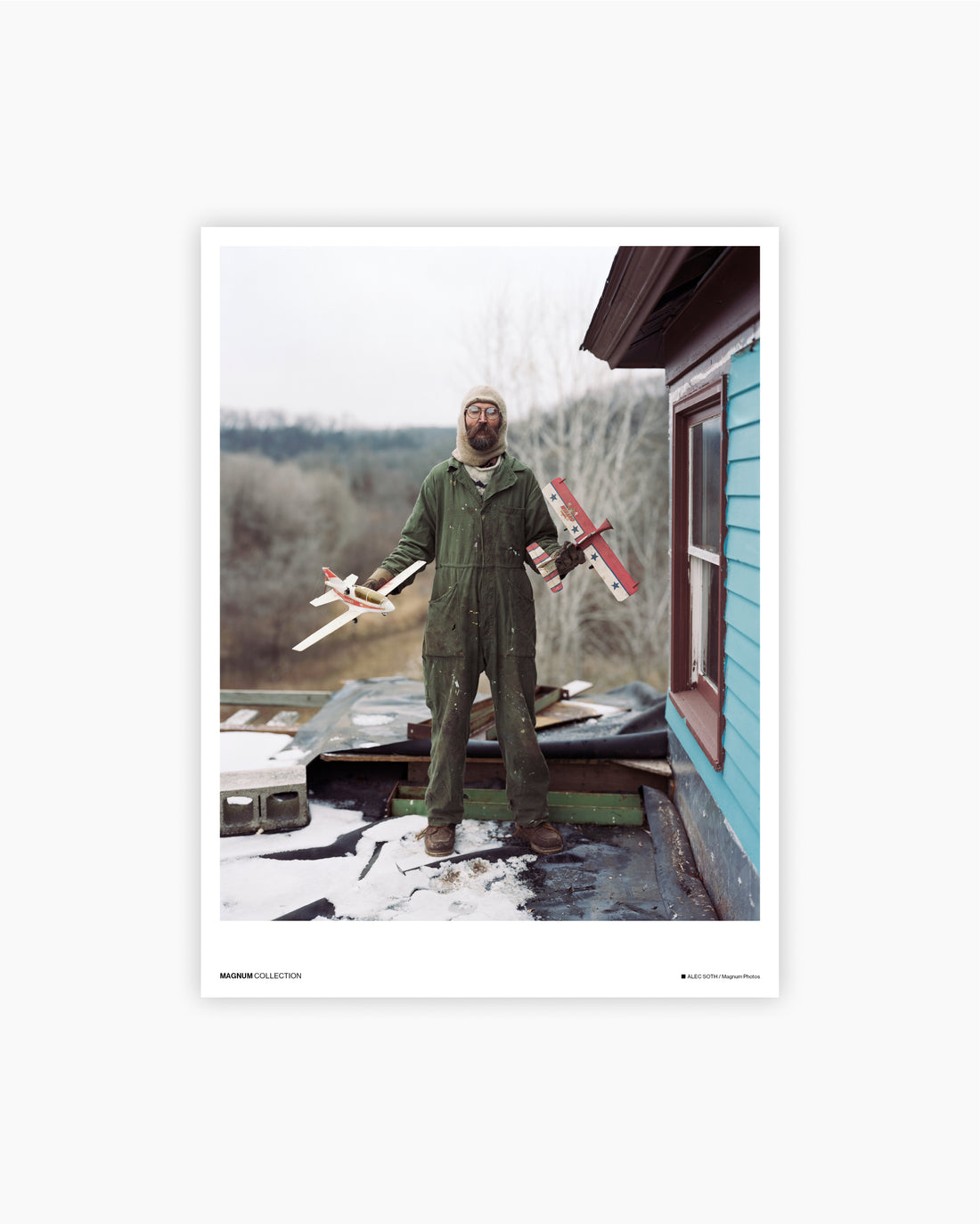
Large-Format Photography That Captures the Authenticity of Everyday Life Title: Charles, Vasa, Minnesota Photographer: Alec Soth Year / Series: 2002, from Sleeping by the Mississippi
IV. Visual Sociology: Why “Authenticity” Is Now a Form of Rebellion
In the era of generative AI and computational photography, the cost of producing a perfectly composed, softly lit, flawlessly skinned image has approached zero. Algorithms can effortlessly synthesize a standard beauty, a grand sunset, or a seamlessly integrated landscape.
Within such a media environment, “perfection” has been devalued into a synonym for mediocrity and cheapness, while “imperfection and authenticity” have become scarce aesthetic assets:
- Resistance to Digital Alienation: True-to-You imagery does not conceal imperfect lighting, the natural folds of the body, or the random incidents of the scene. Visually, it re-establishes the irreplaceability of “human existence in the physical world.”
- Resistance to Aesthetic Expiration: Photos dependent on trendy filters often reveal their dated vulgarity within two or three years (such as the early-2010s HDR epidemic and the 2020s yellowed film emulation wave). Images grounded in color fidelity and native emotion can traverse the cycles of algorithmic trend, transforming into archival slices carrying the meaning of family history and personal history.
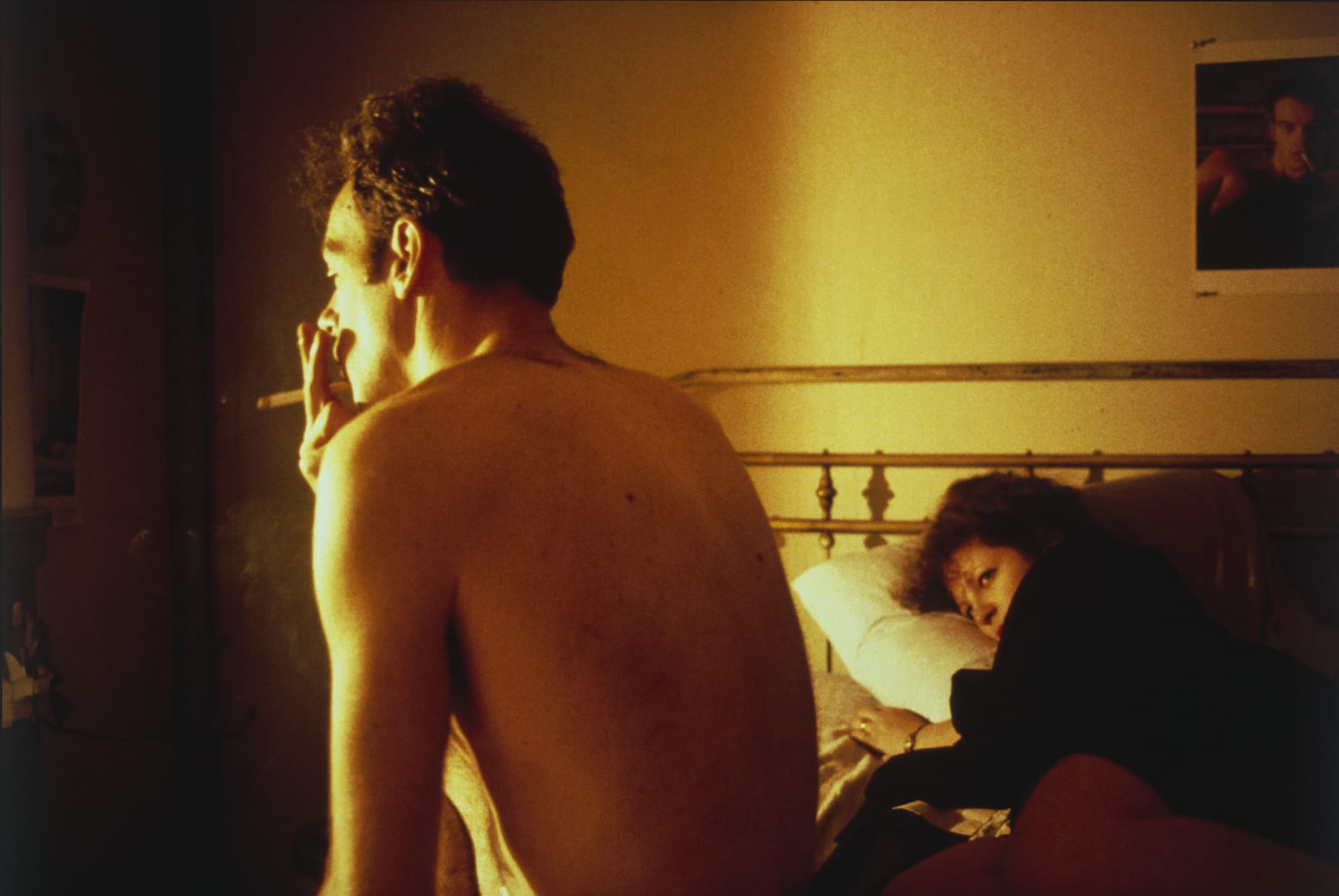
Authentic Intimacy Stripped of Staged Elements Title: Nan and Brian in Bed, New York City Photographer: Nan Goldin Year / Series: 1983, from The Ballad of Sexual Dependency
V. Application Scenarios in Depth
5.1 National Day Holiday Portrait Photography: Reconstructing Subjectivity in the Crowd
Scene Diagnosis
The visual pain point of National Day scenes is, in essence, “the subject being diluted by the environment”:
- Dense background foot traffic; background recognition approaches zero
- Light is mostly noon overhead or overcast flat light; faces lack three-dimensionality
- “Performance anxiety” in public spaces (fear of blocking others, fear of being watched) leads to stiff expressions
- Internet-famous check-in spots produce “copy-paste-style framing”
Spatial Strategy: Let the Crowd Become Narrative, Not Interference
- Abandon the “Cleared-Frame Obsession”: Don’t wait for the crowd to disperse. Instead, choose moments when the crowd’s directional momentum is clear (such as at exits, when movement flows in one direction), and treat the crowd as directional motion blur.
- Find the “Visual Anchor”: In grand scenes like Tiananmen, the Bund, or the Great Wall, position the subject with their back to the main landmark, facing the camera — the landmark exists as an atmospheric layer in the background, with the subject as the absolute foreground.
- Use Obstructions to Create Framing: Natural frames formed by street trees, flowerbeds, railings, bus stops can “enclose” the subject within the visual focus while masking over 60% of the cluttered background.
- Switch Between High and Low Angles: In deep-space scenes like the Forbidden City or the Great Wall, try extreme low-angle upward shots (person + sky) or high-angle downward shots (person + ground texture), completely avoiding the horizontal sightline crowded with people.
Lighting Strategy: Turning Overhead Light into a Sculptor
- Noon Overhead Light (10:00-15:00): Creates strong shadows on the brow bone and nose bridge. Have the subject tilt their head slightly downward or wear a brimmed hat; the shadow naturally falls into the eye sockets, forming a simplified “Rembrandt lighting.”
- Strong Backlight: Have the subject face away from the sun, use the phone’s “spot metering” on the face, and let the background slightly overexpose to create a “halo effect.”
- Architectural and Streetlamp Shadows: In the lantern and red-flag light of National Day evening, the shadows carry their own festive color temperature, avoiding the “false light” feel of on-camera flash.
Direction Strategy: The Antidote to Action and Emotion
-
Dynamic Task Method: Don’t give instructions like “look at the camera and smile” — give specific actions:
- “Hand me the national flag, then turn around and look into the distance”
- “Walk and tell me what you most want to eat today”
- “Crouch down to tie your shoes, then stand up and look back”
-
Emotional Activation Method:
- Have two people stand 5 meters apart, make eye contact, then walk away from each other and look back (capturing the natural smile of “long-awaited reunion”)
- Play a song from the subject’s phone and let them hum along as they walk (avoiding the awkwardness of posing)
Post-Processing Strategy
- Preserve True Color Temperature: Don’t forcefully apply “cinematic teal-and-orange.” Let the red of the national flag remain true red; let the sky retain its natural gradient.
- Noise Management Over Skin Smoothing: Preserving moderate noise (high ISO grain) in low light carries a far stronger sense of era than “one-tap skin smoothing.”
- Cropping as Narrative: Boldly crop crowded horizontal compositions into square or vertical formats, excising edge crowds from the frame.
5.2 Anti-Formula Client Work: From “Commodity Delivery” to “Personal Archive”
Core Position Shift
Traditional client work is the photographer’s portfolio; anti-formula client work is the subject’s family history.
| Dimension | Traditional Client Mindset | Anti-Formula Client Mindset |
|---|---|---|
| Client Expectation | “I want that Xiaohongshu aesthetic” | “I want something I can still look at in 20 years” |
| Shooting Focus | Perfect expressions + tidy composition | Relational interaction + on-site emotion |
| Selection Logic | Prioritize “looking slim and fair” | Prioritize “authentic scene” |
| Deliverables | 100 retouched images | 30 retouched images + 200 archival raw files |
| Retouching Intensity | Skin smoothing, liquifying, color grading — the trinity | Color fidelity + moderate light-shadow work |
Five Breakthrough Points for Anti-Formula Client Work
① Refuse the “Perfect Group Photo”
- Reduce the all-aligned group shot; shift shooting focus to two- or three-person interactive moments.
- For group shots, use the instruction “Look at each other and say the one thing you’re most grateful for,” freezing the moment mid-sentence.
② Introduce “Non-Wedding-Dress Elements”
- Encourage clients to bring 1-2 personal items with stories: an old stuffed animal, a pet, a father’s handwritten letter, a child’s drawing.
- Spend the first 30 minutes shooting in “non-scenic” locations like hotel rooms, cafés, or homes — the privacy of these spaces dramatically reduces the feel of posing.
③ Extend the “First 15 Minutes” of Shooting Time
- Clients are most nervous upon arrival. Don’t rush to start — walk and chat, drink water, review the flow. This “waste-frame time” often yields the most relaxed portraits.
④ Abandon the “Landmark Obsession”
- A Sanya wedding shoot doesn’t have to be in coconut groves or by the sea; a Shanghai shoot doesn’t have to be at the Bund.
- Choose locations along the client’s real-life trajectories: the restaurant of the first date, the park of the proposal, the balcony where the pet is kept — these scenes are themselves storytelling.
⑤ Expectation Management Through Pre-Production Communication
- Before the shoot, show clients a set of “anti-formula sample client images” and make it explicit: “We do not provide face-liquefying retouching; we preserve your real contours.”
- Shift the sales pitch from “we shoot beautifully” to “we record authentically”.
Translation Into the Business Layer
- Pricing Model Adjustment: Shift the unit price from “per-image pricing” to “per-hour pricing” (such as a 4-hour documentary follow-along), encouraging clients to choose “ample time without excessive posing.”
- Deliverable Diversification: Beyond retouched JPGs, include a black-and-white version (testing the original’s contour and light), a film-emulation version (satisfying the client’s “atmospheric” demand), and a curated straight-from-RAW selection (building the “archival feel”).
- Client Education Front-Loading: Publish “anti-formula client work” before-and-after comparisons and client testimonials on Xiaohongshu, WeChat Official Accounts, and other channels — redefining the standard of “beauty” in client work.
📌 Section Summary
Whether for National Day portraits or commercial client work, the underlying logic of the anti-formula approach is the same:
Restore photography from “performance” to “recording,” and restore the photographer from “director” to “witness.”
This is not merely an aesthetic choice — it is a form of respect for time, for the individual, and for the real world. In a today saturated with filters and algorithms, this “imperfect” authenticity is, precisely, the most precious shelf-life of an image.