Beijing Photography Week 2026
Photographer: Zhang Tianzuo
Walking into a photography exhibition is a deep conversation with the photographer, the curator, and even with yourself. Mastering a scientific approach to viewing exhibitions can significantly enhance your artistic experience and aesthetic gains.
0. Before You Read: How to Use This Guide
- First-time visitors: Read through in order, focusing on the “Why Visit” and “How to View” chapters.
- Experienced visitors: Go directly to Chapter 4 on judging professionalism and Chapter 5 on pricing logic for reference.
- Photography creators: Chapter 3 “Interpreting a Single Photograph” and Chapter 5 “Pricing Logic” are most valuable for creation and selling work.
Beijing Photography Week 2026
Photographer: Zhang Tianzuo
I. Why Visit a Photography Exhibition: The Irreplaceability of Physical Exhibitions
In the digital age, we browse thousands of photographs on screens every day. Yet a physical photography exhibition offers far more than the images themselves—it provides a multi-dimensional, immersive, mind-and-body experience with unique advantages that online viewing cannot match.
1. Real Physical Scale and Material Detail
- A display frame of a few inches on a screen cannot convey the true scale of a work—large-format pieces that fill an entire wall can envelop your field of vision, creating pressure and immersion; while small prints invite you to lean in for closer viewing, creating an intimate atmosphere.
- Screen brightness, contrast, and color temperature distort the true colors of a work. In the exhibition hall, you can directly perceive the texture of the photographic paper, the printing process (silver gelatin, platinum/palladium, or high-end inkjet printing), as well as subtle tonal transitions and shadow details.
2. “Slow Looking” Against Digital Fragmentation
- The rapid-scrolling habits trained by social media make us accustomed to spending only a dozen seconds in front of each work.
- Galleries and museums use controlled lighting, generous spacing, and a quiet atmosphere to make visitors “slow down.” When you take the time to pause and gaze at a work, you can enter a near-meditative state and discover metaphors, surface details, and structural nuances.
3. The Grand Narrative and Spatial Experience Constructed by Curation Photos online are often isolated single images, whereas a photography exhibition is a carefully choreographed visual argument.
- A spatial symphony: Through sequencing, lighting, wall color, and even spatial flow, the curator constructs a cinematic narrative arc.
- Dialogue between images: As you move through the space, you discover visual rhymes or contrasts between adjacent photographs. This dialogue between images requires the viewer to actively “connect the dots” and fill in the gaps, thereby generating far richer meaning, memory, and stories than any single photograph could.
4. Irreplaceable Social Dimensions and Collective Resonance A physical gallery provides a shared cultural space that is extremely difficult to replicate in the digital world.
- Collision of ideas: At the exhibition, you may overhear a stranger’s insight that instantly changes your view of a work; you can also converse directly with friends, docents, or even the artist.
- Collective empathy: Certain photography exhibitions with contemporary or social themes evoke strong shared memories among viewers. People point, discuss, laugh, and even cry in front of the works. This “collective empathy” and community connection, transcending individual differences, makes the exhibition a vibrant, living place.
5. A Superb Visual Classroom and Treasury of Inspiration For photographers, art creators, or anyone wanting to improve their aesthetic sense, exhibitions are the best “visual classrooms.”
- You can observe firsthand how masters compose, how they use light to express emotion, and how they choose framing and mounting to suit the theme of a work.
- This in-person inspiration can directly feed back into your own photographic practice and even overturn the way you see the everyday world.
In short, scrolling on a phone is merely “consuming” images, while in a photography exhibition, you are engaged in a deep dialogue with the artwork, the space, other people, and your own inner self. The fundamental meaning of a photography exhibition is that it transforms flat, momentary images into a three-dimensional, enduring, and soul-stirring living experience.
Beijing Photography Week 2026
Photographer: Zhang Tianzuo
II. How to Systematically View a Photography Exhibition
1. Preparation Before the Visit
- Do a little homework: Learn about the exhibition theme, the photographer’s background, and the creative context in advance—it helps you better understand the work.
- Dress comfortably: Viewing requires long periods of standing and walking, so a pair of comfortable shoes is essential.
- Travel light: Avoid carrying a large backpack; store bulky items in lockers to avoid bumping into works or other people in crowded spaces.
2. Overall Orientation and Route Planning
- Quick scan (menu-reading strategy): After entering the hall, don’t rush to examine every work in order. Spend 10 to 15 minutes walking around and sensing the overall atmosphere.
- Identify points of attraction: During the quick scan, notice which works or spaces naturally draw your eye.
- Observe the curator’s “hidden script”: The logic of the arrangement (chronological or thematic), lighting design, wall color, work size, and framing are all means by which the curator guides the audience’s emotions and narrative.
3. Slow Looking
- Select works and linger: Return to the works that first attracted you and spend 5 to 15 minutes or even longer gazing at them.
- Observe first, read labels later: Labels can restrict your thinking before you form an independent impression. First ask yourself: What did I notice first? How does my eye move through the frame? How does this work make me feel (calm, tense, sad…)?
- Notice details and negative space: Is the light harsh or soft? Is the background sharp or blurred? What perspective did the photographer choose? And what is missing from the frame?
4. Contextualizing and Deep Analysis
- Read labels and wall texts: Observe whether the curator’s explanation confirms your own thoughts or offers a new perspective.
- Consider the photographer’s intent: Is the work simply recording a scene, or is it metaphorical? What emotion, social message, or historical information is the photographer trying to convey?
- Accept multiple interpretations: Art has no single correct answer. Confusion and dislike are part of the viewing experience. If in doubt, ask the gallery staff.
5. Exhibition Etiquette
- Keep a safe distance and never touch: Even clean hands leave oils that damage works. Keep enough distance that you would not touch the artwork even if you stumbled.
- Respect others’ space: Don’t monopolize the best viewing position in front of popular works; wait or return later when crowded.
- Control volume and phone: Silence your phone and maintain the quiet atmosphere of the gallery.
- Follow photography rules: First confirm whether photography is allowed. If it is, never use flash, as it can damage works. Remember that viewing the original with your own eyes is often more valuable than viewing it through a phone screen.
6. After the Visit: Reflection
- Record and discuss: Bring a small notebook to jot down artists you liked or sparks of inspiration. Share your thoughts with companions—different perspectives often focus on completely different things.
- Let art ask questions: The best art does not give you answers but sends you away with questions. Reflecting on which work lingers in your mind will deepen your understanding of photography and yourself.
💡 Practical Advice: Create Your “Post-Exhibition Checklist” After the visit, try recording the following in your notebook to consolidate the experience:
- Which work was most unforgettable? Why?
- Which work did you interpret completely differently from your companion?
- Did this exhibition change how you view a certain subject?
- Which photographer or creative direction do you want to research further?
Beijing Photography Week 2026
Photographer: Zhang Tianzuo
III. How to Deeply Interpret a Single Photograph
In a photography exhibition, when facing a specific work, we must not only “see” but also “look,” and ultimately reach the level of “reading” and understanding the image. A photograph is both a record of reality and a visual language through which the photographer expresses ideas, metaphors, and emotions.
1. Trust Your Intuition and First Impressions
- Feel the emotion: First attend to your instinctive reaction—calm, tension, sadness, or curiosity? Don’t rush to find the “correct answer”; your own emotional response is a crucial part of the viewing experience.
- Trace the path of your gaze: Which part of the image does your eye go to first? The brightest area, the strongest contrast, or a face? Then, how does your gaze travel through the frame? A good work naturally guides the eye to flow smoothly or linger at certain points.
2. Slow Looking and Formal Analysis
Spending 3 to 5 minutes or more gazing at a single work reveals many details initially overlooked. You can begin with these formal elements:
- Light and shadow: Natural or artificial light? Hard light brings drama and power, while soft light creates intimacy and emotional atmosphere.
- Composition and framing: Does the photographer use the rule of thirds, leading lines, or frame-within-a-frame? More importantly, consider: What is kept inside the frame, and what is excluded? The viewfinder is a precise cropping tool; the photographer builds narrative through selective presentation.
- Focus and depth of field: Where is it sharp, and where is it blurred? A blurred background separates the subject from its environment; a sharp background makes the environment part of the narrative.
- Perspective and camera position: Looking down (smallness, vulnerability), looking up (power, authority), or eye level (equal dialogue)? These choices all affect the viewer’s feelings.
3. Narrative and Metaphor
A photograph’s “what it shows” and “what it is about” are two different things.
- Explore narrative and metaphor: What is the subject doing? Are there cues about time, symbols, or metaphors in the frame? A street portrait may not merely record one person but explore urban loneliness or human resilience.
- Incorporate background information: After forming your own observations, read the wall label or catalog. Learning about the creative intent, era, and historical context may confirm your thoughts—or completely overturn them.
4. Look Beyond the Single Image: Sequences and Series
In an exhibition, works rarely exist in isolation. Curators and photographers build meaning through sequencing.
- Find visual rhymes: Are there repeated visual elements—posture, color, shape, or texture—between adjacent photographs?
- Feel rhythm and coherence: A photograph’s value changes because of what comes before and after it. Consider: Why did the curator place these photos side by side? Chronologically, thematically, or by emotional progression? The interplay between images often conveys a larger narrative than any single image.
Beijing Photography Week 2026
Photographer: Zhang Tianzuo
IV. How to Judge the Professionalism of a Photography Exhibition
Judging an exhibition’s professionalism should not stop at “whether the photos look good”; it requires a comprehensive assessment of work quality, curatorial approach, spatial design, and visitor experience.
1. Work Quality and Physical Presentation
- Technical execution: Is focus, exposure, and color balance handled well? Are details sharp, with no pixelation or obvious color shifts? Professional exhibitions carefully select paper texture and printing processes to ensure deep blacks, bright whites, and long-term preservation.
- Framing and breathing room: Does the framing style suit the work? Professional installation typically leaves at least 30 cm of blank space around each work, giving the artwork room to “breathe.”
2. Curatorial Concept and Sequencing
- Thematic coherence: Is the exhibition’s overall concept clear? Does each work stay tightly on theme and together build a cohesive narrative?
- The art of sequencing: A key mark of professional curation is control over sequencing—it is not simply chronological display but the construction of visual rhymes, narrative rhythm, and meaning. In a well-planned sequence, the first photograph sets the tone, and the last leaves a lingering resonance.
3. Exhibition Space and Environmental Design The physical environment directly affects how viewers perceive the art:
- Lighting and glare control: Lighting must not only properly illuminate the work and set the mood but also be carefully tuned to eliminate reflections and glare, ensuring the viewer’s eye is completely undisturbed and focused on the image itself.
- Traffic flow: Is the exhibition space used effectively? Is the viewing route smooth, naturally guiding viewers from one work to the next, with visual anchors placed at appropriate points?
4. Quality of Wall Labels and Texts Wall labels are not merely supplementary—they are a litmus test of curatorial professionalism:
- The “single insight” principle and brevity: Excellent explanatory texts are usually concise (about 50–100 words). The best labels select just one core insight that viewers cannot see with their own eyes (such as a special creative background or material) and state it clearly, rather than cramming the artist’s entire career into a paragraph.
- Clear language, no obscurantist jargon: Professional texts are prepared for ordinary visitors standing in front of the work, so they use short sentences and simple syntax, avoiding piling up overly academic terms like “gaze” or “liminal space.”
- Never impose emotion: A professional label never directly tells the audience that “this work makes one feel a deep sense of loss”—either the work evokes the emotion or it doesn’t. The label’s role is to provide contextual information that enables that emotional experience, not to dictate what the viewer should feel.
5. Overall Visitor Experience and Engagement
- Avoid monotony and spark resonance: Through diverse presentation (different sizes, multimedia elements), a professional exhibition effectively prevents visual fatigue while successfully evoking joy, nostalgia, contemplation, and other emotional responses, encouraging meaningful dialogue among visitors.
- Authenticity and supporting facilities: Pre-exhibition publicity must truthfully reflect the content. Misleading promotion (e.g., using the name of a famous artist while displaying only a few original works) creates a terrible experience. Additionally, whether the venue offers comfortable rest areas, discussion spaces, Wi-Fi, or quality art merchandise is part of its service professionalism.
Beijing Photography Week 2026
Photographer: Zhang Tianzuo
V. The Pricing Logic of Photography Exhibition Works
Photographic works circulate in the market as “art collectibles,” and their pricing has no absolute formula; it is determined by supply and demand, the photographer’s background, and the physical attributes of the print.
1. The Photographer’s Reputation and Career Stage
- Market standing: Works by photographers represented by well-known galleries, collected by museums, or favored by professional critics generally have a stronger market foundation and appreciation potential.
- Career maturity: Works by masters (such as Ansel Adams) or established photographers command high prices and have more predictable investment value; works by emerging photographers are priced lower, offering collectors a lower entry threshold and potential appreciation.
2. Editions and Scarcity Unlike infinitely reproducible digital images, art photography creates scarcity through “editions”: limited editions typically range from 10 to 250, and the fewer the prints, the more expensive each one is.
- Tiered pricing: Early-sold numbers (such as 1/10) are priced lower; as the remaining prints decrease, subsequent numbers gradually become more expensive.
- Among different size versions of the same photograph, the larger the size, the smaller the print run, and the higher the price.
3. Print Timing: Vintage vs. Modern/Later Prints The gap between when a photograph was taken and when it was printed has a huge impact on price:
- Vintage prints: Prints made by the photographer at (or very close to) the same period as the photograph was taken. These works best reflect the artist’s original creative intent and the technical limitations of the era, and they are scarce in number, so they typically command a very high premium and are the most valuable collectibles.
- Later prints and posthumous prints: Works printed later in the photographer’s life (later prints) or authorized prints made by a foundation or family after the photographer’s death (posthumous prints). Although they may be equally good or even better technically and qualitatively, their market pricing is usually lower than vintage prints.
4. Craftsmanship, Materials, and Presentation Quality
- Materials and process: The base medium and development process used (such as gelatin silver, platinum/palladium, chromogenic color, or high-end archival pigment printing) affect the price. Certain historical processes or extremely high-quality papers can guarantee that the work will not fade for decades, which directly relates to its long-term value.
- Framing and presentation: In an exhibition, gallery-grade professional framing (using UV-protective glass, acid-free matting, or special floating mount techniques) enhances the work’s premium feel. This high-quality physical presentation is also a reasonable basis for supporting a high price tag.
5. Condition and Provenance
- Condition: Photographs are very sensitive to light, humidity, and temperature. Signs of aging such as fading, scratches, creases, or yellowing on the surface directly affect actual value.
- Provenance: The ownership history of a work is crucial. If a work has a clear provenance (for example, it once belonged to a well-known collector or prestigious gallery, or comes with the artist’s own certificate of authenticity, signature, etc.), this verified authenticity greatly increases buyer confidence and supports higher pricing.
6. Market Supply, Demand, and Transaction History Ultimately, pricing also references recent market data. Galleries and art dealers consult recent private sale or auction prices for similar works by the same photographer, and combine that with current market heat and demand to set a reasonable market-acceptable price.
Beijing Photography Week 2026
Photographer: Zhang Tianzuo
VI. Ticket Price Reasonableness and the “Attention–Value Model”
1. How Are Ticket Prices Determined?
Photography exhibitions are either free or paid. Paid exhibitions usually use ticket revenue to cover—or even profit beyond—the underlying costs, which mainly include:
| Cost Type | Details |
|---|---|
| Venue and presentation costs | Venue rental, high-quality fine-art inkjet printing, professional framing, and set decoration |
| Marketing and operating costs | Promotional materials, website operation, social media management, and opening reception |
| Artist-institution responsibilities | In some cases the artist bears all production costs or even venue rent; galleries or museums may also cover these costs and provide loan fees or sponsorship |
Commercial gallery exhibitions whose main purpose is to “sell works” are often free to the public; special exhibitions with highly narrative and educational significance curated by large museums or independent art institutions typically charge admission to sustain operations.
2. How to Judge Whether a Ticket Price Is Reasonable?—The “Attention–Value Model”
Judging the reasonableness of a ticket price cannot rely only on the face value; we should apply the behavioral economics concept of “value ratio.” According to Stephen Bitgood’s “Attention–Value Model”:
$$\text{Value} = \frac{\text{Benefit}}{\text{Cost}}$$
(1) Redefining the “cost of visiting”
- The cost invested by a visitor is multi-dimensional: it includes not only money (ticket price) but also time and mental and physical effort.
- If the ticket is cheap but the installation is chaotic and the labels are obscure, causing you to spend great effort yet gain nothing, then the “comprehensive cost” is still very high and the value ratio is extremely low.
(2) Evaluating the “benefit of visiting”
- A reasonable ticket price should provide commensurate benefit: satisfaction, emotional resonance, aesthetic improvement, as well as high-value exhibits carefully selected by the curator and thought-provoking thematic design.
- If the curator provides high-value content while reducing visitors’ mental and physical costs through excellent flow design and concise wall texts, the value ratio is extremely high.
3. Beware the “Psychological Trap” of High Ticket Prices High ticket prices often distort our viewing experience. When a museum or gallery charges a relatively high admission fee (for example, $30), visitors easily fall into a compensatory mindset: “I paid quite a bit; I’d better see everything here.” This desire to “get my money’s worth” is the number one cause of “museum fatigue.” It forces you to keep viewing even when your energy is exhausted, so in the end you not only fail to absorb the nourishment of the art but actually make the ticket feel “not worth it.”
Practical advice: How can you make a ticket price more “reasonable”? If you like a particular paid museum or gallery, sources suggest considering an annual membership. The biggest benefit is that it “unbundles” the high single-visit ticket cost. When you no longer feel you must “get your money’s worth” in one visit, you can adopt a “little and often” viewing strategy (for example, stopping in for 10 minutes on the way home from work to focus on just a few works). By reducing the physical and psychological pressure of each visit (lowering cost), you instead gain higher-quality artistic enjoyment (raising benefit), making the expenditure well worth it.
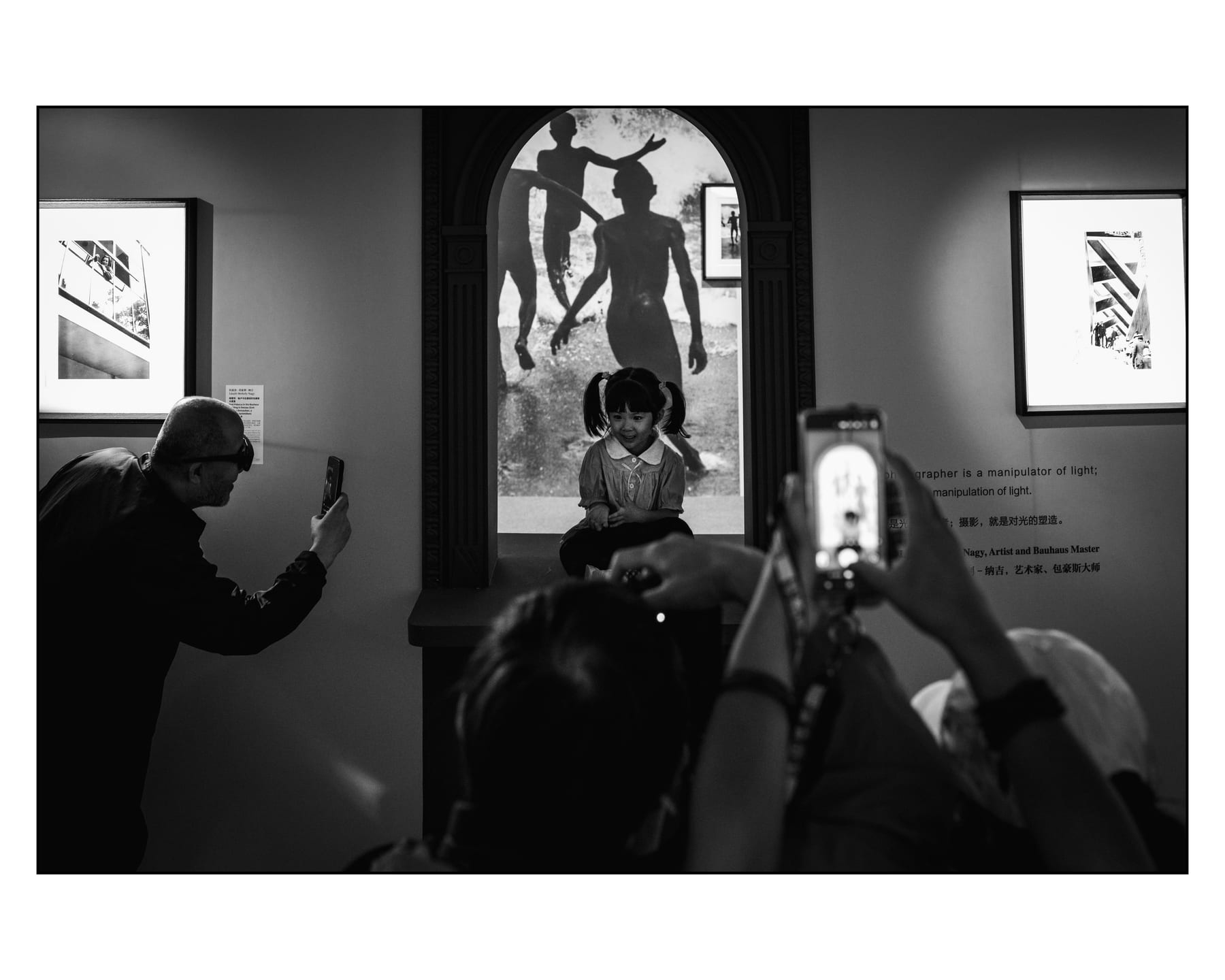
Beijing Photography Week 2026
Photographer: Zhang Tianzuo