Series: Painful Hug
Photographer: Maryam Saeedpoor
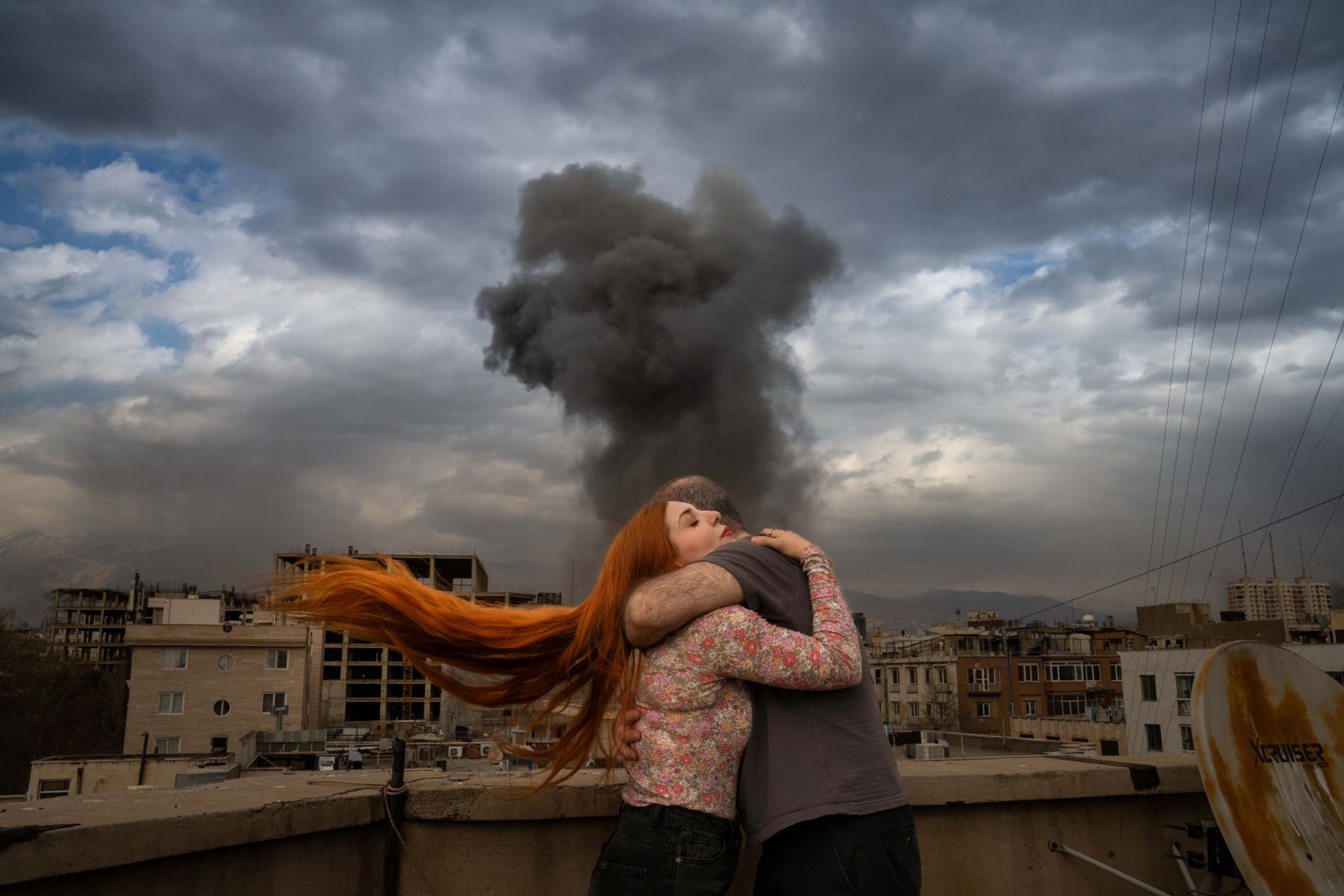
According to the official archives of the International Photography Awards (IPA) and international art documentation, the recipient of the IPA “Fine Art Photographer of the Year” award is Maryam Saeedpoor, an Iranian contemporary conceptual and documentary photographer. She earned this distinction with her series Painful hug, created during the bombardment of Tehran. Deeply rooted in the storm center of contemporary Middle Eastern geopolitics and social transformation, Saeedpoor’s practice employs theatrical staging, the politics of the female body, and highly restrained symbolic metaphors, constructing a visual paradigm that unites the sharp edge of political critique with humanitarian warmth.
Series: Painful Hug
Photographer: Maryam Saeedpoor
I. Artistic Biography and Creative Origins: Between Documentary and Conceptual Practice
Born in 1984 in Tehran, the capital of Iran, Maryam Saeedpoor spent her childhood and formative years amidst the eight-year Iran–Iraq War. Raised in a traditional and religiously devout family environment, she developed from an early age a profound embodied awareness of discipline, constraint, and individual resistance.
Saeedpoor’s early artistic exploration began with drawing and painting. At sixteen, she was selected for a youth art festival, and at twenty-one, she participated in a group exhibition of figurative and hyperrealist painting, demonstrating a keen command of visual form and chromatic composition. Subsequently, she received systematic higher education in photography in Tehran, majoring in photojournalism and fine art photography, while working actively as a press photographer on the front lines of news. During this period, she studied under the internationally celebrated Iranian war photographer Majid Saeedi. Saeedi’s rigorous editorial standards and sustained concern for human conditions on the frontlines of the Afghan and Iraqi conflicts laid the foundation for Saeedpoor’s disciplined documentary observational vision.
However, as Iran’s domestic media environment continued to tighten and restrictions on independent journalists grew increasingly severe, traditional documentary photojournalism became progressively inadequate for expressing complex social emotions and individual trauma. Saeedpoor thus gradually broke free from the singular framework of objective reportage, turning toward fine art photography that integrates theatrical composition, symbolic imagery, and conceptual intervention, exploring more resilient spaces for autonomous expression under the shadow of censorship.
Series: Painful Hug
Photographer: Maryam Saeedpoor
II. In-Depth Analysis of the Award-Winning Work Painful hug
(1) Genesis and Spatial Metaphor under Extreme Circumstances
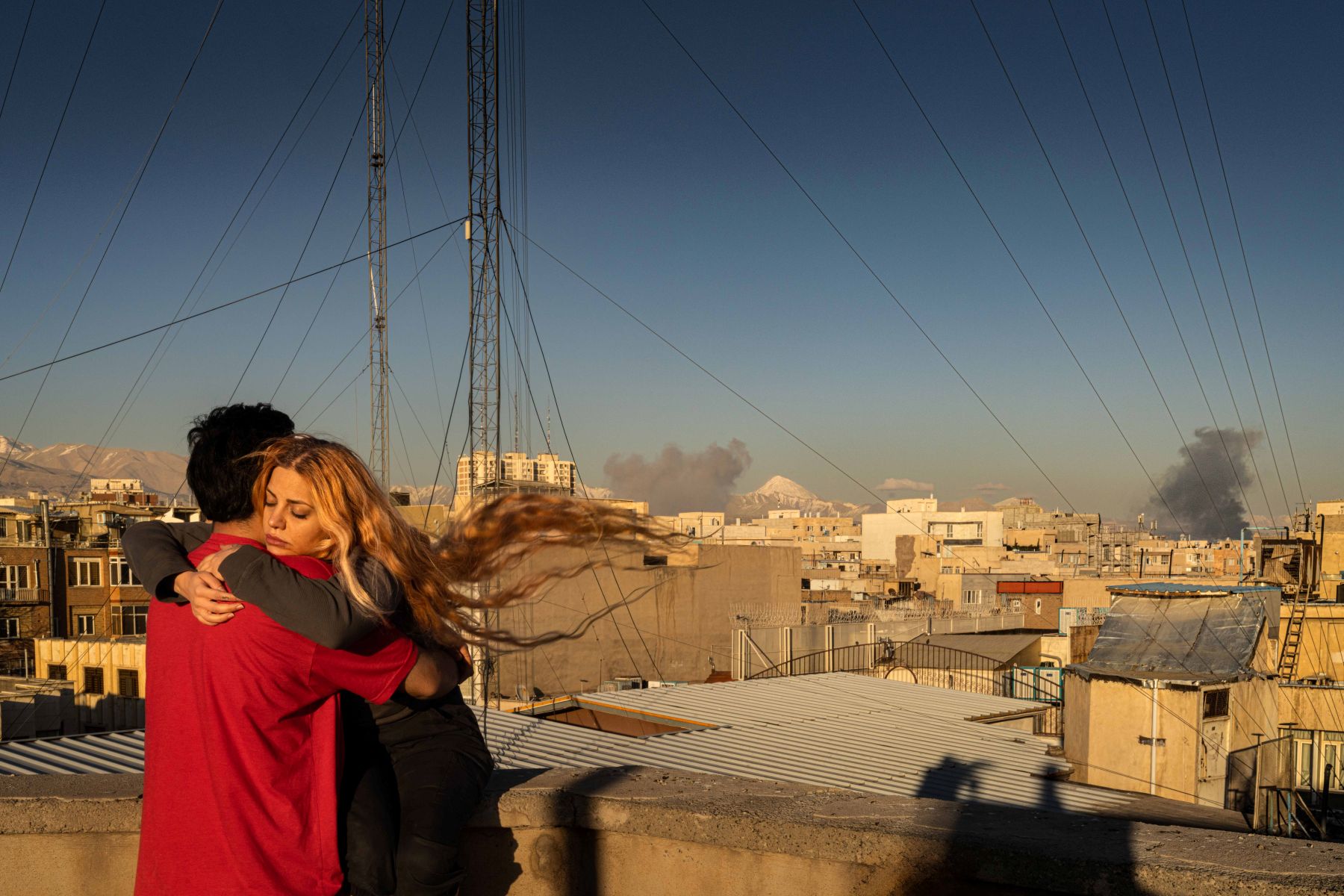
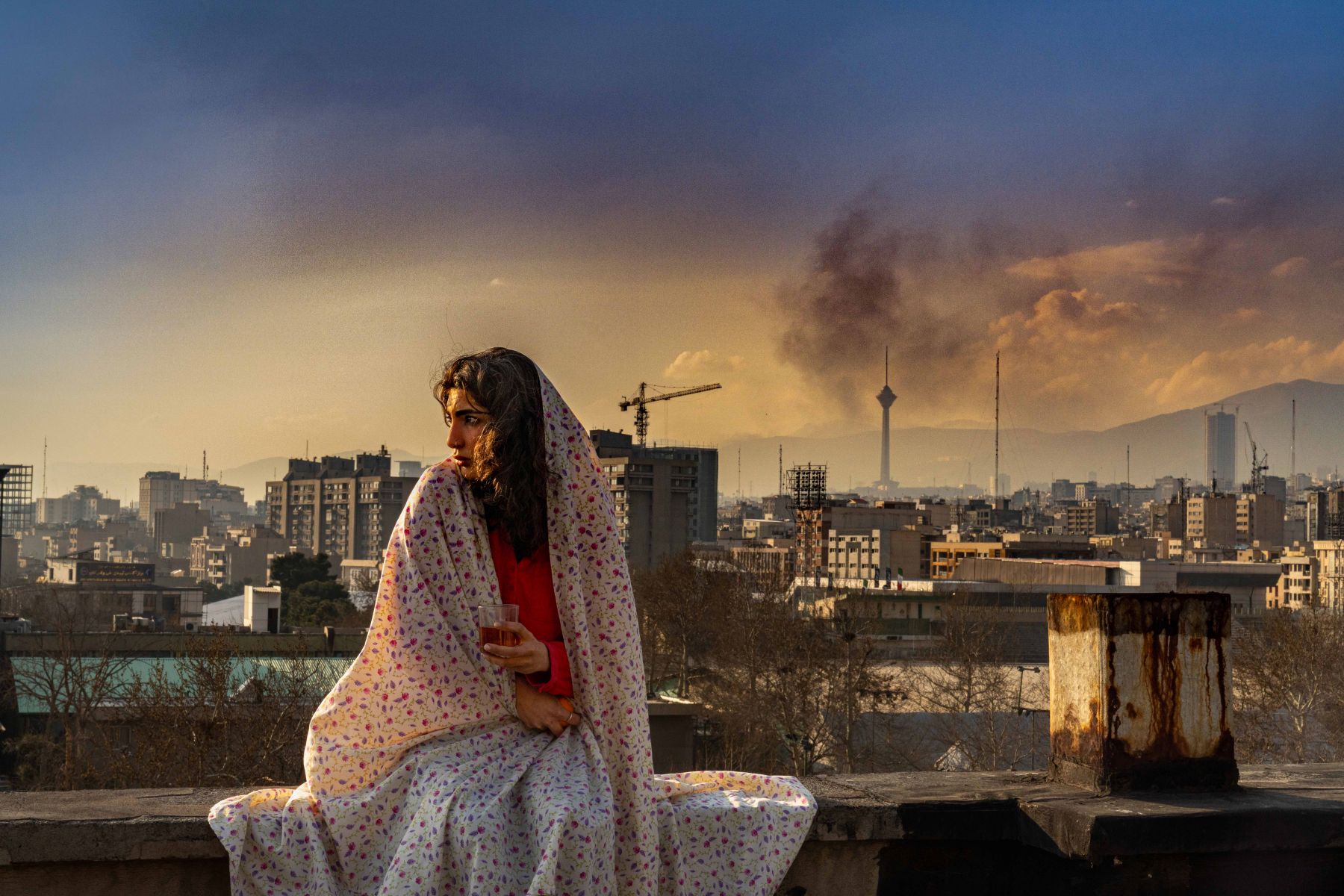
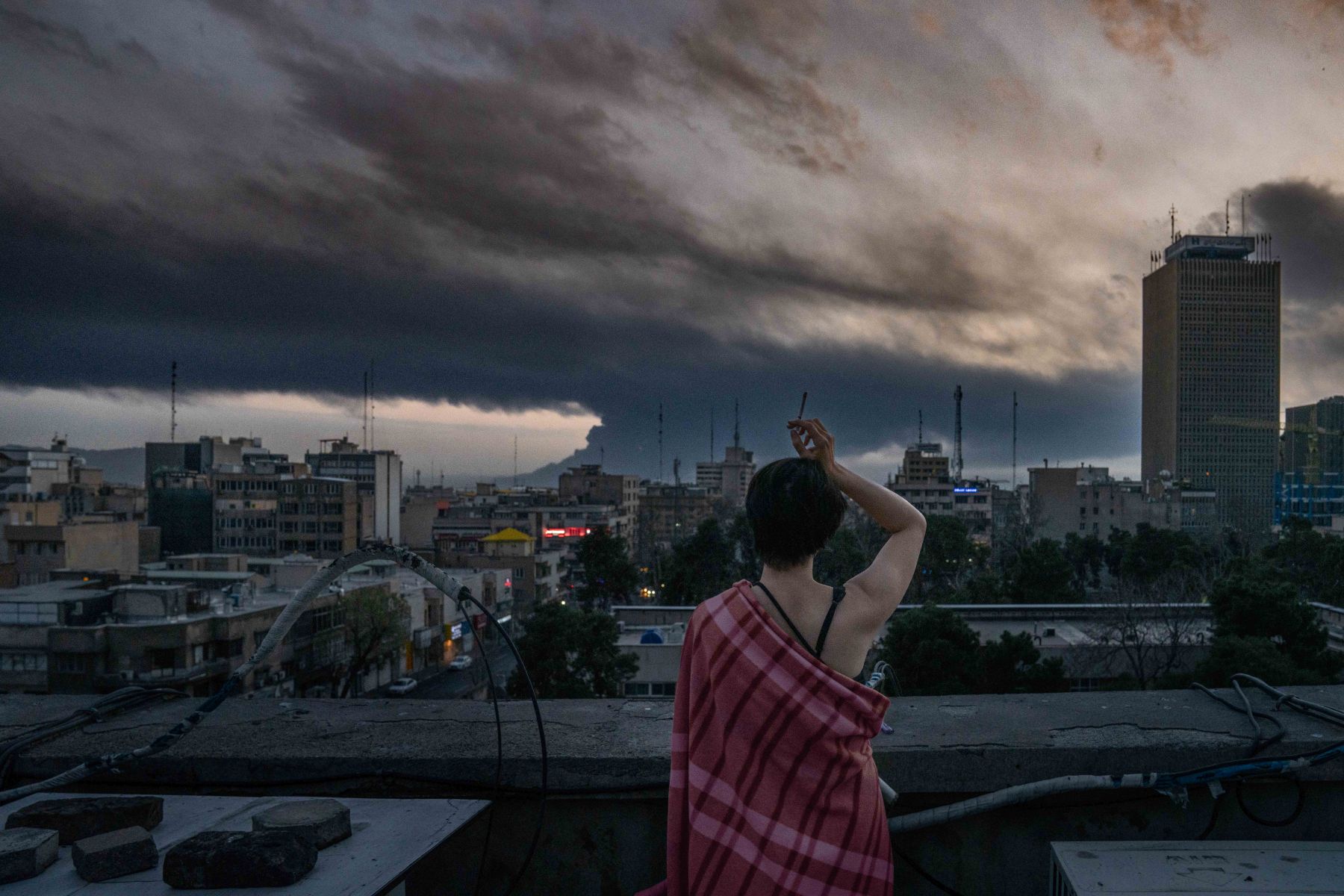
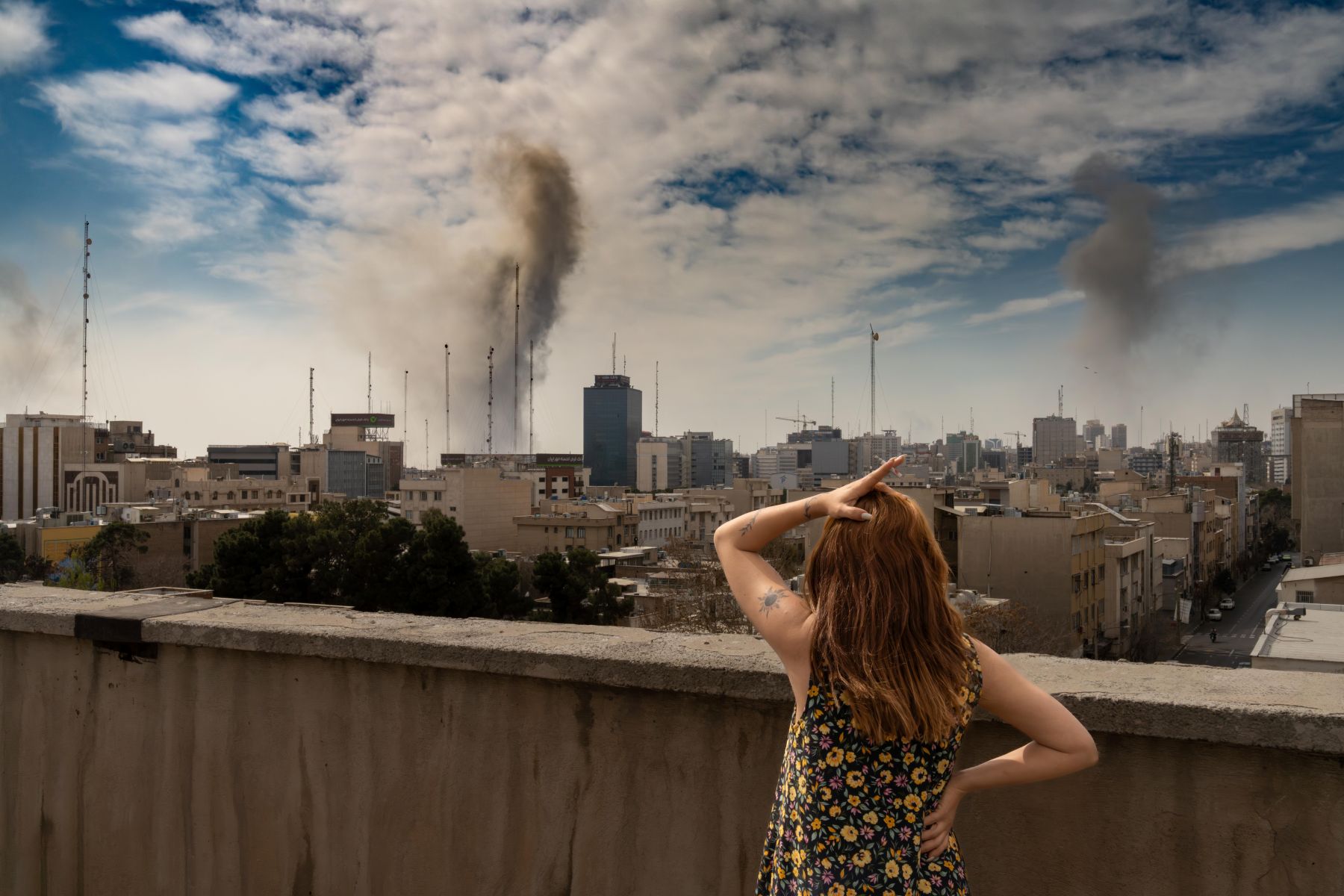
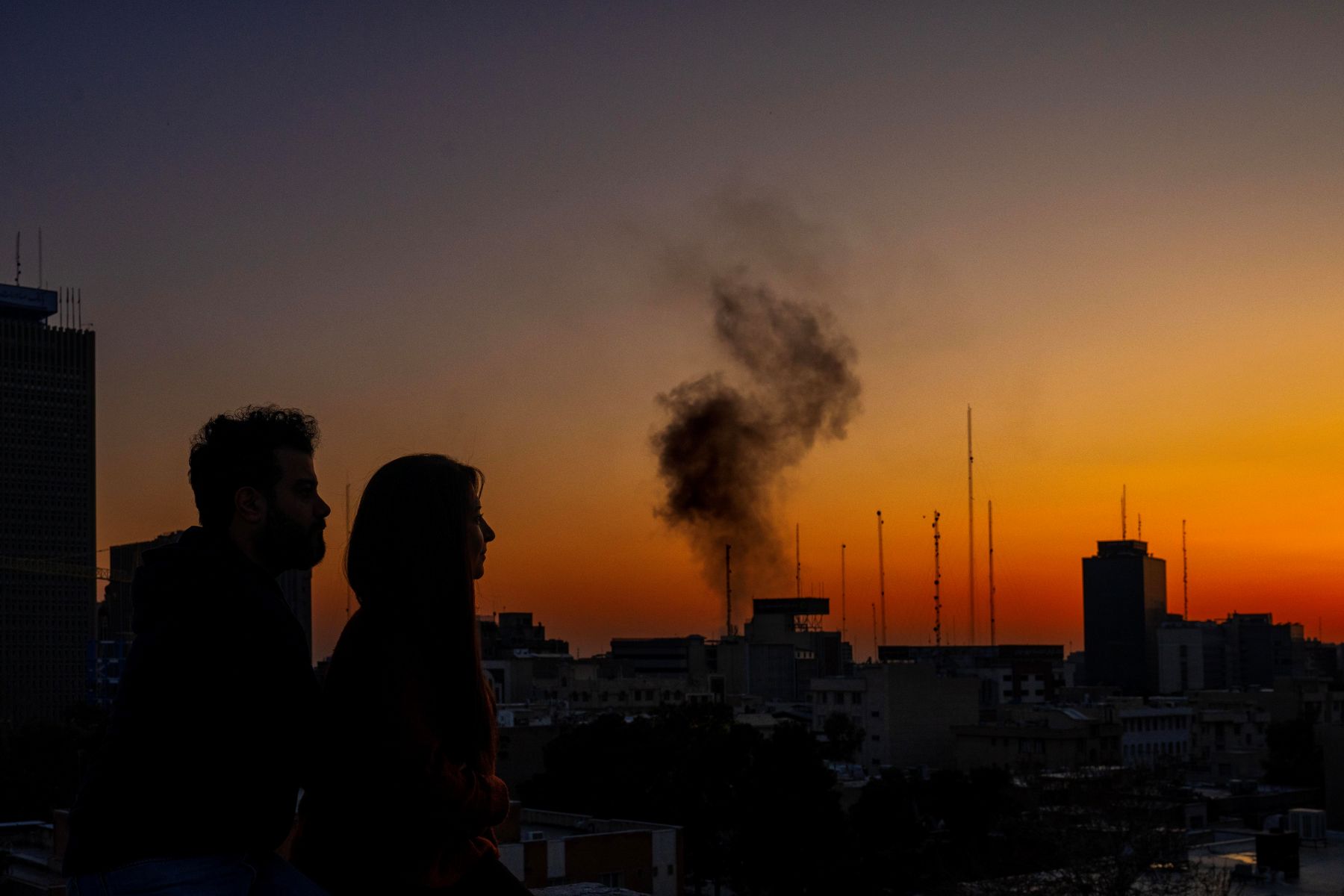
The Painful hug series was produced during a wartime state in which Tehran was subjected to intensive missile strikes and aerial bombardment. While most residents sought shelter or evacuation, Saeedpoor chose to remain on the rooftop of her residence in central Tehran, facing the burning city with her full-frame camera.
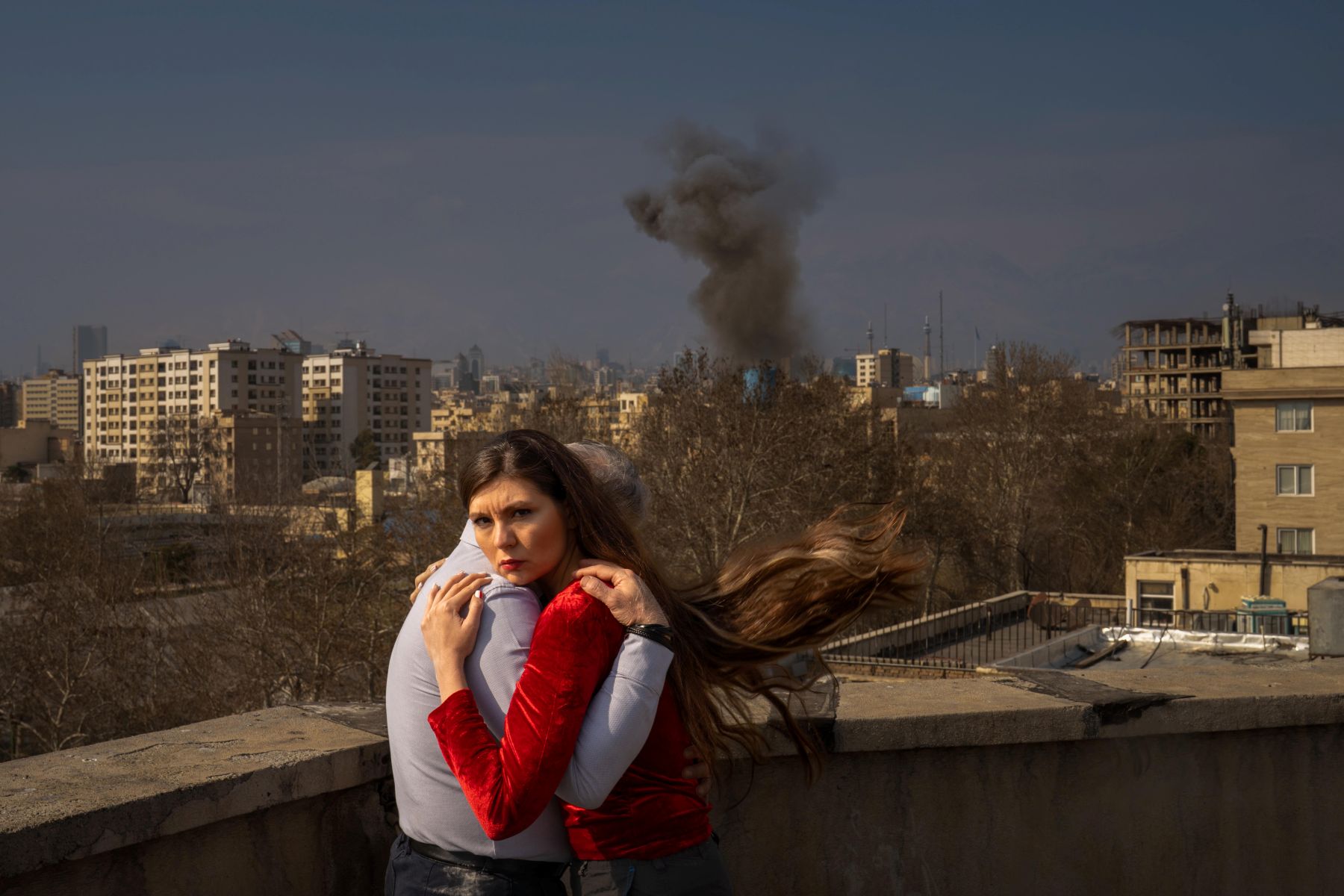
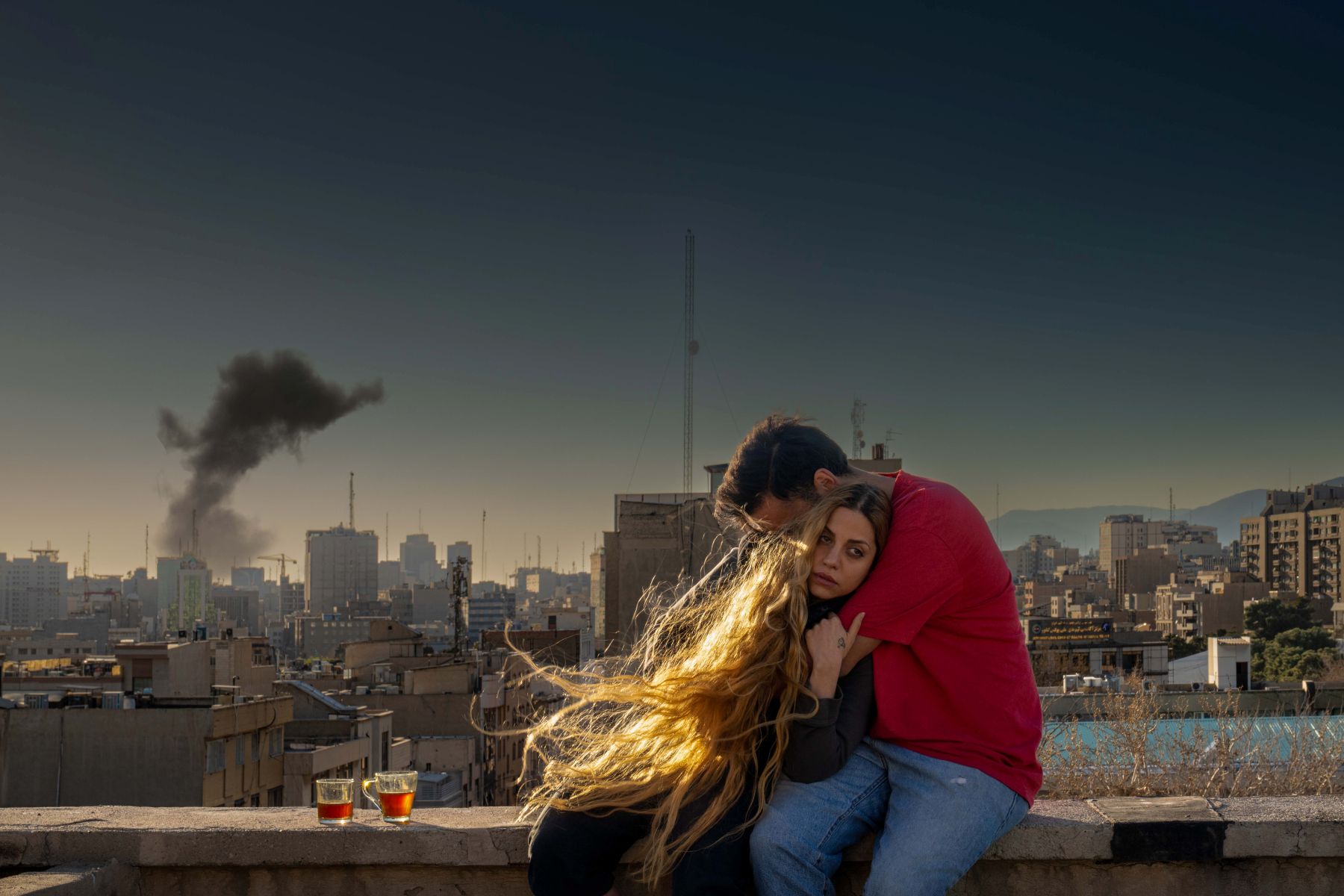
The rooftop carries multiple cultural connotations in Iranian urban architecture: it is both an unshielded zone of danger exposed to the flames of airstrikes and the surveillance of the state, and a relatively free space detached from the strict moral policing of the domestic interior and the street. In moments of air raid sirens and rising smoke, Saeedpoor invited female volunteers and friends onto the rooftop to embrace, kiss, and loosen their hair before the trembling cityscape. This staging of intimate emotional rituals atop a public catastrophe transforms the rooftop into a spiritual sanctuary resisting the intrusion of violence.
(2) Visual Articulation of Anti-War Philosophy and Human Warmth
Saeedpoor thoroughly subverts the disaster semiotics of traditional war photography—centered on crumbling ruins, charred bodies, and scenes of bloodshed—and instead counters the cold forces of destruction with a profoundly tense human tenderness. In her own words, she articulates a pure anti-war and pro-peace appeal: standing on the rooftop, she seeks to preserve Tehran from harm in memory and to call upon global decision-makers to replace conflict with embrace.
IPA jury member Patti O’Halloran praised the work for precisely capturing the tension among “pain, comfort, and fear”: set against the smoke and fire of a city under attack in the distance, the women’s gestures of loosening their hair and embracing freely on the rooftop release a heartbreaking power and a stunning resilience of life. The fundamental drive behind Saeedpoor’s pressing of the shutter in the face of bombardment is the抢救性 documentation of those sincere embraces and kisses in the firestorm that may become “the last time,” thereby establishing the ethical value of the image as testimony to individual survival.
Series: Painful Hug
Photographer: Maryam Saeedpoor
III. Core Creative Trajectory and Matrix of Representative Works
Saeedpoor’s artistic practice has long focused on Middle Eastern female identity, the disciplining of family structures, state violence, and the erosion of daily life by geopolitical conflict. Her representative works reveal a clear progressive trajectory:
| Series | Year | Medium and Setting | Visual Symbols and Core Metaphors | Major Academic Honors and Exhibitions |
|---|---|---|---|---|
| Painful hug | 2025–2026 | Full-frame digital photography; wartime rooftop in central Tehran | Smoke from airstrikes, female embraces, loosened hair; the tearing between destruction and tenderness | IPA 2026 Fine Art Photographer of the Year |
| Woman, Life, Freedom / The Dominance | 2022–2024 | Conceptual studio and medium-format staged photography; traditional Persian carpets and textile backdrops | Vivid dyed hair, removal of hijab, blindfolds, female motorcyclists on the street; the disciplined body | Finalist, Global Peace Photo Award; BarTur Photo Award; Vienna Photo Award; Ostuni Foto Festival, Italy |
| Scattered Memories | 2021 | Conceptual portraiture and reconstruction of domestic interior space | Traditional furniture and objects, physical distance; psychological alienation and identity anxiety | Group exhibitions at European art institutions including the Pennings Foundation, the Netherlands |
Within the Woman, Life, Freedom and The Dominance series, Saeedpoor undertakes a deep deconstruction of the interweaving of traditional family culture and state power. She selects the traditional Persian carpet as a central visual totem: in Iranian culture, the carpet symbolizes both a glorious historical craft and familial warmth, while simultaneously serving as a metaphor for the patriarchal order and traditional constraints deeply embedded in everyday space. She positions young women freed from hijab regulation upon the carpet, displaying vivid hair colors, or captures them riding motorcycles through the streets, transforming the female body—originally belonging to the private sphere—into a political medium that resists homogenizing social norms. Saeedpoor firmly believes that if state power ceases its coercive intervention in individual dress and lifestyle, social groups can move toward a peaceful state of pluralistic coexistence.
Series: Painful Hug
Photographer: Maryam Saeedpoor
IV. Artistic Strategy and Methodological Innovation
(1) “Necessary Ambiguity”: An Aesthetic Strategy as Rhetoric of Resistance
Operating under prolonged censorship, Saeedpoor has internalized external pressure into an aesthetic strategy she terms “Necessary Ambiguity.” She avoids direct, slogan-like political statements, instead employing polysemic visual metaphors, richly saturated chromatic contrasts, and dramatic lighting compositions to endow the image with multi-layered interpretive possibilities. This ambiguity provides both creator and subject with essential safeguards, while guiding global viewers to look beyond geopolitical labels and engage with the work from the standpoint of universal human predicaments and emotional experience.
(2) Collaborative Recruitment and the Construction of Safe Creative Communities
Saeedpoor’s workflow displays a pronounced decentralized character. She initiates open calls for participation through Tehran’s cafés, art galleries, street conversations, and her Instagram platform, inviting ordinary urban middle-class women into her safe studio or private residence. The shooting process is not a unidirectional act of image recording; rather, it evolves into a collective ritual of healing in which creator and subjects jointly articulate trauma, release anger, and affirm each other’s dignity, reconfiguring the power relations between photographer and subject.
(3) Decentralized Digital Networks and Independent Channels of Distribution
Against the backdrop of strict official control over mainstream Iranian media, Saeedpoor has skillfully leveraged decentralized social networks such as Instagram to distribute uncensored original works. This model of dissemination breaches the barriers of traditional news censorship, enabling authentic emotions, anti-war positions, and images of female awakening from the frontline in Tehran to bypass censorship intermediaries and enter directly into international academic networks and public consciousness.
Series: Painful Hug
Photographer: Maryam Saeedpoor
V. International Academic Recognition and Exhibition Landscape
Saeedpoor’s artistic career is marked by a striking transregional contrast: within Iran, her solo exhibitions are often forcibly shut down by authorities within days of opening due to sensitive subject matter; in international academic circles, by contrast, she has earned wide-ranging critical acclaim and exhibition opportunities for her persistent exploration of peace, human rights, and female subjectivity.
The jury of the Global Peace Photo Award—jointly organized by UNESCO, the World Press Photo Foundation, and the International Press Institute (IPI)—praised her work in the award citation as follows: “With an exceptionally restrained and subtle artistic language, she is committed to advocating for the right to a peaceful life and to revealing the extraordinary strength of Iranian women.” In addition to the IPA 2026 Fine Art Photographer of the Year distinction, she has received numerous other international honors, including the BarTur Photo Award.
Her works have been exhibited at authoritative art institutions across Europe, the Americas, and Asia, including the Instytut Fotografii Fort in Warsaw, Poland; the Pennings Foundation in Eindhoven, the Netherlands; the Ostuni Foto Festival in Italy; as well as venues in Vienna (Austria), California (United States), Germany, Japan, and Turkey.
Series: Painful Hug
Photographer: Maryam Saeedpoor
VI. Conclusion
Maryam Saeedpoor’s transition from frontline photojournalist to contemporary fine art conceptual photographer exemplifies the discursive strategic reconfiguration of Middle Eastern contemporary artists amid multiple social crises. She refuses to examine her homeland from the detached perspective of exile, choosing instead to anchor her own life firmly in the concrete reality of Tehran, transforming the camera into a powerful instrument for documenting historical rupture and bearing human dignity.
From the visual deconstruction of traditional order in Woman, Life, Freedom to the resolute upholding of fragile life above the smoke of war in Painful hug, Saeedpoor tightly fuses the real-world force of documentary photography with the philosophical depth of conceptual art. Her artistic practice testifies that, even within the most severe ruins and disciplining structures, art can still construct an inalienable human defense in the name of love, tenderness, and freedom.
Series: Painful Hug
Photographer: Maryam Saeedpoor