

Let’s take a closer look at Newsha Tavakolian’s latest book And They Laughed at Me, an intimate reflection on her beginnings as a young photographer in Iran. After her father’s death, Tavakolian revisited her early negatives from 1995-2001. Here, experimenting with chemical processing to produce unpredictable results, she brings to light what she calls “crooked, out-of-focus snapshots.”
Mentioning these “crooked, out-of-focus snapshots” makes it hard not to think of Japan’s Daido Moriyama. In the late 1960s, Moriyama and the Provoke circle elevated “are-bure-boke” (grainy, blurry, out of focus) from a darkroom accident into an aesthetic manifesto—one that stood against the reigning orthodoxy of sharp, objective, “decisive-moment” photography. Tavakolian’s images echo that lineage: both let flaws carry meaning, both turn the “ruined” into method. Yet their starting points are exactly opposite. Moriyama chose blur deliberately, treating it from the outset as a language he held in hand; Tavakolian’s negatives were genuine “mistakes” at the time, and only by looking back after her father’s death—rewashing, tearing, and reassembling them—did she retroactively claim those accidental flaws as expression. That is why her “resistance to the rules of photography” is less a premeditated formal revolution, as Moriyama’s was, than a belated reconciliation—with youth, with the past, and with the self who “took bad pictures.”
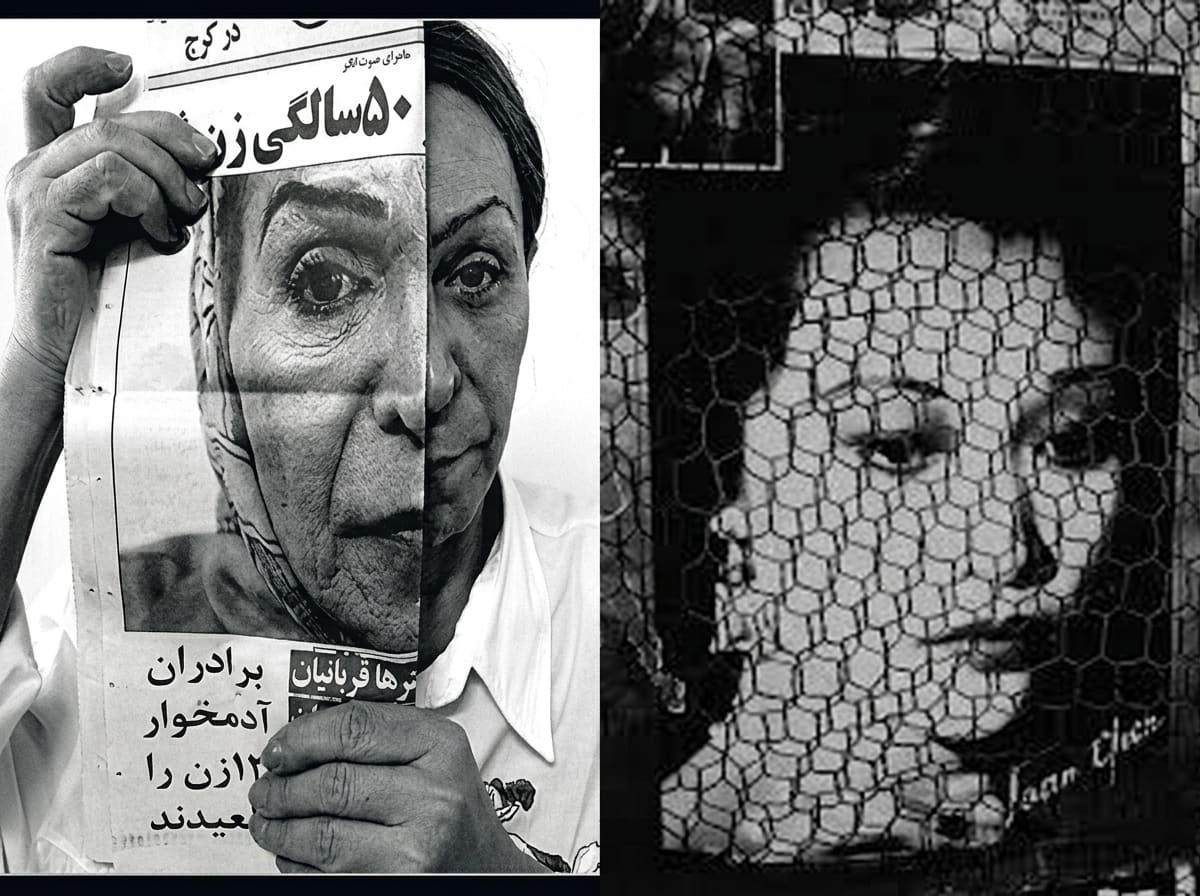
Left: an Iranian woman through Newsha Tavakolian’s lens, holding a newspaper printed with another face over her own; right: a Japanese woman through mesh and poster in Daido Moriyama’s frame. Both black-and-white, both built from newspaper/poster imagery—yet resisting in opposite directions.
Published in 2026 by Germany’s Kehrer Verlag, this photobook is about 220 pages long, with text co-written by Haleh Anvari and Tavakolian. Its title, “And They Laughed at Me,” points directly to the photographs she began making at 16, when she was starting out at Tehran’s women’s daily Zan*—images dismissed as “ruined,” shaped by mistakes made by her, her subjects, the lab technicians, and even the camera itself: overexposure, missed focus, skewed compositions, and blinked moments—what she calls “eyesores.”*(出版信息:Kehrer Verlag)(All About Photo)
Girl smelling a rose. Iran. 1999. © Newsha Tavakolian / Magnum Photos
*The “Girl Smelling a Rose” image recurs throughout the book as a motif and emotional anchor: she returns to it again and again, eventually tearing the print apart, piecing it back together, and immersing it in developer to watch its form and colors shift—an allegory for a past that cannot be erased, only understood and reconciled with.*A diversion from her precise, high-resolution images, And They Laughed at Me gives meaning to flaws, a testament to her determination to document a singular period in her life from her own perspective.
She calls this look back a kind of “coming-of-age rite”: not about selecting a set of greatest hits, but—against the backdrop of a new wave of real-world turmoil—about facing again the hopes and disillusionments of youth, until only one genuine choice remains: to be drawn to the darkness, or to resist it and move toward the light.
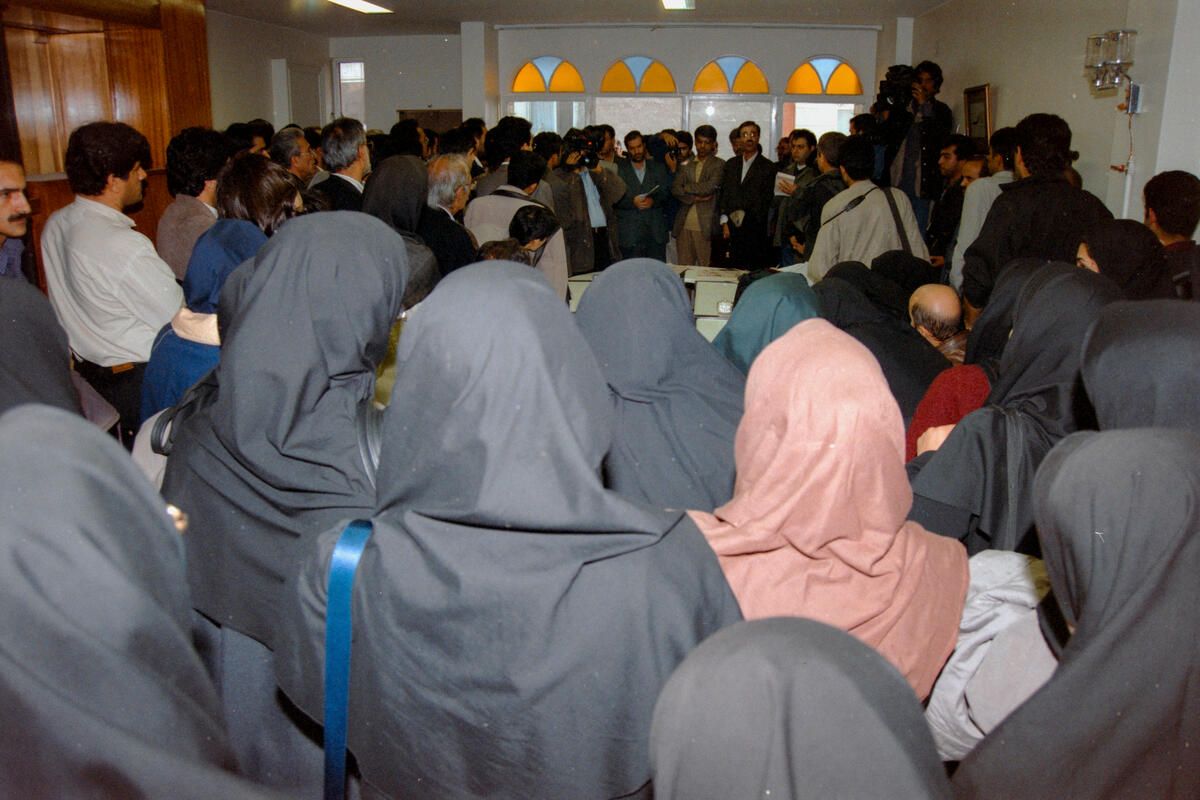
The editor-in-chief of my newspaper is released from prison. Iran. 1999. © Newsha Tavakolian / Magnum Photos
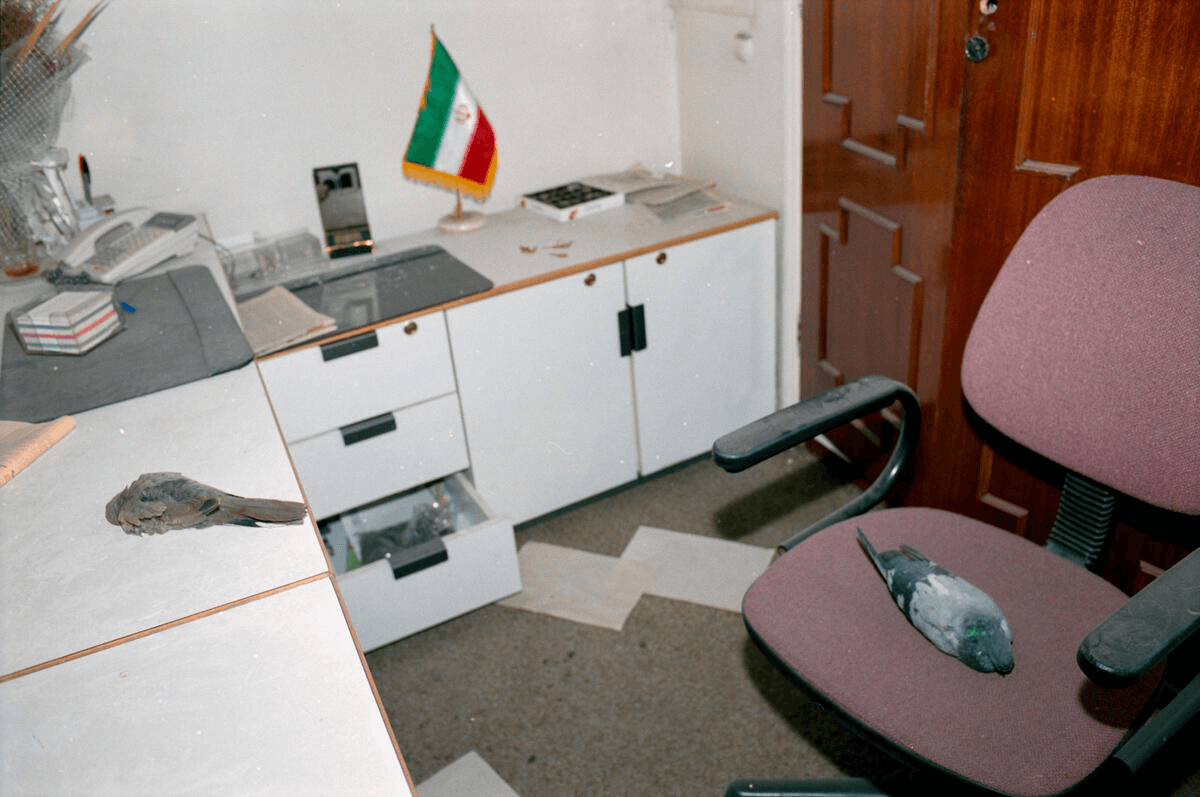
Back in our newsroom after it was searched and closed by the authorities several months earlier. I found nearly a dozen dead pigeons who had been trapped after the premises had been sealed. Iran. 1999. © Newsha Tavakolian / Magnum Photos
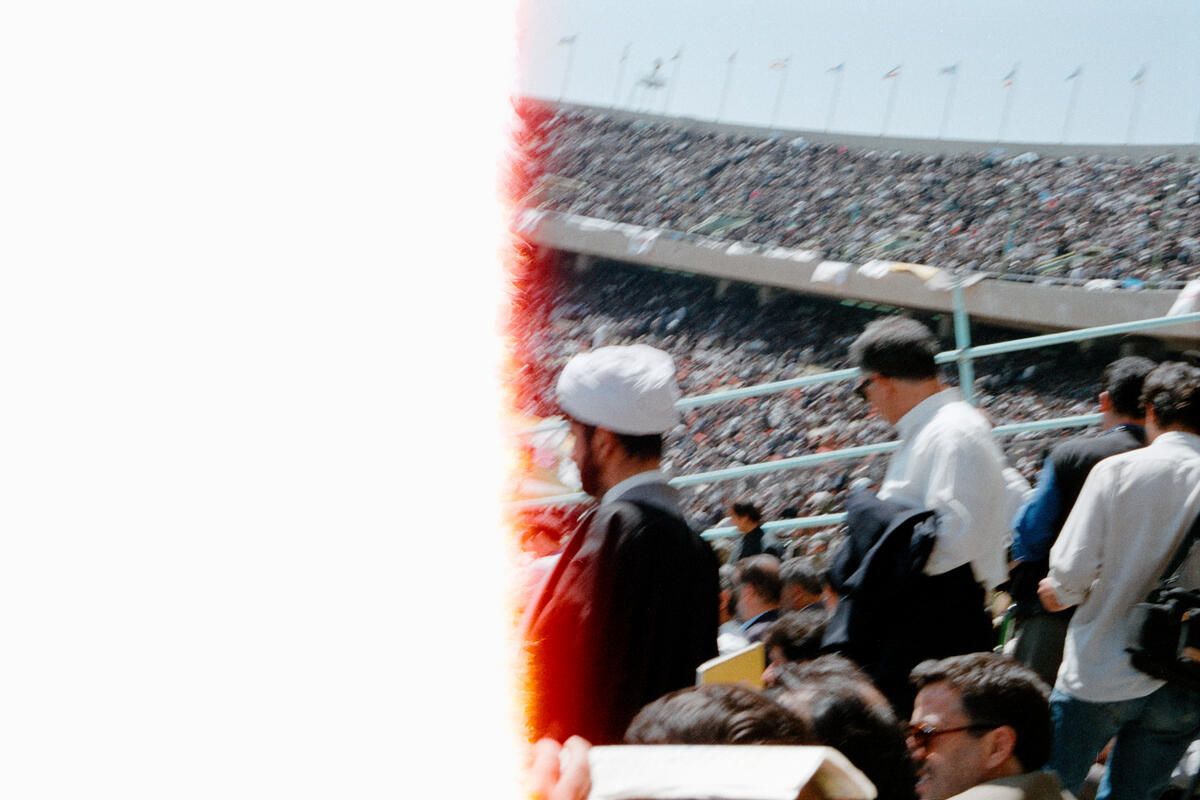
The book unfolds as a personal journal, portraying loved ones and youth in Iran who carved out spaces of expression, in “a time of hope shattered, and teenage dreams destroyed by reality,” she writes. Contact sheets from her first major project, a student protest against the closure of a reformist newspaper, mark the beginning of her life in photography.
These images can be read on two levels. Personally, revisiting these photographs helps her understand why she felt “stuck” as an artist, and why she made the pictures she did. But in the exhibition statement at Milan’s Mudec Museum, they are also linked to the Iranian military’s strategy of “blinding protesters with rubber bullets” to cut off the flow of information, and are described as a visual “manifesto” to resist repression.
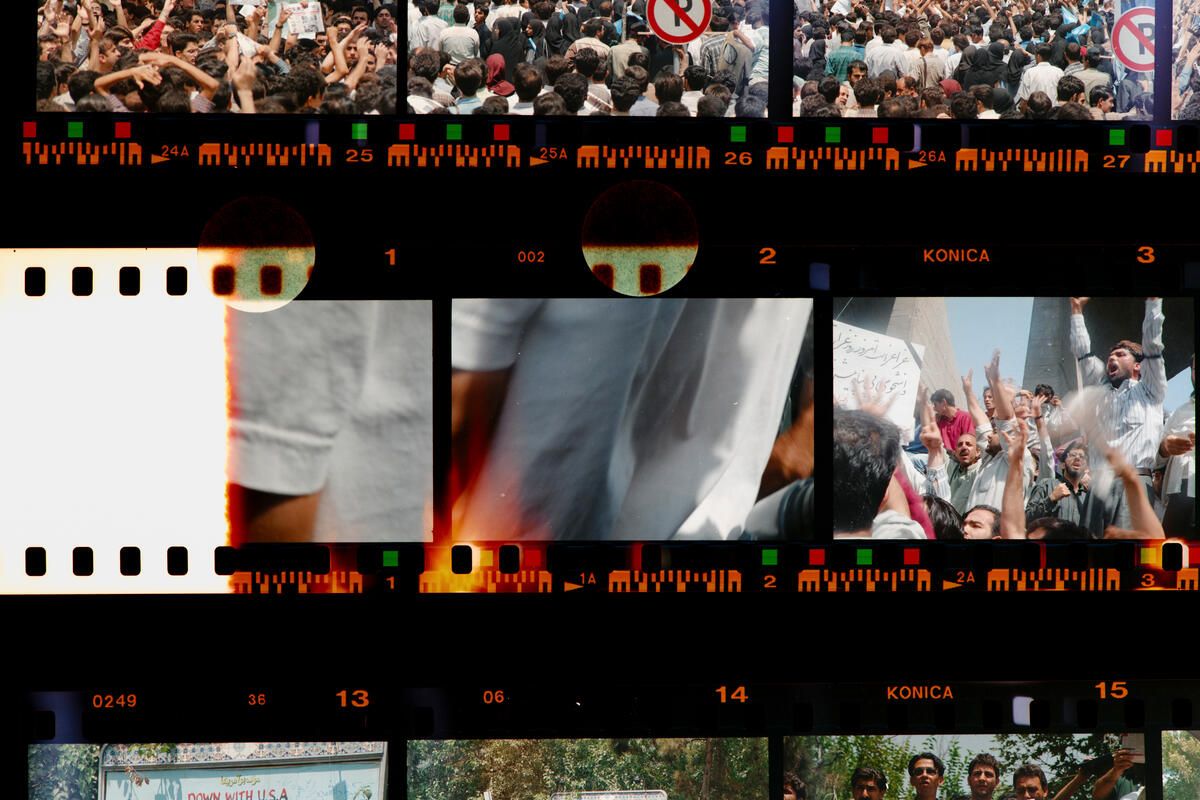
Tavakolian’s images depict a favorite coffee shop shuttered, an editor-in-chief in court, and moments of protest and resistance. In 1999, the newspaper she worked for closed down, and she began taking images from backstage at the City Theater in Tehran. There, she photographed an actress who, until then, was not allowed to move her body freely on stage.
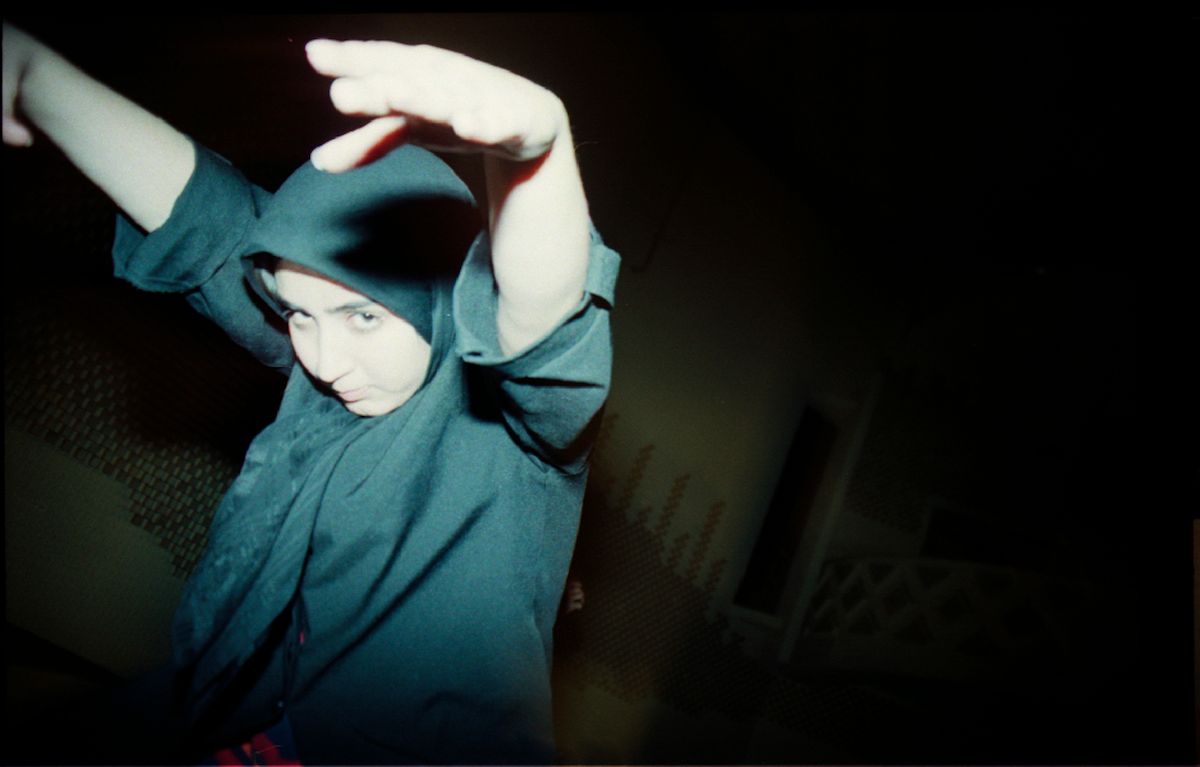
An actress practicing a performance in the City Theatre. For the first time women were allowed to lift their arms above their body on stage. 1999. © Newsha Tavakolian / Magnum Photos
Later, in 2017, Tavakolian captured unpopulated landscapes and portraits of women whose faces are covered so they remain unrecognized. An imperfect patchwork of everyday resilience, the book honors the women who enabled the cultural awakening of the present, who “fought alone in silence, during small and often in unnoticed moments,” Tavakolian writes.
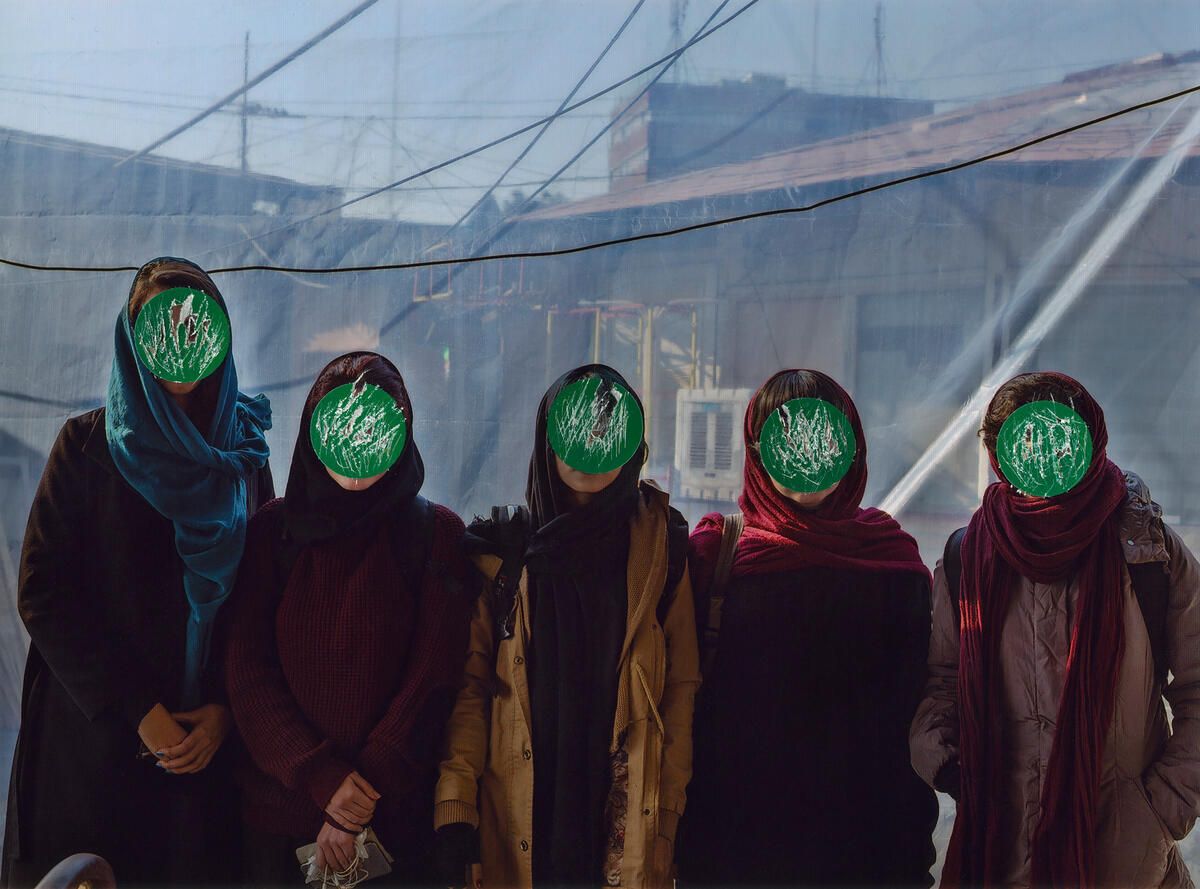
Portrait of female students protesting, asking to be anonymous. Iran. 2017. © Newsha Tavakolian / Magnum Photos
“Being a part of what was happening around me it was as if a light shone down on me: I realized that in order to do justice to all who had been involved, I also had to alter my gaze, no longer wanting to see the world in a pathetic, melancholic way.” Returning to her archives marked a shift in perspective for Tavakolian. It allowed her to “shed her skin,” she says, and face the memories that made her who she is.
Before being compiled into a book, And They Laughed at Me had already debuted as an exhibition. It was shown at Milan’s Mudec Museum from late 2023 to early 2024, where Tavakolian—recipient of the inaugural Deloitte Photo Grant—presented a show curated by Denis Curti. It then toured to Tehran’s Parallel Circuit, Armenia’s Yerevan Photo Fest, and Sarajevo’s WARM Foundation (see the full list on the artist’s website). The book has now been published by Kehrer Verlag and is available from outlets such as Setanta Books and Tipi Bookshop. The Magnum Book Club video and Signature Drop #001 (a limited handmade print edition of “Girl Smelling a Rose”) offer additional images and creative context. As a Magnum member, Tavakolian has received the Carmignac Photojournalism Award and the Prince Claus Award, and their work is held in collections including LACMA, the V&A, the British Museum, and the Museum of Fine Arts, Boston.