Sarah van Rij — Atlas of Echoes
Featured Photo: Sarah van Rij, Atlas of Echoes (2025)
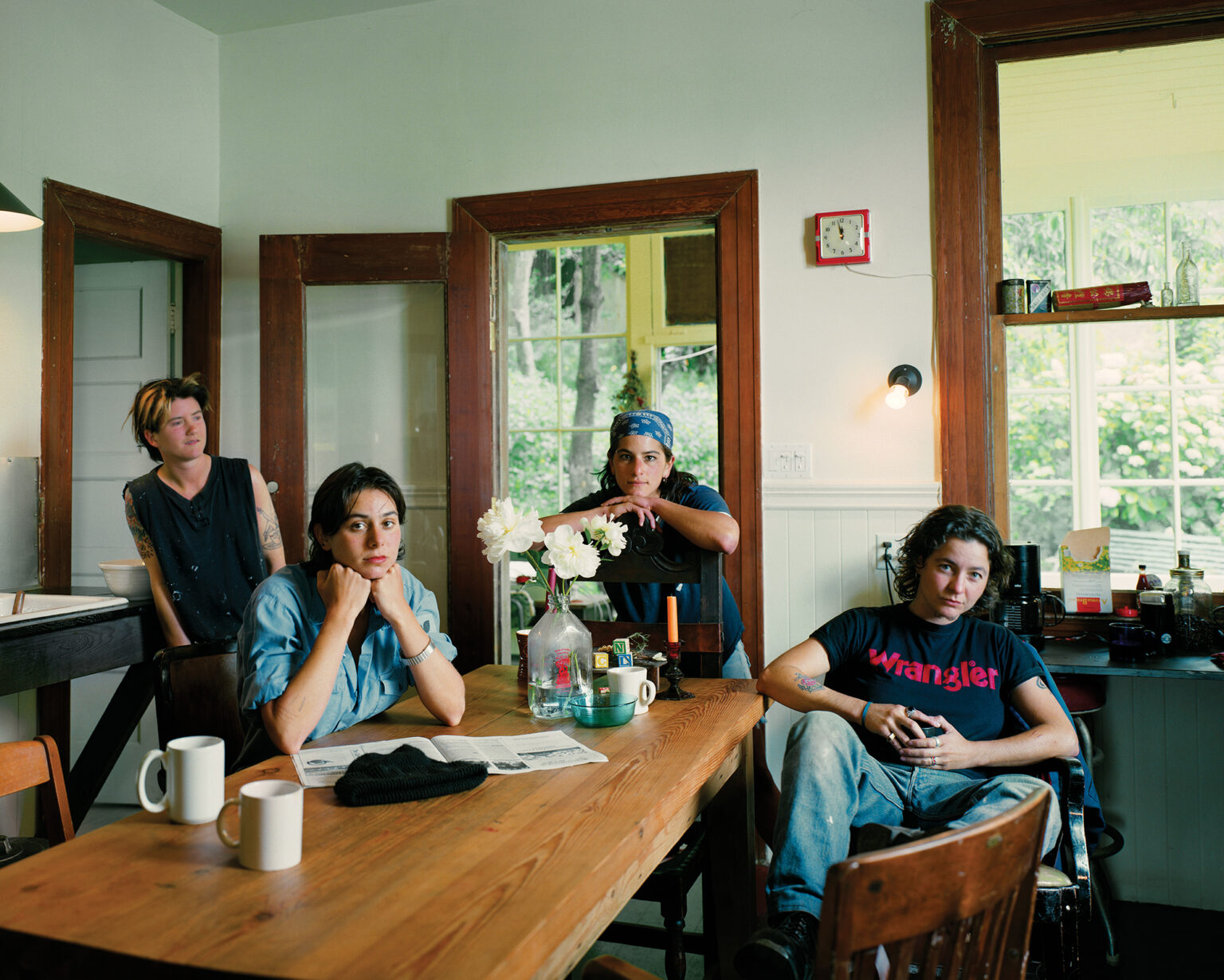
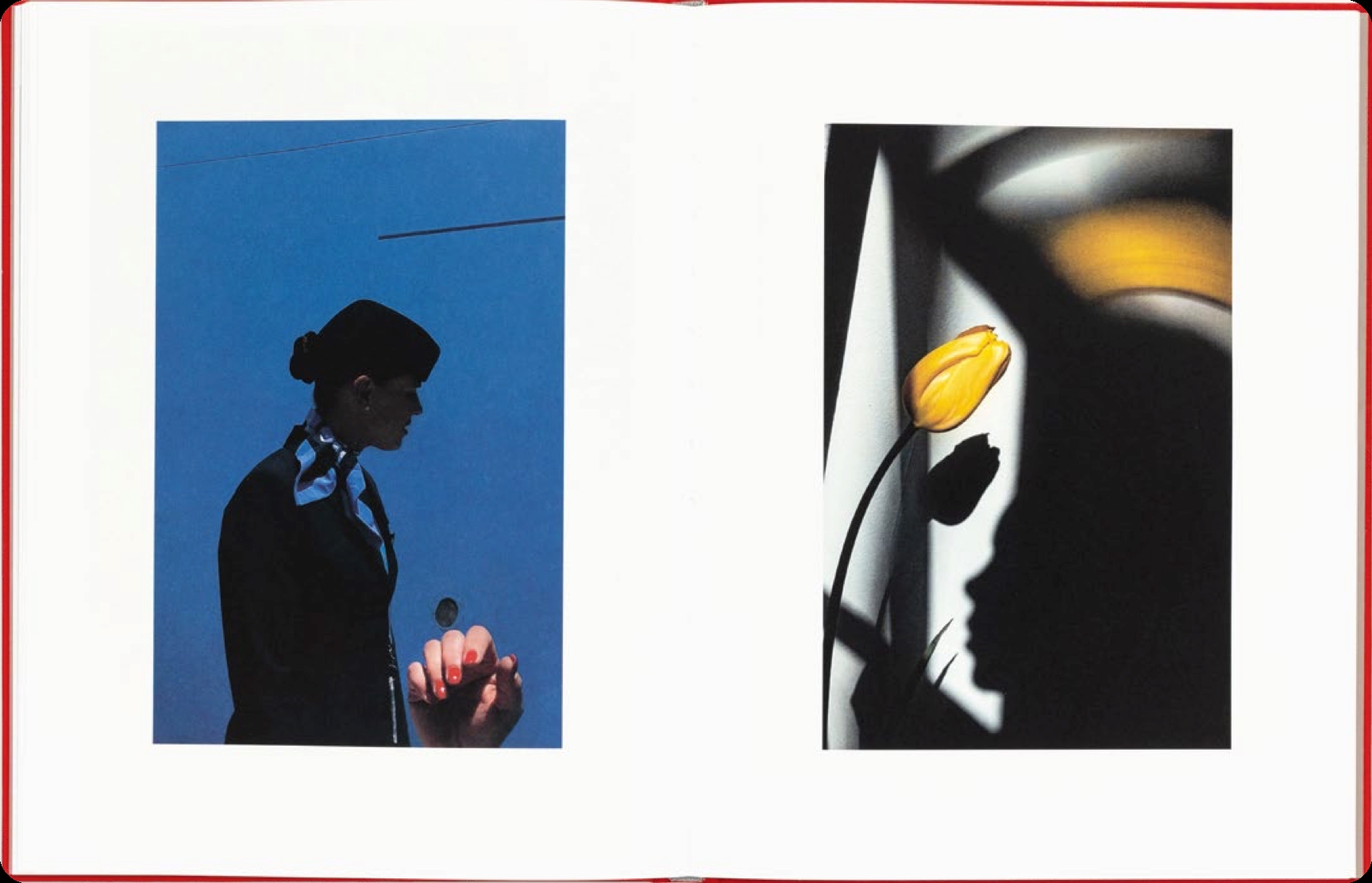
Sarah van Rij’s Atlas of Echoes (Note Note Éditions, 2025; 116 pages, $69) delivers one dopamine hit after another—I worried it might leave me with a kind of photographic hangover. Condensing seven years of photographs and surrealist-inflected collages into a brisk seventy-three images, Atlas of Echoes is the Dutch artist’s first monograph made without her romantic and professional partner, David van der Leeuw. Here, Van Rij plays the jet-lagged flaneur, sprinting through cities “from San Francisco to Seoul,” seemingly fueled by two recurring motifs: martinis and cigarettes.
There’s little sense of time or place. Instead, she cultivates the uncanny blend of distortion and specificity found in dreams, her eye lingering on long shadows and brief encounters, on partial self-portraits glimpsed in espresso shots and table knives. For some, Van Rij’s abstract eroticism and rhythmic, graphic style may feel too polished. The book’s index includes eyes, flower, hands, mirror, rain, and red. There are no potholes or rats.
Van Rij wears her influences on her sleeve: the women’s shoes are Bourdin-esque, the shadows are Friedlanderian, and the rain-slicked windows are pure Saul Leiter. Hitchcock also looms, yet Van Rij trades sinister suspense for a kind of sunny noir (this book would be scored by Stan Getz, not Bernard Herrmann). She transforms those male, mid-century references into her own jazzily disjointed mise-en-scènes, where it’s often difficult to distinguish between collaged and in-camera pictures. We’re encouraged to piece together our own story and subjectivity (I kept imagining a private detective on vacation). Here, the phone’s off the hook, the water is shimmering, and the shadows help you tell the time.
— Zack Hatfield
Lionel Wendt
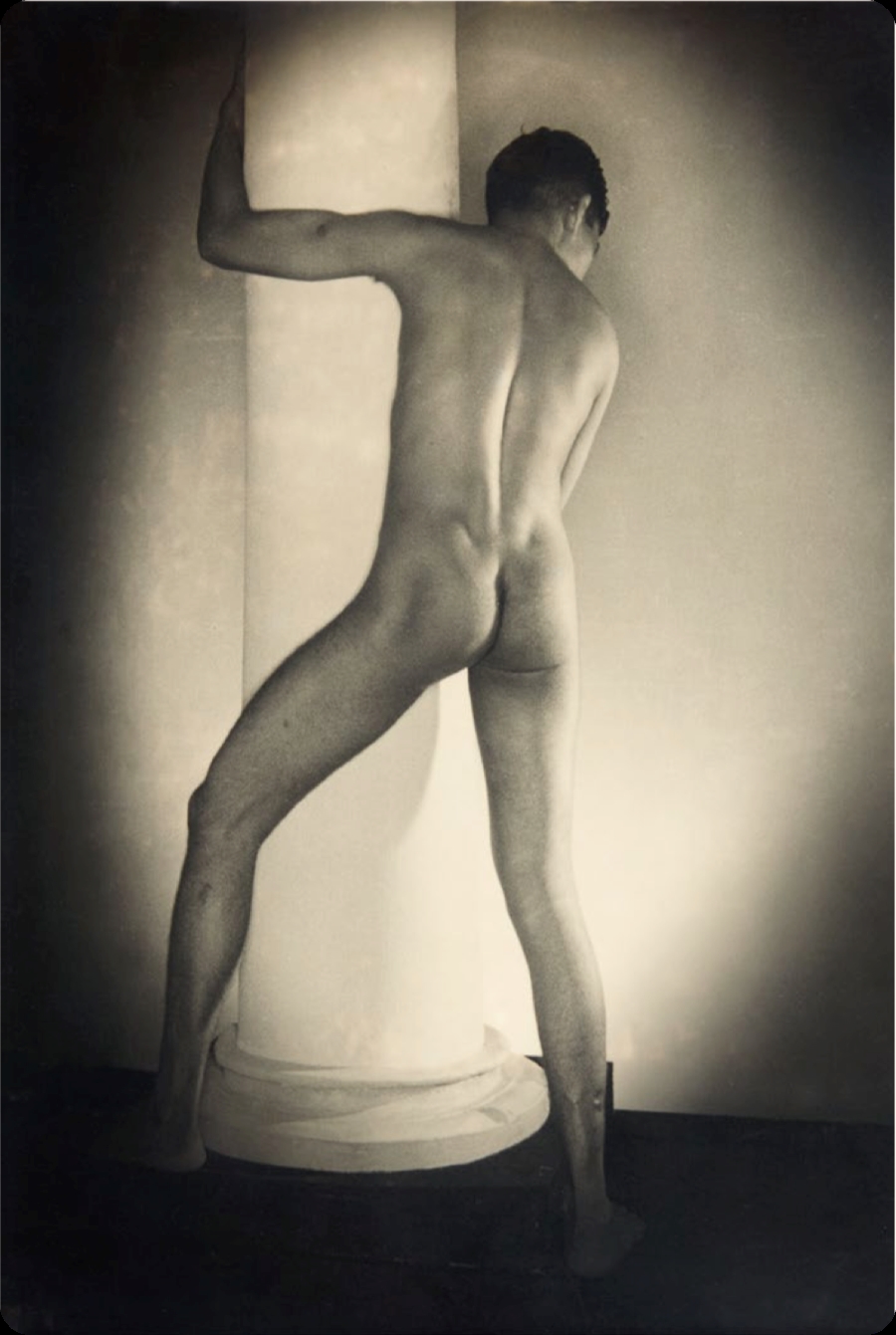
Image: Lionel Wendt, Untitled (Male Figure), ca. 1930–44. Courtesy American Art Catalogues, New York.
This masterful image is one of many previously unseen works in Lionel Wendt (American Art Catalogues, 2026; 54 pages, $55), a new monograph highlighting Wendt’s brief career (the artist died at age forty-four). Born in 1900, Wendt studied music in London before bringing his vision for a modernist movement back home. But a straightforward reading of his place in the avant-garde is ill-advised, the curator Shanay Jhaveri notes in his accompanying essay. As a member of the elite, mixed-race Burgher community and a queer man in British-controlled Ceylon, where homosexuality was outlawed, Wendt worked from a position that was never easily defined.
It was this complicated perspective that caught the eye of Tyler Mitchell, who contributes a short appreciation. Tired of the “‘decisive moment’ patriarchs,” the American photographer writes that he found in Wendt a tenderness and a rich inner life that paralleled his own. Young men appear in nearly half of the photographs—some fully or partially nude, others tightly cropped. A few are posed among classical columns and statuary, borrowing from tradition while underscoring their in-betweenness: ancient and modern, old and new. Brown skin appears incandescent in Wendt’s painterly light. It’s easy to see why his portraits resonate with Mitchell—and why they may influence other emerging artists working today.
—Frances Cathryn
Ray K. Metzker — City Lux
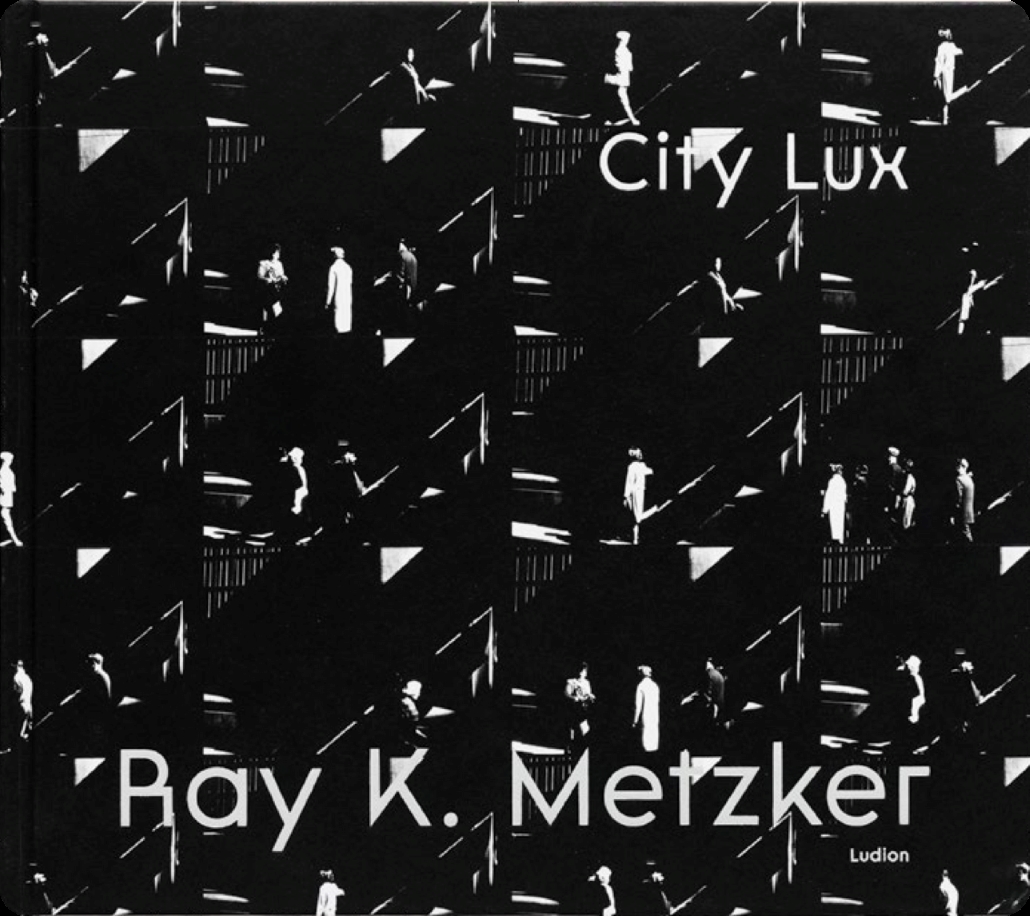
Image: Ray K. Metzker, City Lux (2025).
Like Aaron Siskind and Harry Callahan—his mentors at Chicago’s Institute of Design—Ray K. Metzker is one of photography’s great mid-century modernists. Relentlessly experimental and technically avant-garde, Metzker was anything but a straightforward documentary photographer. He typically shattered and repeated his images until a simple cityscape exploded into jagged abstraction. Yet even his most pared-back pictures—a solitary walker, a silvery puddle, an open door—carry a charged, cinematic quality reminiscent of stills from a Michelangelo Antonioni film. “I really related to the light more than anything else,” he told an interviewer; as a result, his black-and-white prints are strikingly graphic, with incandescent whites and pitch blacks of remarkable depth and clarity. In his most complex images, Metzker shuffled these elements like puzzle pieces, and the results seem to vibrate within their frames.
The catalog Ray K. Metzker: City Lux (Ludion, 2025; 240 pages, $53) expands on a 2024 exhibition at the A Foundation in Brussels, which surveyed a career that touched down in a number of cities (Chicago, Philadelphia, Albuquerque) but rarely zeroed in on distinctive landmarks. Often made through multiple exposures, his urban spaces are nearly interchangeable and his figures anonymous. This may not be Jean-Luc Godard’s futuristic Alphaville, but many of Metzker’s busiest images have a sci-fi cast and a sense of everything happening at once. Whether you find this exciting or unnerving, cool or overheated, the work is far from old-school—except for its roots in analog inventiveness. Because Metzker never stopped messing with time and space, his work reads like a great jazz riff: classic, yet forever new.
—Vince Aletti
Andrea Modica — Italian Story
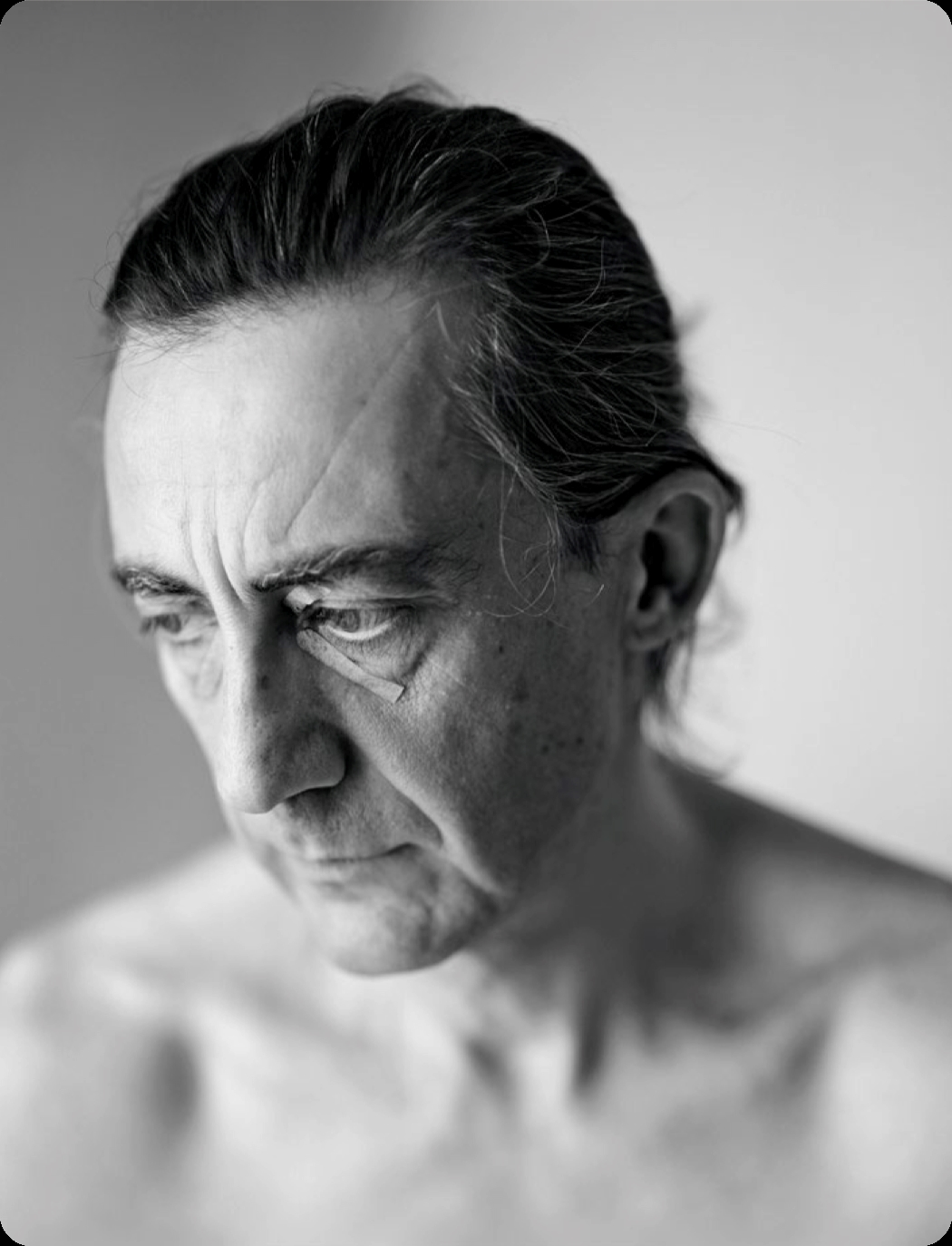
Andrea Modica, Italian Story (2026)
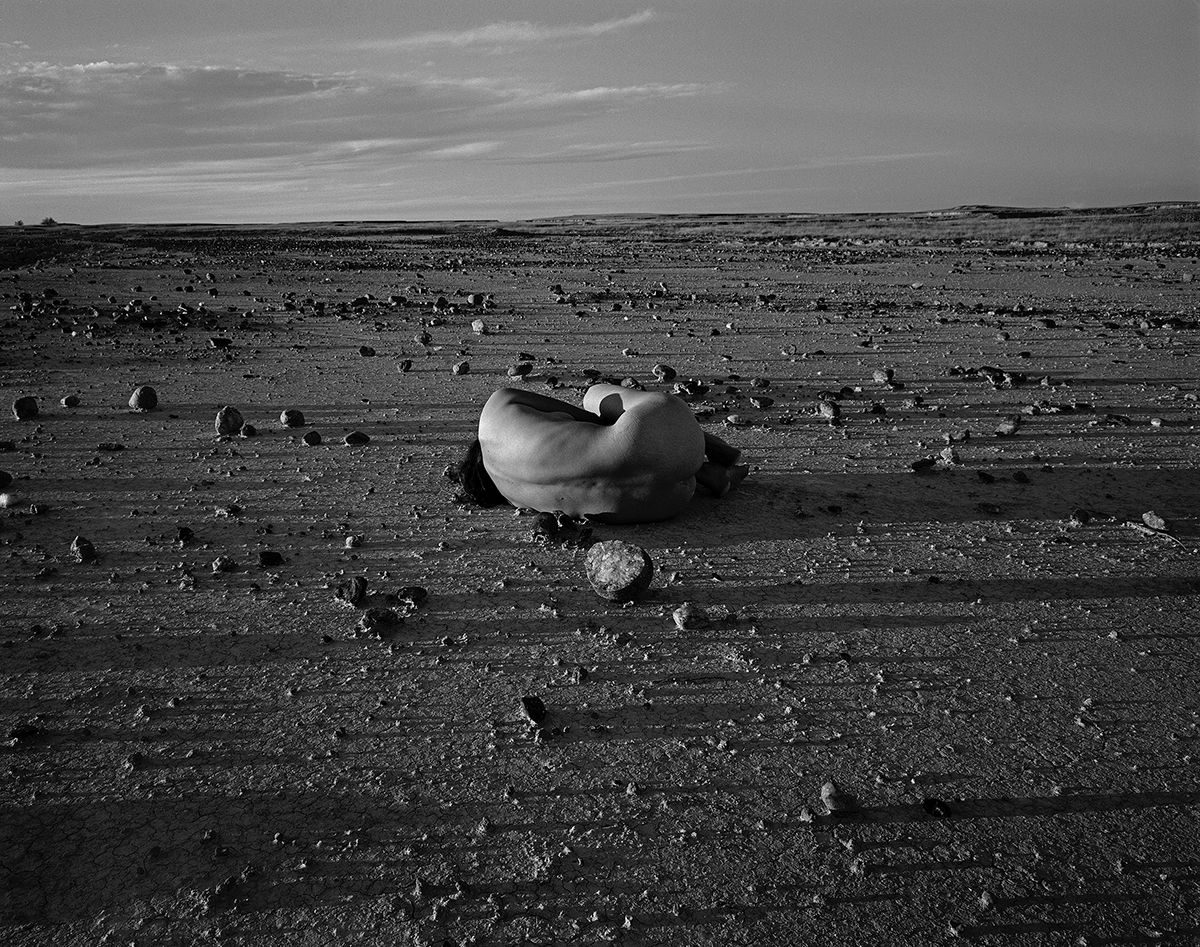
The American photographer Andrea Modica has described her latest book, Italian Story (L’Artiere, 2026; 96 pages, $70), as “a broad narration: a record of events, a historical fiction.” The notion of flexible memory is embedded in the title itself: the Italian word “storia” means both history and story. Created over four decades, these black-and-white images—made with a large-format view camera—seem to exist slightly out of time: dreamlike, but not quite.
Modica’s previous monographs have featured long-term projects on equine medicine, Catholic schoolgirls, and skulls unearthed from a Colorado mental institution. This book, about her relationship with Italy—she’s third generation—highlights the artist’s sensitivity to everyday incongruity. Portraits, landscapes, and still lifes show how Modica uses light, focus, and negative space to convey an ambiguous intimacy. Though her subjects are exactly what they appear to be, there are occasional, subtle surrealist flourishes: a head and a glass tilt forward in an improbable balance; the soft, poetic mirroring of a fern branch and a bare crotch recalls Julia Margaret Cameron and Man Ray.
Modica is a deft manipulator of absence and obfuscation; reading this book can feel like wandering through a haunted villa. In one image, light shines through a dress hanging in the foreground as a person—perhaps its wearer—peeks out from the background, awash in white. In another frame, a nude man lies behind a sheer bed canopy like half of a pietà, his body shrouded by a veil that evokes a delicately chiseled block of Carrara marble.
—Quinn Moreland